
China accelerates AI factory automation as cyber risks rise: report

Story Timeline
2 months · 6 summary articles
China’s push to automate its traditional factories with artificial intelligence is accelerating, with AI-driven robots now spreading beyond high-tech sectors into textiles, food processing and light manufacturing, according to a Financial Times report published today . The shift comes as Chinese robotics firms integrate large-language models that can handle unstructured tasks such as quality inspection and predictive maintenance, enabling smaller workshops to adopt automation without costly bespoke programming.
Security experts warned in a separate report on 30 June that the rapid diffusion of these AI systems is creating a “cyber arms race,” with state-backed and criminal actors poised to exploit newly automated supply chains . Pontus Johnson, a professor at KTH Royal Institute of Technology in Stockholm, told Svenska Dagbladet that within a year “serious data breaches” are likely as cyber-criminals weaponise the same AI tooling that Chinese factories are installing.
The dual narrative—automation gains versus rising cyber risk—was underscored by a flurry of announcements on the same day. China’s Nexchip Semiconductor filed for up to HK$6.9 billion (US$890 million) in a Hong Kong IPO, earmarking proceeds for AI-capable chip manufacturing lines that will feed both domestic factories and export markets . Meanwhile, Taiwanese authorities raided the local office of Super Micro Computer as part of an expanding probe into alleged Nvidia chip smuggling to Chinese data-centres, a case that has already ensnared six individuals and two affiliated firms .
Across Central Asia, Uzbekistan is positioning itself as an AI services hub, targeting a US$5 billion export pipeline by leveraging a young workforce, surplus energy and upgraded digital infrastructure . The plan envisages moving from low-value outsourcing to higher-margin AI consulting and model fine-tuning, directly competing with Chinese vendors.
In a cautionary counterpoint, Ford Motor confirmed it has rehired roughly 350 engineers after an internal experiment showed AI could not replicate human expertise in quality control, underscoring the technology’s limits even in highly structured environments . The reversal was mirrored in multiple media reports published today .
South Korea, by contrast, is doubling down on physical AI, pledging US$1 trillion through 2028 to expand memory-chip production and deploy commercial humanoid robots, aiming to seize the lead in embodied artificial intelligence .
Follow us for live European news
- 2
- 2
- 1
- 1
- 1
- 1
- 1
- 1
- 1
2 further sources not geolocated
Articles

O futuro será mais tecnológico. E também mais manual Mais do que nostalgia, talvez estejamos a assistir à procura de equilíbrio. Não uma rejeição da tecnologia, mas a procura do contrapeso.
observador · about 2 months ago

Autobauer: Volvo entwickelt Autos in weniger als drei Jahren Vor allem dank neuer Softwarearchitektur holt der Hersteller zur deutlich schnelleren chinesischen Konkurrenz auf. Dabei hatte Volvo jüngst noch große Probleme bei der wichtigen Komponente.
handelsblatt · about 2 months ago
FT Alphavilles AI Prediction World Cup: Post-group update: Predictions are predictably hard Many stats; no learnings
financial times · about 2 months ago

Google va finalement lancer ses fonctionnalités IA sur son moteur de recherche en France « cet été » Pour expliquer lexclusion de lHexagone de services pourtant déjà présents dans 200 pays, lentreprise invoquait des « obstacles réglementaires » liés aux éditeurs de presse, quelle a levés.
le monde · about 2 months ago
China pregătește primul hotel din lume în care toate serviciile vor fi asigurate exclusiv de roboți În China urmează să fie deschis primul hotel din lume în care toate serviciile vor fi asigurate exclusiv de roboți, fără intervenție umană în operarea zilnică.
adevarul · about 2 months ago
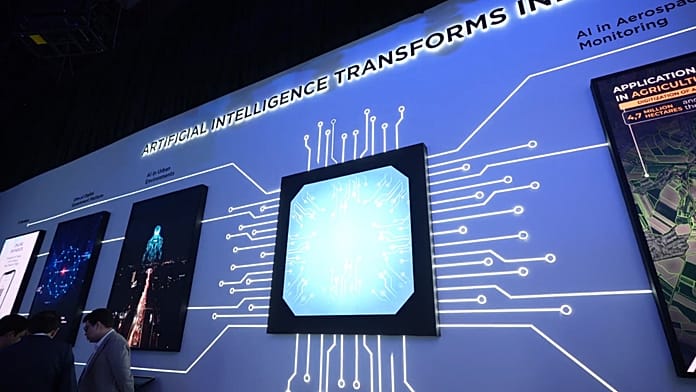
The $5 billion AI export plan gathering momentum in Central Asia Uzbekistan is aiming to move from outsourcing into higher-value services, using its young workforce, energy resources and digital infrastructure to attract investment.
euronews · about 2 months ago
Umělá inteligence zatím jako zkušenější kolega selhává Umělá inteligence zničí do pěti let vyšší desítky milionů pracovních míst. Největší dopad má už nyní na absolventy vysokých škol, v případě České republiky pak především na mladé absolventky vysokých škol. Tolik říkají předpovědi i poslední výsledky pracovního trhu. Jak je to ovšem s nahrazováním zaměstnanců inteligentními stroji?
irozhlas.cz · about 2 months ago
FirstFT: How Elliott spawned a new army of activists Also in todays newsletter: corporate AI users staff hires and Maersk raises profit guidance
financial times · about 2 months ago
Experimentul cu inteligența artificială a eșuat. Ford reangajează aproximativ 350 de ingineri După ani în care a investit masiv în sisteme automate și inteligență artificială pentru controlul calității, Ford a ajuns la concluzia că tehnologia nu poate înlocui experiența acumulată de specialiști.
adevarul · about 2 months ago
Heavy corporate AI spenders add staff faster than peers Study of 22,000 US companies challenges fears that generative AI will trigger broad job losses
financial times · about 2 months ago
Magnificent Seven stocks shed $2.3tn in Wall Street tech rotation Investors switch to soaring chipmakers benefiting from hyperscalers vast AI spending
financial times · about 2 months ago
What would multilateral AI arms control look like? Given the competition, its debatable whether a US-China safety deal is even possible
financial times · about 2 months ago
Is AI an exoskeleton for the mind? Technology that helps people do things they couldnt otherwise achieve can also lead to atrophy
financial times · about 2 months ago
Un mare producător auto a înlocuit sute de ingineri cu inteligența artificială, dar a fost nevoit să-i angajeze la loc Producătorul auto american Ford a reangajat sute de ingineri, pentru că inteligența artificială nu a reușit să le egaleze abilitățile și experiența.
digi24 · about 2 months ago
Klapphandy: Führe uns nicht in Versuchung, Commodore Commodore hat ein Retro-Klapphandy angekündigt, das uns das gute alte Offlineleben zurückbringen soll. Und die Leute flippen aus – je nach Alter positiv oder negativ.
die zeit · about 2 months ago
Har ett år på oss – om Kina är ansvarsfullt Allvarliga dataintrång är att vänta när cyberkriminella får tillgång till den vassaste AI-tekniken. Det varnar flera experter för i en ny rapport från IVA. Viktigt att samhället agerar på alla nivåer, säger KTH-professorn Pontus Johnson.
svenska dagbladet · about 2 months ago
AI in Practice How artificial intelligence is being set to use in — and often fundamentally changing — multiple sectors, including: budget-busting AI bills; transforming pharma; AI and trust in air traffic control; spreading factory automation; rewriting gaming rules; chatbots and mental health; astronomical opportunities; agentic travel agents
financial times · about 2 months ago
AI drives a boom in new games but big developers dominate More instinctive technology is accelerating production amid concerns it risks losing gamers trust
financial times · about 2 months ago
Businesses face up to budget-busting AI bills A shift to usage-based pricing and new models is making companies rethink spending
financial times · about 2 months ago
Why AI can transform pharma — but nature cannot be hurried Artificial intelligence has the potential to fundamentally change the development of new treatments
financial times · about 2 months ago
Can AI help avoid an air traffic control crisis — and would we trust it? The technology has potential to assist controllers with an increasing flight load but many are wary
financial times · about 2 months ago
Use of artificial intelligence for mental health splits opinion Two-thirds of those aged 25 to 34 have asked chatbots for wellbeing support
financial times · about 2 months ago
How AI and an astronomers laptop can bring new galaxies within reach AI is spotting patterns in fresh and old data with surprisingly little computing power
financial times · about 2 months ago
AI speeds the march of Chinas factory robots into new sectors Artificial intelligence is enabling the spread of automation to traditional industries
financial times · about 2 months ago
Autotest: Schöner ein- und schneller aufladen mit dem Zeekr 7GT Bisher ist Zeekr weniger präsent als andere noble China-Marken. Kein Wunder: Sie ist bei uns spät gestartet und richtet sich hauptsächlich an Firmenkunden. Mit dem 7GT könnte das alles anders werden.
handelsblatt · about 2 months ago
Meta Contractors Posed as Teens to Prompt Rival Chatbots About Suicide, Sex, and Drugs Hundreds of contractors working on a project for Meta pretended to be kids in order to see how other chatbots like Gemini and ChatGPT would respond to high-risk subjects, WIRED found.
wired.com · about 2 months ago
Why Wont Europe Build AI Data Centers in Iceland?
gdeltproject.org · about 2 months ago
Modelele chineze de inteligență artificială reduc decalajul față de rivalele americane în securitatea cibernetică Modelele de inteligență artificială dezvoltate în China au ajuns să concureze cu unele dintre cele mai avansate sisteme americane în anumite
adevarul · about 2 months ago
Europe Will Never Catch Up with Anthropic of OpenAI and Become an AI Superpower
gdeltproject.org · about 2 months ago
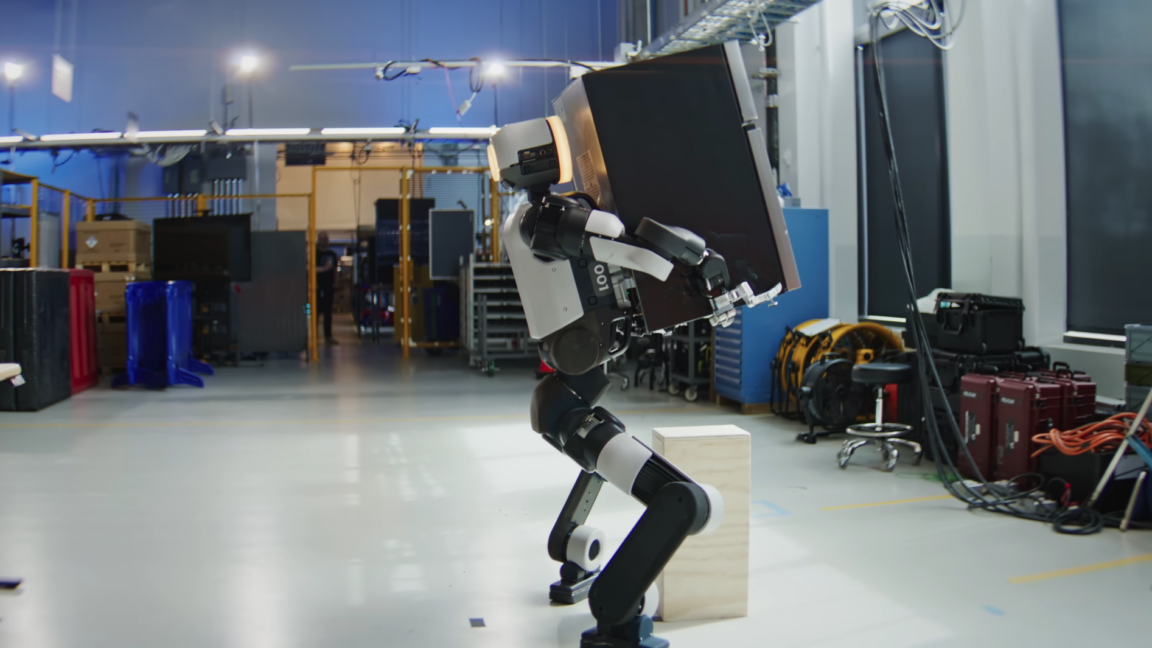
South Korea to spend $1T on more memory chip production and humanoid robots South Korea targets physical AI lead and commercial humanoid robots by 2028.
ars technica · about 2 months ago