Loading…
 Saturday, August 29Saturday, August 29
2 months · 31 summary articles
The future of artificial intelligence is no longer a question of *if* but *how fast*—and the world is scrambling to keep up. On Monday, the Five Eyes intelligence alliance issued a rare joint warning that advanced AI models capable of toppling governments or dismantling corporations could reach the market within months, not years . The statement, described by officials as an urgent call to action, underscores a global shift from speculative debate to immediate strategic concern.
The warning follows a series of high-stakes policy moves and corporate announcements that reveal both the promise and peril of AI dominance. In Europe, the bloc’s Cloud and AI Development Act (CADA) has drawn sharp criticism for its aggressive market intervention, with critics arguing that tripling the EU’s data centre capacity within five to seven years requires intrusive measures that distort competition . Meanwhile, the EU’s plan to phase out Chinese-made power inverters from publicly funded projects—citing cybersecurity risks—has run into immediate supply chain reality, as European manufacturers lack the capacity to replace Beijing’s role in the short term .
Corporate giants are also recalibrating their AI strategies under regulatory and competitive pressure. Dutch semiconductor equipment maker Nearfield, once a niche player, has surged into the billion-euro league after securing €330 million in new funding to meet soaring demand for AI chipmaking machinery, prompting comparisons to ASML’s rise . In retail, AS Watson Group launched a data-driven “brand lab” on Monday, aiming to transform its global retail ecosystem into a scalable engine for AI-powered brand growth .
The labor market is bifurcating under AI’s influence, according to PwC’s 2026 AI Jobs Barometer, which found that companies most adept at integrating AI are expanding hiring faster than peers—while prioritising human-centric skills such as judgment, creativity, and leadership . Yet the automation wave is also reaching blue-collar roles: JD.com’s founder Richard Liu bluntly stated that robots will eventually replace the company’s 700,000 couriers, marking one of the most direct acknowledgments to date of AI’s displacement effect on manual labour .
Against this backdrop, AI ethics and governance remain flashpoints. Anthropic, which has been more vocal than rivals about AI risks, now faces the unintended consequence of heightened scrutiny that could lead to export restrictions on its most advanced models . Meanwhile, Tesla is positioning itself as a turnkey provider of modular AI data centres, offering plug-and-play infrastructure for third-party developers .
From Brussels to Beijing, the message is clear: AI is no longer a competitive edge—it is the foundation of national and corporate power. The question now is whether the world can build the guardrails fast enough to prevent the very outcomes its intelligence agencies now warn are imminent.
Follow us for live European news
6 further sources not geolocated
EUs cloud and AI development act gets mixed reception The European Commissions goal of tripling the EUs data centre market within five to seven years would not be possible without intrusive market engineering, and CADA does exactly that.
euronews · 2 months ago
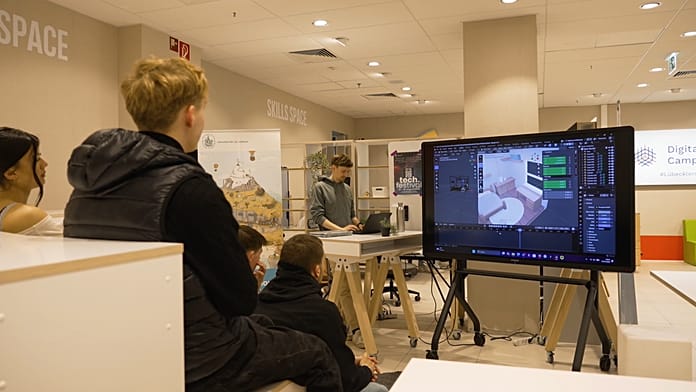
AI, VR, learning of the future at any age, on a free digital campus with over 600 courses Germanys Schleswig-Holstein has launched a digital campus with over 600 online and in-person courses on AI, virtual and augmented reality and other cutting-edge technologies. It is free of charge and open to all.
euronews · 2 months ago

EUs phase-out of China-made inverters gets a reality check As the EU plans to ban Chinese power inverters from EU-funded projects over cybersecurity fears, industry and investors are warning that European supply cant yet replace Chinese suppliers any time soon.
euronews · 2 months ago

Krugman, Fable 5, and Europe in Decline?폴 크루그만은 유럽이 경제적으로 쇠퇴하지는 않았지만, 전략적 기술 접근권 상실 위험이 커졌다고 지적한다. 특히 미국이 AI 모델과 GPU, 클라우드 등 핵심 기술과 인프라에 대한 접근을 통제하며 유럽의 기술 의존도가 심화되고 있다. ASML의 EUV 리소그래피 장비가 유럽의 유일한 강점이나, 미국의 수출 규제와 정책 재량권이 유럽의 기술 주권을 위협하는 상황이다. 유럽은 대규모 투자와 정책으로 대응하지만, 미국 중심의 기술 생태계에 대한 의존은 여전히 심각한 문제로 남아 있다. #technologydependence #europe #usexportcontrol #semiconductor
mastodon bot · 2 months ago

The new database world according to Google: Inexact queries and AI in everything Humans are not going to be using data platforms in the next three to five years, product exec tells us
the register · 2 months ago

How Anthropic may have talked itself into an AI export ban The company warned about dangers of advanced AI far more than rival OpenAI.
ars technica · 2 months ago
AS Watson Launches brand lab to Turn Retail Scale into a Data-driven Brand Growth Engine HONG KONG SAR - Media OutReach Newswire - 22 June 2026 - AS Watson Group has launched AS Watson brand lab, a data-driven brand creation and scaling platform designed to systematically identify, develop, and grow brands across its global retail ecosystem. Built on the companys integrated O+O ...
the slovenia times · 2 months ago
Vláda schválila projekt podpory vybudování AI Gigafactory v Česku Vláda schválila projekt zajištění infrastruktury pro vybudování velkého datového centra pro umělou inteligenci, tzv. AI Gigafactory na českém území. Chce tak posílit bezpečnost a nezávislost ČR v AI. Po jednání vlády to uvedl ministr průmyslu a obchodu Karel Havlíček (ANO).
irozhlas.cz · 2 months ago

Vous ne trouverez plus deux couleurs de M&Ms dans les futurs paquets : "Sous la pression de Robert F. Kennedy Jr" M&Ms tire un trait temporaire sur deux de ses couleurs. Dès le mois daoût, le fabricant des célèbres dragées de chocolat, enrobées de sucre coloré, lancera une nouvelle version de ses produits, en supprimant les colorants artificiels. ...
la libre · 2 months ago

El plan del CEO de Nike para dar un impulso a la marca: "Estamos aquí para ganar" Elliott Hill afirma que la magnitud de los problemas que afronta hace que la reestructuración esté tardando más de lo previsto. Leer
expansion · 2 months ago
Profumi che riprogrammano la mente: è boom delle neurofragranze, ecco cosa sono e come influiscono sul nostro cervello Dimenticate il profumo inteso solo come vezzo estetico, firma di stile o strumento di seduzione. Oggi lindustria olfattiva si fonde con la biologia. È lera delle neurofragranze: composizioni ingegnerizzate e validate scientificamente per bypassare la mente razionale, dialogare in frazioni di secondo con il sistema limbico e alterare i nostri parametri fisiologici. Si tratta di […] Larticolo Profumi che riprogrammano la mente: è boom delle neurofragranze, ecco cosa sono e come influiscono sul nostro cervello proviene da Il Fatto Quotidiano.
il fatto quotidiano · 2 months ago

Éolien en mer: le scandaleux plan de licenciement dIberdrola Le géant espagnol, qui profite dun soutien financier public hors norme et accumule des profits à couper le souffle, nenvisage pas moins de tailler dans ses effectifs: «Mediapart» révèle les détails dun premier plan de licenciement. Un second pourrait être en préparation.
mediapart · 2 months ago
Le Groupe EBRA lance un plan de départs volontaires pour réduire les effectifs de 10 La direction du groupe de presse régional de lest de la France, détenu par le Crédit mutuel, compte supprimer 400 postes sur 3 200. Alors quelle annonce vouloir automatiser certaines tâches et accélérer la transition vers le numérique pour atteindre léquilibre financier dici à 2028, les syndicats sinquiètent des conditions de travail à venir et du déploiement de lintelligence artificielle.
le monde · 2 months ago
Künstliche Intelligenz: „Mit 75 Prozent Wahrscheinlichkeit passiert genau das: Die Blase platzt Stuart Russell hat das einflussreichste KI-Lehrbuch geschrieben. Er erklärt, warum die Technologie bald auch Top-Manager ersetzen könnte – und wann sie zu einer existenziellen Bedrohung wird.
handelsblatt · 2 months ago
Initiative zum Ärger um Zwischenlager: „Es werden wieder Tatsachen geschaffen Betriebsgenehmigungen für die Atommüllzwischenlager laufen bald aus. Die BI Lüchow-Dannenberg fordert, an den Entscheidungen zur Zukunft beteiligt zu werden. mehr...
taz.de · 2 months ago
As cinco funções do iPhone que chegaram com o Android 17 A Google já lançou a mais recente actualização do seu sistema operativo. Descubra as novidades práticas que aproximam os dois rivais e saiba quando o sistema chega ao seu telemóvel.
publico · 2 months ago
Portugal junta-se a Espanha e Turquia para criar fábrica de inteligência artificial O país integra o consórcio do MareNostrum 5, que vai receber uma fábrica de inteligência artificial para revolucionar as previsões do tempo e a medicina.
publico · 2 months ago
Honger naar AI-chips maakt van het Nederlandse Nearfield een miljardenbedrijf Chipmachinemaker Nearfield uit Rotterdam is in één klap een miljardenbedrijf, dankzij de vraag naar rekenkracht voor AI en een nieuwe financieringsronde van 330 miljoen euro. Is dit het nieuwe ASML?
nrc · 2 months ago
Fermentation, flavour and the future of food: Making sustainability delicious Continue reading Fermentation, flavour and the future of food: Making sustainability delicious at The European Sting - Critical News & Insights on European Politics, Economy, Foreign Affairs, Business & Technology - europeansting.com.
european sting · 2 months ago
Războiul inteligenței artificiale a ajuns în punctul din care nu mai există întoarcere. Ce urmează? Între un nou decret prezidențial, o dispută aprinsă cu compania Anthropic și conflictele tehnologice de ultimă generație, Statele Unite pășesc într-o cursă a înarmării cu inteligență artificială (AI) pe care comunitatea internațională se străduiește să o controleze.
adevarul · 2 months ago
Russian Antitrust Service Enlists E-Commerce Sites to Block Speculative Fuel Resales Avito has temporarily hidden all fuel-trading ads, while online marketplaces Ozon and Wildberries have banned gasoline sales outright.
themoscowtimes · 2 months ago
Dutch businesses shift focus from recruitment to retaining and developing staff Businesses in the Netherlands have shifted their strategy for dealing with the tight labor market away from recruitment and are now focusing more on retaining and developing the staff the
nltimes.nl · 2 months ago
AI-powered threats may succeed within months, Five Eyes warns Western governments and corporates cautioned that their lead in AI might not last long
financial times · 2 months ago
JD.com says robots will replace its 700,000 couriers JD.com robots will eventually replace the companys 700,000 couriers, its founder says. It is a rare admission that automation is coming for blue-collar jobs. Most tech bosses hedge when asked whether machines will take peoples jobs. Richard Liu just said it plainly. He chairs JD.com, one of Chinas biggest e-commerce groups. At the APEC China […] This story continues at The Next Web
the next web · 2 months ago
Germany tells Trump: you cannot get to the moon without us Germanys space minister has a message for Washington: the dependence runs both ways. In an interview with Politico at the VivaTech trade show in Paris this week, Dorothee Bär said Europe provides critical key technologies for American space missions, adding bluntly: Without us, it cannot be done. The claim is not bluster. NASA describes the European Service […] This story continues at The Next Web
the next web · 2 months ago
Lucid Motors cuts 18 of workforce as new CEO dismantles second production shift Lucid Motors is cutting 18 percent of its workforce, roughly 1,500 employees, just four months after the EV maker laid off 12 percent of its staff. The company said Monday that it has also eliminated the second production shift at its factory in Casa Grande, Arizona, and scrapped the chief operating officer role entirely. The […] This story continues at The Next Web
the next web · 2 months ago
The future wont be defined by who tried AI first By Andreas Yiasemides* Artificial Intelligence is no longer a future ambition or a technology experiment taking place on the margins of day-to-day business. It is rapidly becoming a defining force behind how organisations operate, compete and create value. The conversation has shifted decisively from what AI could do to how AI is already transforming the […]
in-cyprus · 2 months ago
„Acționați acum. Ce îi îngrijorează pe experții în securitate în legătură cu noua generație de modele AI Modele puternice de inteligență artificială, capabile să dea jos guverne și să distrugă companii, pot deveni disponibile în doar câteva luni, au avertizat agențiile de informații cibernetice ale alianței Five Eyes într-o declarație comună rară, prin care le cer liderilor lumii să „acționeze acum, potrivit The Guardian. Intervenția publică surprinzătoare a agențiilor specializate în interceptarea …
hotnews.ro · 2 months ago

Laurent Hublet présente son plan pour relancer Bruxelles, mais ne convainc pas tout le monde : "Il faut des chiffres sinon il va se faire démonter" Le ministre de lÉconomie bruxellois a présenté sa feuille de route pour relancer lactivité économique de la Région. Mais en coulisses, des craintes apparaissent après ce coup de communication. ...
la libre · 2 months ago
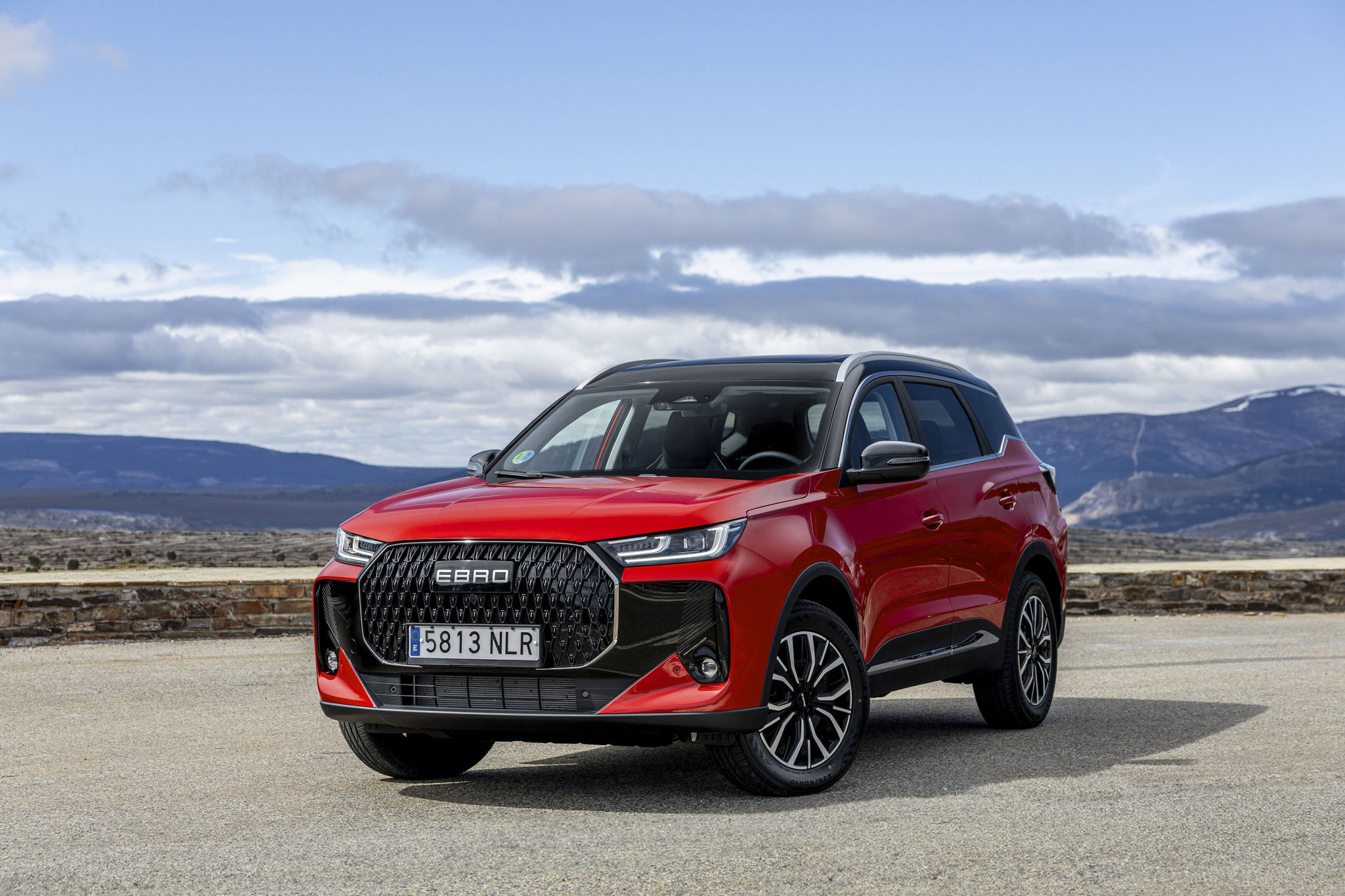
Ebro abre una nueva línea de montaje que multiplicará por tres la producción de coches en España La nueva línea de producción M1, que se enmarca en una inversión global de más de 150 millones de euros en la transformación de la planta de Barcelona, permitirá producir hasta 250 vehículos al día, entre ellos el futuro eléctrico de Ebro. Leer
expansion · 2 months ago