
German football delivers 1 million donation as 2026 World Cup kicks off in Mexico
Story Timeline
4 months · 8 summary articles
The 2026 FIFA World Cup kicks off Thursday in Mexico City, marking the start of a tournament that will span three nations, 104 matches, and distances that dwarf any previous edition. The opening fixture between hosts Mexico and Sweden at the Aztekenstadion will be more than a sporting spectacle: it will also serve as a platform for German football officials to deliver a €1 million donation to Mexican social projects, underscoring the tournament’s role beyond the pitch. DFB Sport Director Oliver Bierhoff and President Bernd Neuendorf are scheduled to hand over the cheque during the match, highlighting a decade-long partnership between German and Mexican football federations .
The 2026 edition is unprecedented in scale and ambition. For the first time, 48 teams will compete across 16 venues in the United States, Canada, and Mexico, with the longest travel distances ever recorded in World Cup history. A single flight from Los Angeles to Toronto covers 3,400 kilometres—more than the entire span of the 2014 tournament in Brazil. Ticket prices have surged accordingly, with some premium seats in New York and Dallas exceeding €10,000, a reflection of the event’s commercial gravity .
Yet the tournament’s most compelling narrative may lie in its cultural contradictions. In Mexico City, where only 13 of the 104 matches will be played, fans insist the atmosphere will surpass anything seen north of the border. “There won’t be the same vibe in the United States that we’re going to bring here,” declared one local organiser ahead of Thursday’s opener . Meanwhile, in Guadalajara, a city steeped in football history, criminal cartels are exploiting the influx of visitors, raising security concerns despite the festive mood .
The tournament also arrives amid geopolitical tensions. Somali referee Omar Artan was removed from the officiating roster after U.S. authorities denied him entry, a decision that has drawn criticism from FIFA and human rights groups . The event’s location in the United States, under a president whose administration has pursued restrictive immigration policies, has sparked debate over whether the World Cup can transcend political divisions. Some analysts argue that the presence of diaspora players—particularly from African and Middle Eastern nations—could challenge traditional national narratives and offer a more inclusive vision of the sport .
For Germany, the focus remains on the pitch. The national team arrived in Winston-Salem, North Carolina, on Monday, greeted by 3,000 fans at a public training session featuring veteran goalkeeper Manuel Neuer. “We have no stars, but we fight for each other until the last second,” said Curaçao coach Remko Bicentini ahead of his side’s Group A opener against Germany on Friday . With the tournament’s complexities on full display, the World Cup begins not just as a competition, but as a global experiment in unity, commerce, and identity.
Follow us for live European news
- 3
- 2
- 1
- 1
- 1
- 1
1 further source not geolocated
Articles

Fußball-Nationalmannschaft: Erstes Training mit Neuer vor 3.000 Fans in Winston-Salem Wenige Stunden nach der Ankunft im WM-Quartier absolviert die DFB-Auswahl ein öffentliches Training. Wichtigste sportliche Nachricht: Manuel Neuer ist mit vollem Torwart-Einsatz dabei.
tagesspiegel · 4 months ago
Edelfan des 1. FC Köln: Musiker Niedecken sorgt sich vor WM um den Fußball Er sehe die Gefahr, dass der Fußball „überkommerzialisiert werde, sagt der Musiker Wolfgang Niedecken kurz vor WM-Start.
tagesspiegel · 4 months ago

Football postcolonial : la Coupe du monde 2026 sera le Mondial des diasporas À la Coupe du monde, chacun son pays, son hymne et son drapeau. Mais, selon certains médias, cette édition, marquée comme aucune autre auparavant par limportance des diasporas, héritage des migrations, peut permettre de dépasser cette vision, alors même quelle se déroulera principalement aux États-Unis de Donald Trump, engagés dans une politique migratoire répressive. Et si, avec cette puissante ambivalence, la Coupe du monde 2026 était capable de nous faire croire encore au pouvoir transformateur du football ?
courrier international · 4 months ago

Les Diables Rouges ont atterri à Seattle après un peu moins de dix heures de vol Cest sur le coup de 14h38 heure locale, 23h38 heure belge que les Diables Rouges ont atterri lundi à Seattle aux États-Unis où ils ont établi leur camp de base pour la Coupe du monde 2026. ...
la libre · 4 months ago

En Argentine, la ville de Cutral Co mise sur une gigantesque statue de Lionel Messi pour attirer les touristes Dans cette cité de Patagonie, le capitaine de léquipe nationale de football culminera à 26 mètres de haut. La municipalité, qui se cherche un avenir en dehors du pétrole, entend figurer au livre Guinness des records et faire venir du monde.
le monde · 4 months ago
CM 2026. Ce club a trimis cei mai mulți jucători la Campionatul Mondial. O echipă uriașă lipsește din acest Top 10 Mai sunt câteva zile până când începe Campionatul Mondial din SUA, Mexic și Canada, iar echipele și-au alcătuit lotul pentru turenul final.
digi24 · 4 months ago
CM 2026. Furia fanilor față de interdicțiile de călătorie și restricțiile de viză din SUA: „Campionat Mondial pentru ei, nu pentru noi Când echipa de fotbal a Irakului s-a calificat la Campionatul Mondial la sfârșitul lunii martie, Abdulla Adnan a cumpărat bilete pentru meciurile țării sale împotriva Norvegiei și Franței, care vor avea loc luna aceasta în orașele americane Boston și Philadelphia, scrie BBC.
digi24 · 4 months ago
Fotboll – socialism i förklädnad? Den amerikanska högern brukade håna fotbollen som socialistisk och omanlig. Men inför sommarens VM i USA möts sporten av helt andra tongångar.
svenska dagbladet · 4 months ago
Socialism idag är att pappa betalar Socialismens nutida anhängare är självupptagna, krävande och saknar en tid som få ens har upplevt.
svenska dagbladet · 4 months ago

Corée du Nord, Léon XIV, Maroc, Coupe du Monde et Bleus : les informations de la nuit
courrier international · 4 months ago
Coupe du monde 2026 : à Mexico, «il ny aura pas aux Etats-Unis lambiance quon va mettre ici !» Seuls 13 des 104 matchs de la compétition se joueront au Mexique. Mais ses habitants tiennent à montrer que la passion du football se vit plus intensément chez eux que chez leurs voisins du Nord.
liberation · 4 months ago
FIFA lebt ihren amerikanischen Traum Am Donnerstag startet mit der Fußball-WM in den USA, Mexiko und Kanada ein Turnier der Superlative. Das Teilnehmerfeld ist so groß wie bei keiner WM davor, zudem sprengen die Distanzen zwischen den Austragungsorten alle bisherigen Maßstäbe – und ebenso die Ticketpreise. Das Potenzial hinter der Gigantomanie lässt den Fußballweltverband (FIFA) träumen. Aus europäischer Sicht ist es vielfach ein Paradigmenwechsel.
orf.at · 4 months ago
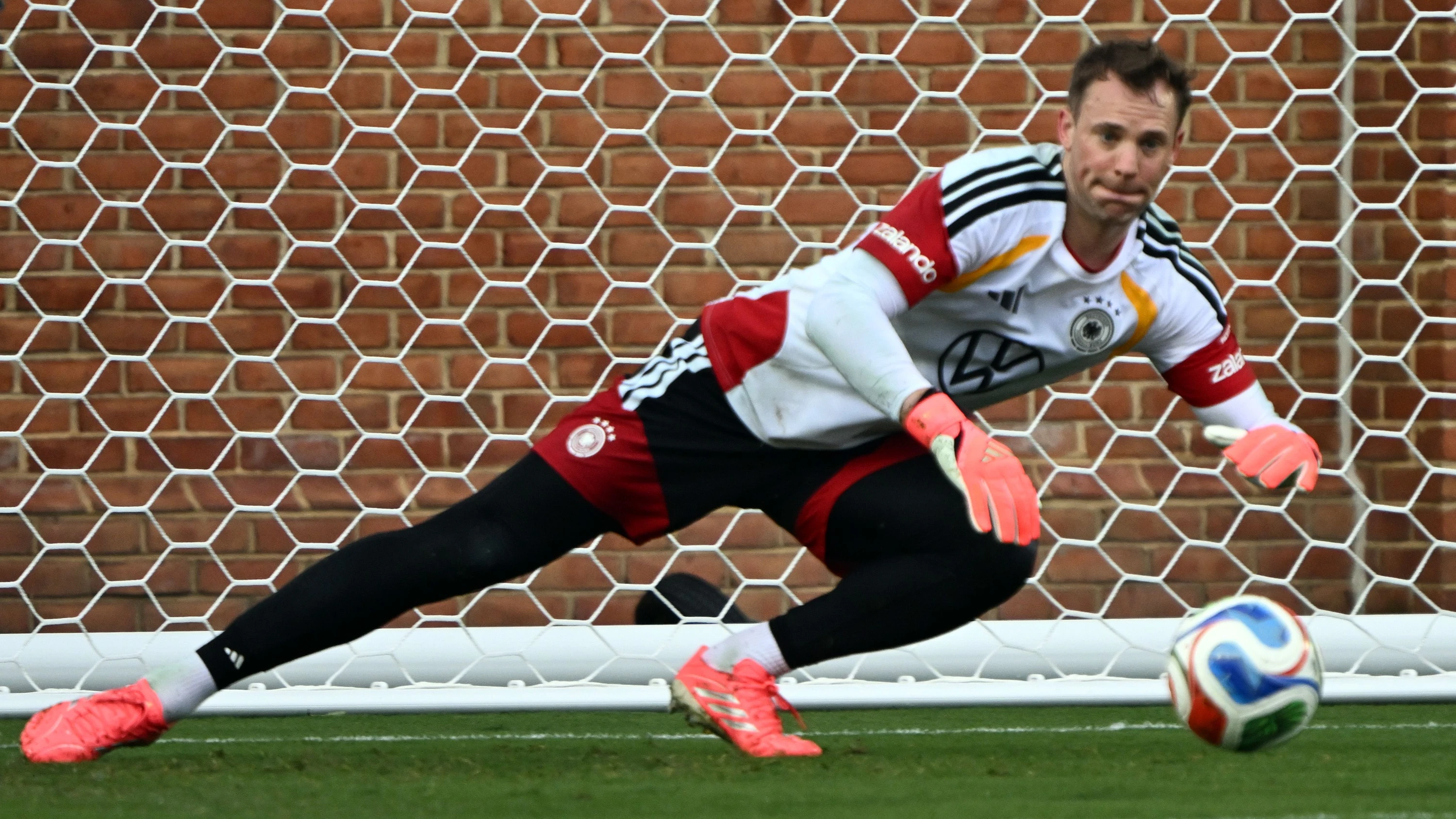
Start in Winston-Salem: Neuer vor Punktlandung – 3000 Fans beim deutschen Training Das DFB-Team ist im WM-Quartier angekommen. Zum Start gibt es eine Einheit vor begeisterten Fans in Winston-Salem. Mit dabei: Manuel Neuer. Und mit Lennart Karl leiden die 3000 Zuschauer noch einmal.
faz · 4 months ago
Fußball-Nationalmannschaft: Völler und Neuendorf überbringen Scheck für Mexiko-Hilfe Der DFB-Sportdirektor und der Verbandspräsident fliegen zum WM-Eröffnungsspiel. Die Partie im Aztekenstadion ist nicht der einzige Grund. Es geht auch um ein langjähriges soziales Engagement.
tagesspiegel · 4 months ago
Der Checkpoint am Morgen: 69-Tage-Staatssekretär will weitere 50.000 Euro + 69-Tage-Staatssekretär will weitere 50.000 Euro + Ob Ipanema, Favela: Franzi ist schon da + VIP-Tickets fürs Public Viewing mit dem Tagesspiegel zu gewinnen +
tagesspiegel · 4 months ago
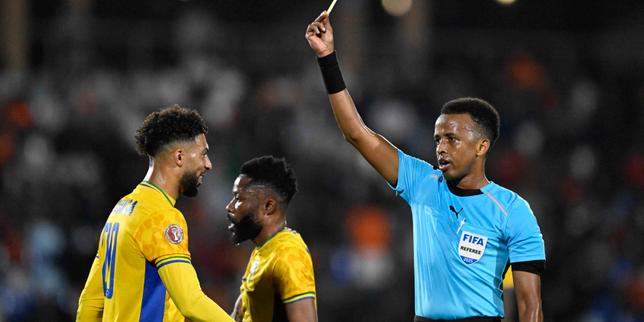
Coupe du monde 2026 : un arbitre somalien écarté après sêtre vu refuser lentrée aux Etats-Unis Omar Abdulkadir Artan, 34 ans, aurait été le premier arbitre somalien à tenir le sifflet lors dune phase finale de Coupe du monde. Les raisons du refus de son visa par les Etats-Unis ne sont pas encore connues.
le monde · 4 months ago
The criminal cartels cashing in on the World Cup – podcast Football fans are celebrating the tournament coming to Guadalajara. But with a brutal crime syndicate holding sway there, what are the risks for fans – and the government?Excitement is mounting in Mexico as the World Cup opens in Mexico City, then heads to the city of Guadalajara.Mexican journalist Leon Krauze is a fan. He was there the last time the World Cup came to Mexico and will be watching again. The city of Guadalajara has a mythical footballing past: Peles Brazil played there in 1970, then Zico and Socrates played there in 1986. There is a real football memory there, a love affair between Guadalajara and football in general, and I expect it to be a wonderful party. Continue reading...
theguardian · 4 months ago