
48-team World Cup kicks off: Spain and Iran make history in opening matches
Story Timeline
4 months · 20 summary articles
The 2026 FIFA World Cup, the first to feature 48 teams, kicked off on 11 June across the United States, Mexico and Canada, with the opening matchday on Monday, 15 June, delivering four fixtures from 18:00 local time. The expanded format, the largest in tournament history, has already drawn global audiences as the competition enters its second full day of action.
Spain and Belgium launched the second round of matches in the early hours of Tuesday, 16 June, following Monday’s opening fixtures. The Spanish side, among pre-tournament favourites, began their campaign against Cape Verde in a Group B encounter broadcast live across Europe and North America. Iranian fans, meanwhile, watched their national team make its long-awaited World Cup debut in a Group C clash against a seeded opponent, a fixture widely anticipated after months of intense media scrutiny. Uruguay also took to the field on Monday, adding further star power to a day rich in narrative potential.
Coverage of the expanded schedule is extensive. Broadcasters in Germany, Italy and the United States have dedicated extended programming blocks, with live analysis and multi-angle feeds available on major sports networks. In Germany, public broadcaster ARD and commercial channel RTL have scheduled rolling coverage from 18:00 CET, while in the United States, Fox Sports and Telemundo are airing simultaneous English- and Spanish-language broadcasts. Canadian viewers can follow the action on TSN and RDS, with French-language commentary available in Quebec.
The tournament’s 104 matches will unfold across 16 venues in 16 cities, from SoFi Stadium in Los Angeles to MetLife Stadium in New Jersey, and from Estadio Azteca in Mexico City to Commonwealth Stadium in Edmonton. Kick-off times vary by region, with early evening starts in North America and late-night fixtures in Europe and Asia to accommodate global audiences. The group stage concludes on 29 June, after which the knockout rounds will begin on 2 July.
With 48 nations competing for the first time, the expanded format has intensified competition and broadened the tournament’s geographic footprint. Analysts note that debutant teams such as Cape Verde and the Islamic Republic of Iran bring fresh narratives to a competition traditionally dominated by established footballing powers. The expanded format also increases the number of direct berths for confederations, with Europe gaining three additional spots and Africa two, reflecting FIFA’s push for greater inclusivity.
As the World Cup enters its second full day, the focus shifts from spectacle to competition, with early results already shaping group dynamics and fan expectations. The tournament’s organisers have reported record ticket sales and broadcast deals, underscoring football’s enduring global appeal.
Follow us for live European news
- 2
- 1
- 1
- 1
- 1
Articles
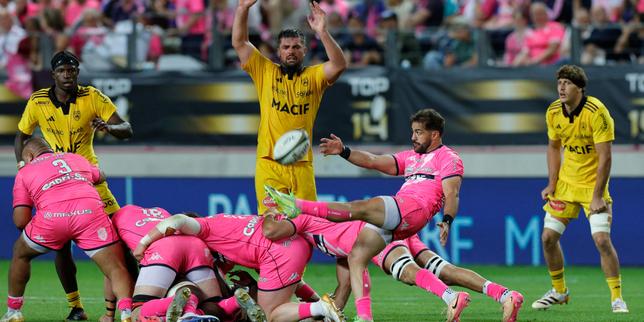
Top 14 : le Stade français et le Racing 92 qualifiés pour les demi-finales Vainqueurs en barrages de la Rochelle, les « soldats roses » affronteront Montpellier, alors que les « ciel et blanc », tombeurs de Pau, se frotteront au triple champion de France toulousain.
le monde · 3 months ago

Campionatul Mondial de fotbal 2026. Programul complet al meciurilor, rezultate și clasamente Campionatul Mondial de fotbal 2026 are loc în trei țări, SUA, Mexic și Canada și are loc în perioada 11 iunie - 19 iulie. Este primul turneu final al Cupei Mondiale din istorie care are la start 48 de echipe.
digi24 · 3 months ago
Μουντιάλ 2026: Πού θα δείτε σήμερα τους αγώνες της διοργάνωσης
protothema · 3 months ago
Termine, TV-Sender, Stadien: Spielplan der Fußball-WM 2026 in den USA, Kanada und Mexiko Die Fußball-WM 2026 findet in den USA, Kanada und Mexiko statt. Vom 11. Juni bis 19. Juli stehen 104 Spiele an. Hier finden Sie alle Infos zu Anstoßzeiten, Spielorten, Gruppen, Terminen und TV-Sendern.
faz · 3 months ago
Mondiali 2026, le partite di oggi: attesa per lesordio dellIran, in campo anche Spagna e Capo Verde | Orari e dove vederle in tv Lesordio della Spagna contro Capo Verde, unaltra delle favole più curiose di questo Mondiale. E ancora il Belgio, lUruguay, ma soprattutto la prima dellIran, la nazionale più discussa della Coppa del Mondo ormai da diversi mesi. Queste alcune delle squadre che scenderanno in campo lunedì 15 giugno e nella notte tra il 15 e il […] Larticolo Mondiali 2026, le partite di oggi: attesa per lesordio dellIran, in campo anche Spagna e Capo Verde | Orari e dove vederle in tv proviene da Il Fatto Quotidiano.
il fatto quotidiano · 3 months ago
So sehen Sie den Auftakt von Spanien und Belgien live im TV Bei der WM werden in der Nacht von Montag auf Dienstag ab 18 Uhr vier Partien ausgetragen. Mitfavorit Spanien eröffnet den Abend, in der Nacht hat auch der Iran seinen ersten Auftritt. Alle Infos zu den Partien und Übertragungen finden Sie hier.
welt.de · 3 months ago