Loading…
 Saturday, August 29Saturday, August 29
3 months · 6 summary articles
The European Commission proposed on Friday to extend temporary protection for Ukrainian refugees in the EU until 4 March 2028, but will exclude newly arrived men of fighting age from the scheme at Kyiv’s request. The measure, announced by the Commission on 26 June 2026, must now be approved by the Council of the European Union before it can enter into force.
Under the existing temporary protection directive, introduced in March 2022 in response to Russia’s full-scale invasion, about 4.4 million Ukrainians have been granted legal residence, access to labour markets, housing and social services across the bloc. The Commission’s proposal would maintain these rights for women, children, the elderly and other vulnerable groups until early 2028, while denying them to Ukrainian men liable for military service who arrive in the EU after the regulation takes effect.
The change reflects a direct request from Ukrainian authorities, who argue that preventing military-age men from leaving the country undermines national defence at a time when Russia’s war shows no sign of abating. “Whoever wants Ukraine to succeed militarily cannot take away its fighting men,” argued the German daily *Tagesspiegel* in an editorial on 26 June 2026 . Critics, however, have condemned the move as a form of indirect conscription. The left-leaning *taz* described it as “the EU acting as an enforcer of the Ukrainian army,” arguing that the policy risks turning the bloc into “an accomplice in forcing men back to the front” .
Denmark has already signalled its intention to adopt the exclusion immediately. On 26 June 2026, the Dutch daily *Volkskrant* reported that Copenhagen will stop granting temporary protection to conscript-age Ukrainian men, aligning its policy with the forthcoming EU-wide rule .
The Commission’s proposal comes as the temporary protection regime faces growing political scrutiny across the EU. While most member states have renewed their national implementations annually since 2022, the latest extension requires formal Council approval—a process that could face delays if some capitals seek further concessions. The Commission has urged swift adoption to avoid legal uncertainty for the more than four million Ukrainians currently benefiting from the scheme.
Follow us for live European news
4 further sources not geolocated

The European Commission proposed extending temporary protection status for individuals fleeing the war in Ukraine until March 2028 — but excluding newly arrived men of fighting age.
bluesky bot · 2 months ago

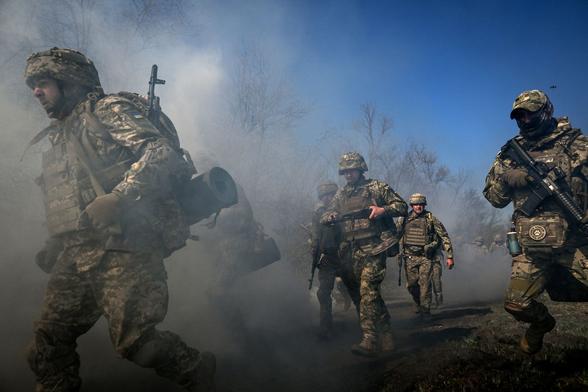
More than four years into the full-scale invasion, the Defense Ministrys military reform was meant to deliver long-awaited changes. Instead, it has triggered a fresh wave of frustration among soldiers.
bluesky bot · 2 months ago

UE prelungește protecția pentru refugiații ucraineni, dar introduce schimbări. Ce categorie este vizată Uniunea Europeană a decis, vineri, să prelungească până în martie 2028 măsurile de protecție temporară pentru cei 4,4 milioane de refugiați ucraineni aflați în statele membre. În același timp, Bruxelles-ul pregătește o modificare importantă: bărbații de vârstă militară care vor solicita de acum înainte acest statut nu vor mai putea beneficia de el, la cererea autorităților de la Kiev, relatează Kyiv Independent.
digi24 · 2 months ago

Újra tartalékos katona lett Ruszin-Szendi Romulusz honvédelmi miniszter Elmondta, hogy ezért semmilyen jövedelmet nem vesz fel.
hvg.hu · 2 months ago

Denemarken stopt met bescherming dienstplichtige Oekraïners
de volkskrant · 2 months ago
Comisia Europeană propune prelungirea cu încă un an a protecției temporare pentru refugiații din Ucraina Comisia Europeană a propus prelungirea până la 4 martie 2028 a protecției temporare acordate persoanelor care au fugit din calea războiului din Ucraina. Măsura trebuie aprobată de Consiliul UE.
adevarul · 2 months ago

Schutzstatus der EU: Die wehrfähigen Männer sollen in der Ukraine bleiben Seit Kriegsbeginn bekommen Ukrainer besonderen Schutz in der EU. Die EU-Kommission will das verlängern – allerdings mit einer Ausnahme, um die Kiew gebeten hat.
faz · 2 months ago
Vorschlag der Kommission: EU will wehrfähigen Ukrainern Flucht erschweren
sueddeutsche · 2 months ago
Bruselj na poziv Kijeva predlaga odvzem začasne zaščite novim ukrajinskim vojaškim obveznikom Evropska komisija je predlagala enoletno podaljšanje začasne zaščite za begunce iz Ukrajine v EU-ju do začetka marca 2028, a do začasne zaščite glede na predlog ne bi bili več upravičeni vojaški obvezniki, ki bodo na novo prišli v EU.
rtv slovenia · 2 months ago
European Commission seeks to extend temporary protection for Ukrainians, but not newly arrived military-age men The European Commission has proposed to extend temporary protection for Ukrainians until 4 March 2028, but not to grant it to newly arrived Ukrainian citizens who are prohibited from leaving Ukraine due to military service obligations.
ukrpravda · 2 months ago
Kein EU-Schutz für wehrpflichtige Ukrainer: Menschlich hart und doch notwendig Nach mehr als vier Jahren Krieg stellt sich die EU einem Kernwiderspruch: Wer den militärischen Erfolg der Ukraine möchte, darf ihr nicht die kämpfenden Männer entziehen.
tagesspiegel · 2 months ago
Wehrfähige Ukrainer verlieren Schutz: Die EU als Vollstreckungsgehilfe der ukrainischen Armee Während der Krieg mit Russland eskaliert, fasst die EU einen Beschluss, der Wehrpflichtige zurück an die Front zwingen soll. Eine Bankrotterklärung. mehr...
taz.de · 2 months ago
Since the beginning of russias full-scale invasion, we have mobilized more than EUR 300 billion in support: Yulia Svyrydenko
gdeltproject.org · 2 months ago
Ukraines long-awaited military reform falls short for long-serving troops #UkraineUkraines long-awaited militar...
mastodon bot · 2 months ago