Loading…
 Saturday, August 29Saturday, August 29
3 months · 9 summary articles
Israel will keep its troops in Lebanon, Syria and Gaza “for as long as necessary,” Defence Minister Israel Katz declared on Wednesday, as Israeli forces continued strikes in southern Lebanon and a Palestinian goalkeeper was killed in Gaza City.
Speaking to reporters in Tel Aviv, Mr Katz said the Israel Defence Forces would remain in the “security zones” it has established in all three territories until further notice, citing the need to protect civilians from “jihadist elements.” His remarks came hours after Lebanese President Joseph Aoun met army chief Rodolphe Haykal to discuss the expanded role of the Lebanese Armed Forces under a US-brokered framework agreement with Israel, which pledged to hand security control in southern Lebanon to Beirut. Yet on the ground, the situation remains unchanged: Israeli forces still occupy parts of southern Lebanon, launched fresh targeted strikes over the weekend, and Prime Minister Benjamin Netanyahu visited the occupied area to reiterate that the IDF will not withdraw while Hezbollah remains present .
In Gaza, Israeli raids killed at least three people and wounded more than ten in Gaza City on Wednesday morning, according to local monitors . The same day, Palestinian goalkeeper Saleem Al-Ashqar was shot dead by Israeli forces, drawing international attention to the targeting of civilians in the enclave .
The Israeli government also escalated its diplomatic offensive, with Mr Netanyahu warning that Israel would strike Iran again “if needed,” as a US-Iran memorandum brokered by Pakistan entered into force this week . Meanwhile, the Board of Peace—a group advocating for the dissolution of the UNRWA—announced its intention to shut down the agency’s operations in Gaza, a move welcomed by Israel’s embassy in London and the Foreign Ministry, which accused UNRWA of “terrorism” and “participation in October 7th” .
Domestic pressure on Mr Netanyahu mounted as former IDF chief Gadi Eisenkot, a prominent critic, gained ground in polls ahead of the autumn election, running neck-and-neck with the prime minister in some surveys . Opposition leaders accused the premier of “complete silence” after ultra-Orthodox rabbis branded the military a “teacher of gravest sins” over conscription protests, further straining the coalition’s unity amid ongoing wars .
Analysts warn that Israel’s refusal to withdraw from southern Lebanon risks undermining the US-brokered framework agreement, which aims to stabilise the border but has yet to alter the reality on the ground . With indirect US-Iran talks now underway in Doha, the coming weeks will test whether Israel’s military posture can coexist with broader regional de-escalation efforts.
Follow us for live European news
5 further sources not geolocated

⚡3 killed and more than 10 wounded in Israeli raids on Gaza City since this morning 💧 Rainbet.com the #1 Non-KYC Crypto Casino & Sportsbook @rainbetcom +18
telegram_War Monitors · about 2 months ago
Israel defence minister says troops will remain in Lebanon, Syria, Gaza until further notice READ: Follow @InsiderPaper for more news
telegram_Insider Paper · about 2 months ago

Au Liban, la communauté chiite entre fierté et amertume face au Hezbollah, au deuil et à lexil Au sortir dune guerre dévastatrice, relancée en mars par le Parti de Dieu contre Israël, sympathisants et opposants de lorganisation sinterrogent sur le sens des sacrifices consentis alors quun accord-cadre a été signé le 26 juin entre le Liban et lEtat hébreu.
le monde · about 2 months ago
Strawberry moon rises over Gazas ruins after Israeli attacks The full moon of June, known as the Strawberry Moon, illuminated the night sky above the wreckage of Nuseirat in Gaza on June 29, 2026, offering a somber backdrop to the destruction left behind by recent Israeli airstrikes. The lunar event underscored the ongoing humanitarian crisis in the region.
yenisafak · about 2 months ago
Lebanese president, army chief discuss troop role after Israel deal Lebanese President Joseph Aoun met with Army Commander Rodolphe Haykal on Tuesday to discuss the militarys expanding responsibilities under a US-brokered framework agreement with Israel, as Beirut prepares to assume security control in southern territories.
yenisafak · about 2 months ago
Israeli army closes charity headquarters in Nablus Israeli forces raided and closed the headquarters of the Attadamun Charitable Society in Nablus, confiscating equipment and aid for poor families. The army claimed the charity supports terrorism, but Palestinian officials condemned the move as part of a systematic policy to undermine Palestinian society.
yenisafak · about 2 months ago
Pro-Palestinian activist confronts Israeli tourists 🇻🇳 An altercation broke out in a Vietnamese restaurant after an American pro-Palestinian activist confronted a group of Israeli tourists over one mans admission that he had served in the Israeli army.The activist accused those who serve in the army of being involved in the killing of children and the bombardment of civilians in Gaza, and chanted Free Palestine.
yenisafak · about 2 months ago
Israeli opposition slams Netanyahu silence after ultra-Orthodox army slur Opposition leaders on Tuesday accused Prime Minister Benjamin Netanyahu of maintaining "complete silence" after ultra-Orthodox rabbis denounced the Israeli military as a "teacher of gravest sins" during protests against conscription, warning that the coalitions reliance on religious parties threatens national unity amid ongoing wars.
yenisafak · about 2 months ago
Gaza death toll exceeds 73,000 as Israeli attacks continue The Gaza Health Ministry said on Tuesday that Israeli attacks killed eight Palestinians and wounded 26 others in the past 24 hours, bringing the cumulative death toll from the genocide in the blockaded enclave to 73,066 since October 2023 as medical facilities continue to document casualties amid relentless ceasefire violations.
yenisafak · about 2 months ago
On the Arab Leagues new Secretary-General... Nabil Fahmy, the new Secretary-General of the Arab League, officially assumed his post today, July 1, 2026. The 75-year-old Fahmys candidacy was unanimously approved and announced to the public at the Arab League foreign ministers meeting on March 29. The statement emphasized that Fahmy possesses the experience and knowledge to deal with international crises. Fahmy, who took over from outgoing Secretary-General Ahmed Aboul Gheit, noted that assuming the role at "a time when those who trample on
yenisafak · about 2 months ago
President Erdoğan: Israeli slanders attempt to cover up Gaza genocide President Recep Tayyip Erdoğan has dismissed Israeli slanders against Türkiye as attempts to cover up the barbarity in Gaza. He also announced that Türkiye has dispatched 75 rescue personnel to earthquake‑hit Venezuela and highlighted the countrys defence industry achievements.
yenisafak · about 2 months ago
Türkiye warns UNRWA faces unprecedented political pressure Türkiyes UN ambassador warned on Tuesday that the UN agency for Palestinian refugees faces mounting political attacks and chronic funding shortfalls, announcing a fresh $10 million contribution while condemning Israeli actions against the agencys personnel.
yenisafak · about 2 months ago
Türkiyes intel chief meets Egyptian counterpart in Ankara National Intelligence Organization chief Ibrahim Kalin on Tuesday hosted Egyptian General Intelligence Service head Hassan Rashad in Ankara to discuss Gaza ceasefire violations and regional security files, security sources said.
yenisafak · about 2 months ago
Netanyahu vows Israel will strike Iran again if needed Israeli Prime Minister Benjamin Netanyahu said Tuesday that Israel stands ready to strike Iran again "if needed," vowing that Tehran "will not have nuclear weapons" as a US-Iran memorandum brokered by Pakistan entered into force this week.
yenisafak · about 2 months ago
US House blocks resolution to withdraw troops from Lebanon The House of Representatives on Tuesday rejected a war powers resolution sponsored by Congresswoman Rashida Tlaib that sought to mandate the withdrawal of US armed forces from hostilities in Lebanon, with the measure failing in a 189-235 vote as debate over American military involvement continued.
yenisafak · about 2 months ago
Canadian group slams removal of Palestinian keffiyeh at graduation The National Council of Canadian Muslims has condemned an incident at a Saskatoon high school where a staff member allegedly removed a Palestinian keffiyeh from a graduating student during a ceremony, calling it part of a disturbing pattern of anti-Palestinian racism in Canadian educational institutions.
yenisafak · about 2 months ago
Board of Peace prepares to oversee Gaza humanitarian shelters Israel Hayom reported that the Board of Peace is expected to launch a pilot program in the Gaza Strip within weeks to administer humanitarian shelter centers outside Hamas-controlled areas. The first site is planned near Rafah, where civilians will reportedly be relocated as part of a broader governance and security initiative backed by an international force.
yenisafak · about 2 months ago
Former PM Bennett: Netanyahu incapable of governing under far‑right control Former Prime Minister Naftali Bennett has said Benjamin Netanyahu is incapable of governing because far‑right ministers and ultra‑Orthodox groups now control him. He warned that prolonged wars are draining Israels economy and military reserves, and that the governments conduct has badly damaged Israels international standing.
yenisafak · about 2 months ago
Netanyahu wants to end US aid to Israel within decade Israeli Prime Minister Benjamin Netanyahu has said he wants to phase out US financial assistance over the next decade, describing it as welfare. He argued that Israels economy, now approaching $1 trillion, can fully sustain its military and financial needs.
yenisafak · about 2 months ago
Eisenkot accuses Netanyahu of fabricating Iran nuclear threat Former Israeli army chief Gadi Eisenkot on Wednesday accused Prime Minister Benjamin Netanyahu of fabricating claims that Iran possesses nuclear weapons in order to frighten the Israeli public, as the opposition leader formally announced his bid to challenge the premier in upcoming elections.
yenisafak · about 2 months ago
Israeli settlers storm Al-Aqsa Mosque compound, perform rituals The Palestinian news agency WAFA reported on Wednesday that dozens of Israeli settlers stormed the Al-Aqsa Mosque compound in occupied East Jerusalem under the protection of Israeli police, touring its courtyards and performing Talmudic rituals amid ongoing tensions over the flashpoint holy site.
yenisafak · about 2 months ago
Gadi Eisenkot: Der israelische Ex-General, der Netanyahu herausfordert [premium] Der frühere israelische Armeechef könnte dem Premier bei der Wahl im Herbst gefährlich werden. In den Umfragen liegt der 66-Jährige gleichauf oder knapp hinter dem Likud-Chef. In vielerlei Hinsicht verkörpert er den Anti-Netanyahu.
die presse · about 2 months ago
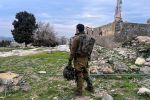
Minister: Israels Soldaten bleiben auf unbegrenzte Zeit im Libanon und Gaza Soldaten bleiben laut Verteidigungsminister Katz in den "Sicherheitszonen", um "Einwohner und Gemeinden vor jihadistischen Elementen" zu schützen
der standard · about 2 months ago

Locked up like an animal in cage...forced to witness rape and slaughter...tortured until they prayed for death: October 7 hostages most horrifying accounts yet of what they endured at the hands of Hamas The Israelis taken hostage by Hamas gunmen from the Nova music festival massacre on October 7, 2023, have revealed the scale of the horror they endured at the hands of their captors.
dailymail · about 2 months ago
Secretive Gaza meetings in Cyprus as plan to isolate Hamas gathers pace Board of Peace talks on Gazas post-war future face funding crises and warnings of a colonial occupation.
aljazeera · about 2 months ago

⚡ NEWSIsraeli forces kill Palestinian goalkeeper in GazaPalestinian goalkeeper Saleem Al-Ashqar was shot dead by Israeli forces in Gaza. The incident highlights the ongoing violence and casualties within the conflict zone, drawing international attention to the specific targeting of civilians or non-combatants.📰 #Military #Geopolitics #GeoWire
mastodon bot · about 2 months ago
#NEW 🇺🇸🇮🇱🇺🇳🇵🇸 - Earlier today, the Board of Peace states its goal to dismiss the UNRWA and its operations in Gaza in the future via X. Israels Embassy in Britain and the Foreign Ministry have condoned this decision, accusing the UNRWA of "terrorism" and "participation in October 7th".
telegram_GeoPWatch · about 2 months ago
PMs plan to move embassy to Jerusalem faces roadblocks A proposal by Slovenian Prime Minister Janez Janša to relocate the countrys embassy in Israel from Tel Aviv to Jerusalem and freeze the recognition of Palestine has been met with domestic and international pushback and is at risk of stalling as even his allies have expressed trepidation about a ...
the slovenia times · about 2 months ago

"Israel tem um poder de chantagem decisivo" Azeredo Lopes, antigo ministro da Defesa, detalha como o governo de Netanyahu, focado na sobrevivência política, atua para impedir a normalização de relações entre os Estados Unidos e o Irão.
observador · about 2 months ago
Ministrul Apărării, Israel Katz: Armata israeliană va rămâne „pe termen nelimitat în Liban, Siria şi Gaza Ministrul israelian al apărării, Israel Katz, a declarat miercuri că armata israeliană va rămâne „pe termen nelimitat în ceea ce ea numeşte „zone de securitate stabilite în Liban, Siria şi Fâşia Gaza, relatează AFP.
digi24 · about 2 months ago