
EU Migration Pact delays family reunions, deepening asylum backlogs across Europe
Story Timeline
4 months · 2 summary articles
Sweden passes 'good behaviour' law revoking immigrant permits over minor infractions
EU Migration Pact delays family reunions, deepening asylum backlogs across Europe
The European Migration Pact, which takes effect this Friday, will prolong family reunification waits for thousands of asylum seekers already trapped in bureaucratic limbo, including Walaa, a Syrian mother who has spent 2.5 years waiting to reunite with her children. From 12 June 2026, the Dutch Immigration and Naturalisation Service (IND) will prioritise new asylum claims over the 50,000 older cases already on its books, pushing back processing times and deepening the anguish of families like Walaa’s. “My youngest is starting to forget me,” she told Dutch daily *NRC* .
The pact’s centrepiece is a continent-wide shift toward faster asylum decisions and stricter family-reunification rules, a response to record migration flows and rising political pressure. Under the new framework, member states will process new claims within six months, while backlogs of pending cases—including those lodged before 2024—face indefinite delays. The IND’s decision to deprioritise older files means Walaa’s children, stranded in Lebanon, will likely wait years longer for the permits they need to join her in the Netherlands.
Across the EU, governments are scrambling to implement the pact’s provisions. In Portugal, the government is weighing whether to back the centre-left Socialist Party (PS) or the far-right Chega party in a parliamentary vote on the *PSU*—a legislative package tied to the pact—after Chega demanded cuts to social benefits for immigrants as a condition for approval . Meanwhile, Finland’s new deportation laws, which took effect this week, aim to accelerate both voluntary and forced returns, with Interior Minister Mari Rantanen (Finns Party) citing “smoother voluntary returns, more efficient forced returns and stronger national security” as key objectives .
Critics warn the pact risks creating a two-tier system. Labour migration advocates argue the rules ignore economic realities: the European Training Foundation (ETF) notes that migrant workers’ skills are “a vital resource for addressing the transformations taking place in contemporary economies” . Yet the pact’s family-reunification curbs could deter precisely the workers Europe needs, prolonging separations that fuel social strain.
In the Netherlands, Walaa’s case has become a symbol of the pact’s human cost. With no clear timeline for resolution, her story underscores a broader European dilemma: balancing control over migration with the moral imperative to protect families fleeing war. As the pact’s first week begins, the IND’s inbox is filling with new claims—and the clock is ticking for those already waiting.
Follow us for live European news
Articles

HOMNE EESTI ⟩ Tähe Lilleorg: eesti keel võiks olla justkui uus prantsuse keel Kui rääkida homsest Eestist, võetakse tihti kõneaineks ühiskond ja poliitika. Kahjuks ei ole paljud inimesed veel mõistnud, kui oluline on selles pingereas eesti kultuuriruum. Kas eesti noored tunnevad piisavalt huvi meie eelkäijate kommete ja kultuuri vastu? Kuna meie riik on geograafiliselt väike, peame leidma muid võimalusi kaardil püsimiseks, kirjutab 15-aastane Keila kooli õpilane Tähe Lilleorg.
postimees · 4 months ago

Seguro: "Tenho conseguido equilibrar o sistema político" Seguro chegou aos Açores para as celebrações do 10 de junho no dia em que completa 3 meses em Belém. Tentou afastar polémicas à volta da utilização da Base das Lajes pelos Estados Unidos.
observador · 4 months ago
Fine vita, la nuova proposta di Forza Italia: ampliati i requisiti, ok allassistenza gratuita dei medici del Servizio sanitario Sul fine vita Forza Italia porta avanti la sua guerra di posizione. Dopo aver ottenuto la riapertura del termine, gli azzurri hanno presentato una serie di emendamenti al testo base, approvato lanno scorso e da allora fermo nelle Commissioni Giustizia e Affari sociali del Senato. Le proposte di modifica, firmate dalla capogruppo Stefania Craxi e […] Larticolo Fine vita, la nuova proposta di Forza Italia: ampliati i requisiti, ok allassistenza gratuita dei medici del Servizio sanitario proviene da Il Fatto Quotidiano.
il fatto quotidiano · 4 months ago
Der Trend geht zu kurzen Namen: Sophia und Noah wieder auf Platz eins der beliebtesten Babynamen Mit dem Aufstieg von Theo und Leo in der Hitliste der Babynamen festigt sich der Trend zu kurzen Namen. Ganz vorn liegen zwei „moderne Klassiker, die sich schon länger großer Beliebtheit erfreuen.
tagesspiegel · 4 months ago
Fotos am Flughafen gemacht: Deutscher nach Spionagevorwurf auf Kreta wieder frei Ein deutscher Tourist hat auf Kreta das Wochenende in Polizeigewahrsam verbracht, weil er Fotos am Flughafen gemacht hatte. Nun kann er seinen Urlaub fortsetzen.
tagesspiegel · 4 months ago
Bezahlen im Urlaub: Karten im Ausland: Sperren und Limits vorab prüfen Am besten kann den Urlaub im Ausland genießen, wer auch „flüssig ist. Beim Vorbereiten der Reisekasse sollte man daher auch den Verfügungsrahmen im Blick haben. Was noch?
handelsblatt · 4 months ago
Settlers drag dog carcass Illegal Israeli settlers tied a dogs carcass to a vehicle, dragged it through the area, and later dumped it near Palestinian homes in Al-Mufaqara village in Masafer Yatta.🎥 @eyeonmasaferyatta
yenisafak · 4 months ago
Preşedintele Miguel Diaz-Canel: Statele Unite au în vedere trei scenarii împotriva Cubei Preşedintele cubanez Miguel Diaz-Canel a declarat într-un interviu publicat luni că Statele Unite au în vedere trei scenarii împotriva Cubei: provocarea unei explozii sociale prin presiune economică, preluarea controlului asupra economiei sau recurgerea la agresiune militară.
digi24 · 4 months ago
Governo vai preferir PS ou Chega na PSU? O Chega quer exige limitar os apoios sociais para imigrantes como condição para aprovar a PSU.
publico · 4 months ago
Hoe kan de krijgsmacht het thuisfront het beste betrekken? Als het misgaat en het vertrouwen ontbreekt, dan willen familieleden bloed zien Zijn Nederlandse militairen gevechtsklaar? En is dat thuis onderwerp van gesprek? Vijftig defensiemedewerkers praatten daarover op een landgoed in Hilversum. „In Afghanistan had ik mijn broer als contactpersoon opgegeven, omdat ik niet wilde dat mijn vrouw het als eerste zou horen als mij iets overkwam.
nrc · 4 months ago
De Syrische Walaa wacht al 2,5 jaar op haar gezin, door het migratiepact zal dat nog langer duren. Mijn jongste begint me te vergeten De nieuwe regels van het Europese migratiepact, dat vrijdag ingaat, zullen ook gevolgen hebben voor gezinshereniging. De IND geeft vanaf dan prioriteit aan nieuwe asielaanvragen. Voor de vijftigduizend oude zaken die al zijn ingediend, zullen de wachttijden verder oplopen.
nrc · 4 months ago
Labour migration offers a triple win: for migrants, countries of origin and host countries For the European Training Foundation (ETF), the skills of migrant workers represent a vital resource for addressing the transformations taking place in contemporary economies and societies
eunews.it · 4 months ago

300 migrants bound for UK kidnapped, tortured and threatened with organ removal According to the BBC , the group of young men from Iraqi Kurdistan were captured by a militia in Libya where they were held for ransom and subjected to abuse.
dailymail · 4 months ago

Trumps former border chief wants to deport one-third of all Americans – claiming they are all migrants Bovino appeared to confirm he was exploring a 2028 presidential run in claiming, without evidence, that roughly a third of the US population is comprised of illegal immigrants
independent · 4 months ago

A parasite that devours living flesh is spreading in Texas—and officials are racing to stop it Two more cases of the New World screwworm have been confirmed in Texas, demonstrating the difficulty of stopping the spread of a pest that potentially could devastate the nations cattle industry
independent · 4 months ago
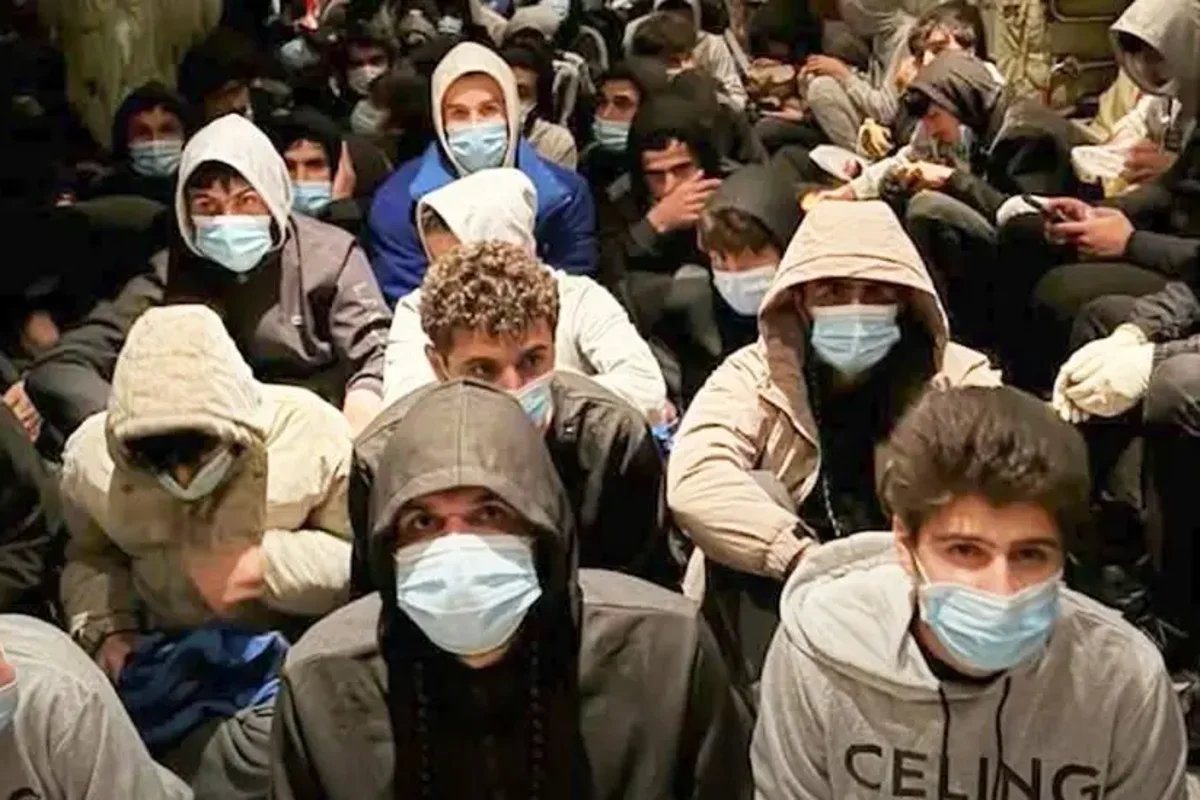
Hundreds of migrants heading for UK kidnapped, tortured and threatened with organ removal We did not see the sun for six months, a 16-year-old hostage said, describing depraved conditions where over 170 captives shared a single toilet
independent · 4 months ago

Trump team wants to make it harder for immigrants to legally work New DHS proposal would impose sweeping restrictions on work permits as administration cracks down on legal immigration pathways
independent · 4 months ago

America grows more socially conservative as more people say they are against having a baby outside marriage In the past year, the share of Americans who consider having a baby outside marriage acceptable dropped nearly 10 points
independent · 4 months ago

The Latest: House poised to fund immigration enforcement for the rest of Trumps term House Republicans hope to approve nearly $70 billion for immigration enforcement on Tuesday, which would fund Homeland Security throughout President Donald Trumps time in office
independent · 4 months ago
Finlands expedited deportation, entry ban laws go into effect this week "Smoother voluntary returns, more efficient forced returns and stronger national security" are among the government programmes key objectives, Interior Minister Mari Rantanen (Finns) noted.
yle.fi · 4 months ago
Trecento migranti curdi sequestrati e torturati in Libia per mesi: I miliziani minacciavano di asportarci i reni. Linchiesta della Bbc Rapiti, torturati e minacciati di espianto forzato di organi. È quanto accaduto la scorsa estate a 300 migranti curdi diretti nel Regno Unito. Lo riporta la Bbc. I giovani, tutti provenienti dal Kurdistan iracheno, sono stati catturati in Libia da una milizia locale: gli aguzzini hanno chiesto alle famiglie un riscatto di 5mila dollari, minacciando […] Larticolo Trecento migranti curdi sequestrati e torturati in Libia per mesi: I miliziani minacciavano di asportarci i reni. Linchiesta della Bbc proviene da Il Fatto Quotidiano.
il fatto quotidiano · 4 months ago

„Basteln sich ihre eigene realitätsferne Welt– Greenpeace-Aktivisten überkleben Autobahn‑Schild Aktivisten von Greenpeace haben an der A93 bei Kiefersfelden ein Verkehrsschild überklebt, um für ein Tempolimit von 100 km/h zu werben. Die Polizei prüft die Verstöße, die CSU spricht von einer „realitätsfernen Aktion.
welt.de · 4 months ago
„Er demaskiert sich mit solchen Aussagen selbst In einem Interview spricht AfD-Politiker Björn Höcke dem deutschen Westen das „Deutschsein ab. Seiner Auffassung nach, seien es Amerikaner, die Deutsch sprechen. „Er macht diesen Zustand für die Polarisierung der Gesellschaft im Land verantwortlich, sagt WELT-TV-Redakteur Sebastian Vorbach.
welt.de · 4 months ago
Ausländerfeindliche Gewalt in Südafrika: Präsident Ramaphosa stellt sich vor Migranten In einer Rede verspricht Südafrikas Präsident bedrängten afrikanischen Migranten Schutz vor selbst ernannten Bürgerwehren. Doch die wollen weitermachen. mehr...
taz.de · 4 months ago