
Sweden passes 'good behaviour' law revoking immigrant permits over minor infractions
Story Timeline
4 months · 29 summary articles
On Monday, Sweden’s parliament passed a contentious “good behaviour” law that allows authorities to revoke the residency permits of immigrants who commit minor infractions such as unpaid debts, undeclared work, or alleged links to extremist organisations, a move immediately condemned by civil society groups as an assault on fundamental freedoms.
The legislation, adopted by a majority vote in the Riksdag, makes “good conduct” a formal condition for foreign nationals to maintain their right to remain in Sweden. Authorities will now be empowered to withdraw permits if immigrants breach unspecified behavioural standards, a framework critics argue risks criminalising poverty and dissent.
In parallel, Sweden’s government confirmed that six Swedish public authorities will be legally obliged to report suspected immigration violations to police and the Migration Agency starting this summer, a policy shift critics have labelled an Orwellian expansion of state surveillance.
Across the Baltic, Romania’s Senate has fired a diplomatic salvo, demanding that Stockholm immediately repatriate two Romanian minors, Sara and Tiana Samson, and reopen their case after Swedish authorities banned direct contact between the girls and their biological parents. The upper house in Bucharest approved a resolution on Monday with 94 votes in favour, calling for family reunification and a fresh review of the Swedish decisions.
The twin controversies erupted as France’s parliament formally endorsed the restitution of the remains of six Indigenous Amazonians who were forcibly exhibited in Parisian “human zoos” in 1892. Of 33 people taken from French Guiana, eight died during the ordeal; the lower house in Paris voted on Monday to return the surviving remains to Cayenne, closing a 134-year-old chapter of colonial exploitation.
Human rights organisations across Europe warned that Sweden’s new residency rules risk setting a dangerous precedent, conflating administrative breaches with moral turpitude and eroding the principle of proportionality in migration policy. Critics also highlighted the potential chilling effect on free expression and civic participation, as vague definitions of “extremist links” could encompass legitimate political activism. Swedish authorities have yet to publish detailed enforcement guidelines, leaving lawyers and migrant support groups scrambling to interpret the scope of the new powers.
Follow us for live European news
- 2
- 1
- 1
- 1
2 further sources not geolocated
Articles

Swedens parliament passed a law allowing authorities to revoke immigrants residency permits based on bad behavior, such as having unpaid debts, doing undeclared work or having links to extremist organizations reut.rs/3SrgwNj
bluesky bot · 3 months ago

Betrug mit Sprachkenntnissen: Polizei zerschlägt Berliner Bande für gefälschte Deutsch-Zertifikate Deutschkenntnisse müssen Ausländer etwa bei ihrer Einbürgerung nachweisen. Dafür brauchen sie ein schriftliches Zertifikat nach einer Prüfung. Offensichtlich kursieren da auch Fälschungen.
tagesspiegel · 3 months ago
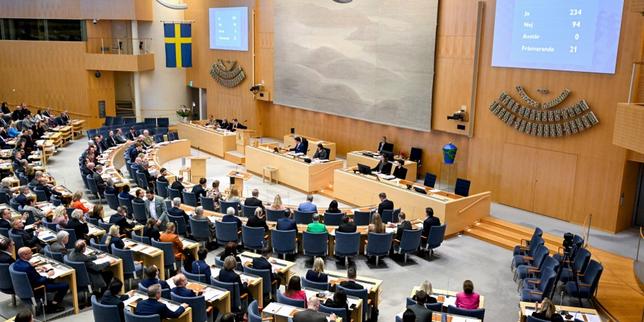
Avoir une « bonne conduite » devient une condition pour vivre en Suède Lundi, les députés ont adopté un projet de loi qui fait de la « conduite » des ressortissants étrangers une condition pour loctroi dun titre de séjour. La mesure est dénoncée par de nombreuses organisations, qui y voient une menace pour la liberté dexpression et de manifestation.
le monde · 3 months ago
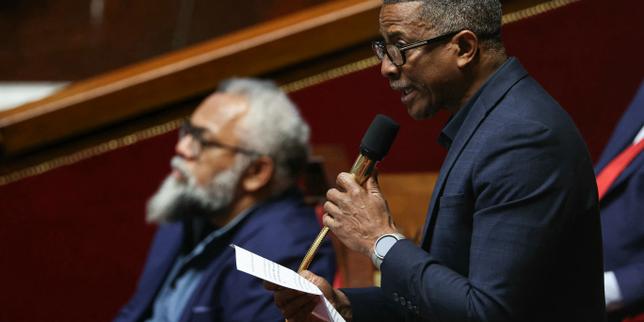
Le Parlement entérine la restitution à la Guyane des restes de six Amérindiens, exhibés dans des « zoos humains » En 1892, 33 Amérindiens furent emmenés par paquebot vers lHexagone et exhibés vivants dans des « zoos humains » au Jardin dacclimatation, à Paris. Huit dentre eux ne survécurent pas.
le monde · 3 months ago
Senatul României cere repatrierea surorilor Sara și Tiana Samson din Suedia și reanalizarea cazului lor de către autoritățile suedeze Senatul a adoptat luni, cu 94 de voturi „pentru, o declarație prin care solicită autorităților suedeze să reanalizeze deciziile de interzicere a contactului direct dintre minorele Sara și Tiana Samson și părinții lor biologici și cere repatrierea celor două fete în România, în scopul reunificării familiei.
digi24 · 3 months ago
Vandelskrav för uppehållstillstånd skärps
svenska dagbladet · 3 months ago
Informationsplikt införs i sommar Sex myndigheter blir skyldiga att informera polis och Migrationsverket om de misstänker att en utlänning saknar rätt att vistas i Sverige.
svenska dagbladet · 3 months ago
«Zoos humains» : 130 ans après, le Parlement donne son feu vert à la restitution à la Guyane des restes de six Amérindiens LAssemblée a voté à lunanimité ce lundi une loi issue du Sénat ouvrant la voie au retour en Guyane des dépouilles de ces six personnes, mortes après avoir été exposées au Jardin dacclimatation en 1892 et restées bloquées en France depuis.
liberation · 3 months ago

Sweden passes good behaviour law to kick out misbehaving immigrants
news.yahoo.com · 3 months ago