
Moderna and Merck report mRNA cancer vaccine cuts melanoma recurrence risk in late-stage trial

Story Timeline
14 hours · 2 summary articles
Moderna and Merck report mRNA cancer vaccine cuts melanoma recurrence risk in late-stage trial
Moderna shares surge over 150% after positive melanoma vaccine trial results: U.S. Treasury doubles bond buybacks
Continuation
Moderna and Merck announced on Wednesday that a personalized mRNA cancer vaccine, developed jointly, reduced the risk of recurrence and spread of melanoma in a late-stage trial involving over 1,100 patients. The vaccine, called Intismeran, was tested in combination with Merck’s immunotherapy drug Keytruda and demonstrated a "clinically meaningful improvement" over Keytruda alone, according to the companies .
The trial focused on patients with high-risk melanoma that had been surgically removed but carried a significant risk of returning. Moderna President Stephen Hoge said thousands of melanoma patients could benefit within the first few years of approval, pending regulatory clearance . The companies plan to submit the full results at an upcoming medical meeting and have begun discussions with regulators .
Moderna’s stock surged as much as 177% on Wednesday, while Merck’s shares rose 12.6% following the announcement . The vaccine represents the first positive Phase 3 results for an mRNA-based cancer therapy, the companies stated in a joint release .
The trial divided 1,137 patients into groups, with two-thirds receiving the vaccine alongside Keytruda and the remainder treated with Keytruda alone. Study leader Georgina Long, medical director of the Melanoma Institute Australia, called the results a "milestone in the adjuvant treatment" of melanoma .
Beyond melanoma, the companies are conducting late-stage trials for non-small cell lung cancers and mid-stage trials for bladder and kidney cancers, with early-stage studies underway for pancreatic and stomach cancers. Additional results are expected in the next one to two years, Hoge told Reuters . Roche and BioNTech are also testing a similar mRNA-based treatment, autogene cevumeran, in mid-stage studies for colon and pancreatic cancers, with colon cancer trial results anticipated in 2027 .
The safety profile of the combination treatment aligned with earlier studies, showing no new risks, according to Hoge . The companies did not specify a timeline for regulatory approval but indicated they are preparing submissions to authorities.
Follow us for live European news
- 2
- 2
- 2
- 2
- 1
- 1
- 1
- 1
- 1
- 1
5 further sources not geolocated
Articles

Analysis-Moderna, Merck breakthrough could usher in wave of cancer vaccines
news.yahoo.com · about 2 hours ago

Moderna pins hopes on game-changer for cancer vaccines Technology behind blockbuster Covid-19 jabs is now yielding promising results in oncology treatment
financial times · about 2 hours ago
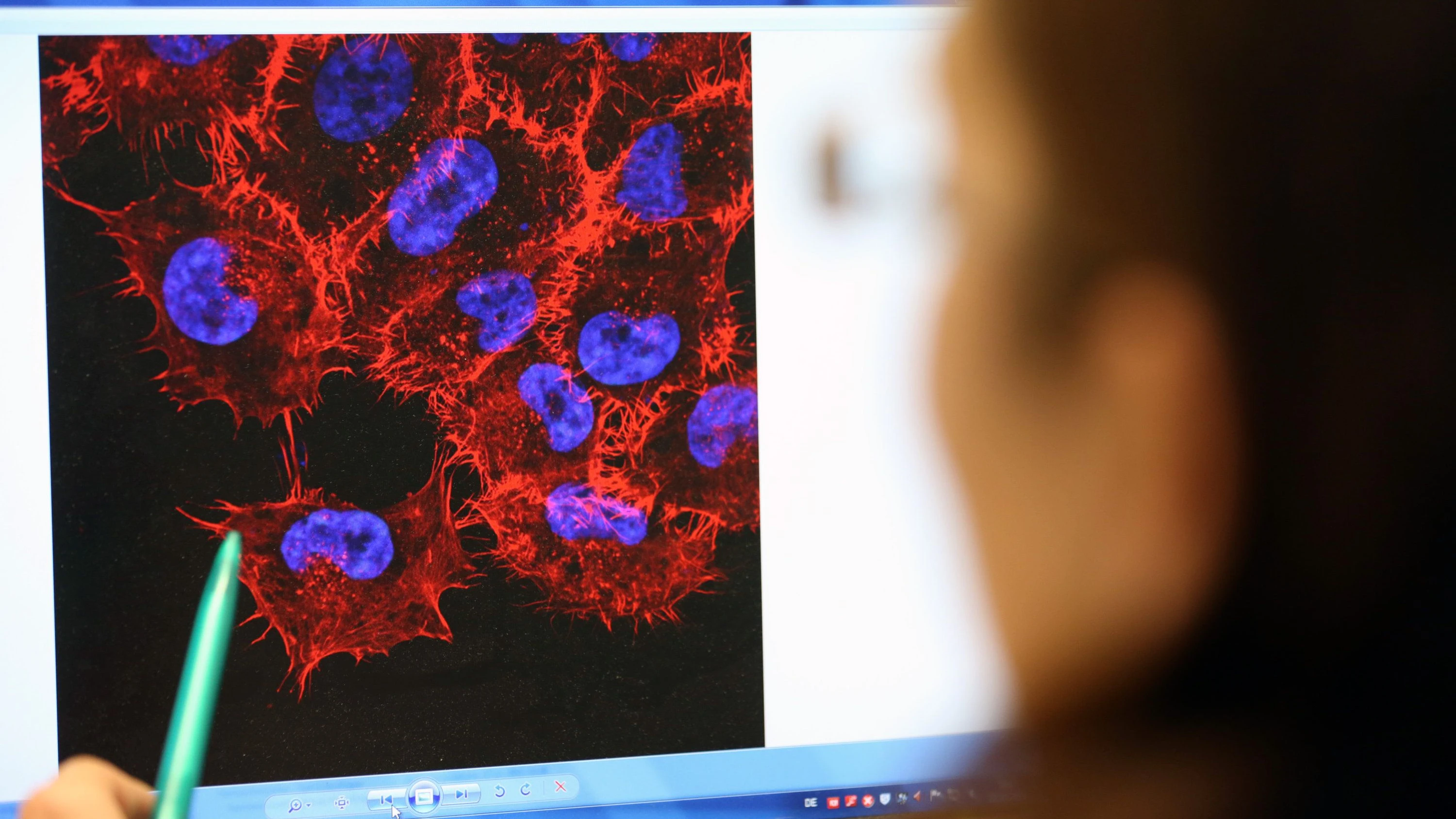
Merck und Moderna: Positive Testergebnisse für Hautkrebs-mRNA-Impfstoff Die Covid-Pandemie machte mRNA-Impfstoffe bekannt. Stets war die Hoffnung, dass sie auch bei Krebs wirken. Zwei US-Pharmafirmen könnten nun Patienten Hoffnung machen, die an schwarzem Hautkrebs leiden.
faz · about 3 hours ago
Pharma stock surges on cancer vaccine news Modernas shares surged 155 percent on the US stock market after the company and Merck published positive trial results on Wednesday for a melanoma vaccine. The companies developed an mRNA-based cancer vaccine that, in combination with Mercks immunotherapy drug Keytruda, can reduce the risk of melanoma recurrence and spread. Based on a phase 3 trial […]
cphpost · about 4 hours ago

Hundreds of thousands of type 2 patients could benefit from switching to Onswik following approval, especially those who need help with injections
bluesky_The Times · about 4 hours ago
Morning Briefing: Kommt die erste Krebsimpfung schon im kommenden Jahr? Moderna und der US-Partner Merck legen Studien für einen neuen Krebsimpfstoff vor – und nähren damit nicht nur die Fantasie der Anleger. Mit mRNA könnten Tumore per Impfung verhindert werden.
handelsblatt · about 4 hours ago
Morning Briefing Podcast: Pharma: Aktionäre bejubeln Krebsstudien-Erfolg von Moderna Moderna und Merck erfreuen nicht nur Patienten mit guten Ergebnissen eines Krebsimpfstoffs - sondern auch ihre Aktionäre. Um 176 Prozent sprang die Moderna-Aktie gestern. Auch, weil es hier um mehr als einen Impfstoff geht.
handelsblatt · about 4 hours ago
Syöpälääkkeet | Ihosyöpään ollaan saamassa rokotehoito Koronarokotteestaan tunnetun yhdysvaltalaisen Modernan rokotehoito esti yhdessä toisen syöpälääkkeen kanssa melanooman leviämistä.
helsingin sanomat · about 4 hours ago

Moderna Stock Soars on Cancer Vaccine Success Plus, heres what led to the ouster of the L3Harris CEO, and the national debt tops $40 trillion.
wsj · about 5 hours ago

US drugmakers Merck and Moderna said Wednesday an experimental melanoma drug that delivers treatment tailored to a patients specific tumor prevented the cancer from returning in a large clinical trial u.afp.com/SHyc
bluesky_AFP English · about 5 hours ago

Moderna, Merck breakthrough could usher in wave of cancer vaccines reut.rs/4x9tv5M
bluesky_Reuters · about 5 hours ago
Moderna and Merck said that a personalized mRNA cancer vaccine reduced the risk of recurrence and spread of melanoma in a late-stage trial, a major success in a new field of cancer treatment that sent Modernas shares surging as much as 160. Michele Gershberg has more.
bluesky_Reuters · about 6 hours ago
![Moderna and Merck shares soar on mRNA cancer vaccine Moderna and Merck shares soared on Wednesday after the companies said a personalized mRNA treatment hit its target of preventing skin cancer from recurring or spreading in a late-stage clinical trial. Why it matters: The results come at a pivotal moment for Moderna and mRNA research, after Trump administration health officials cut federal funding for new vaccines and asserted the technology poses more risks than rewards.The customized therapy, which could see a commercial launch next year, could also be adapted for other cancers of the kidney, bladder and pancreas.The big picture: The results could lead to a remarkable turnaround for Moderna, whose market value plummeted more than 90 after demand for its COVID vaccine declined post-pandemic. The company this month also won Food and Drug Administration approval for a new mRNA seasonal flu vaccine."People will experience this as ... the COVID company now [takes on] cancer," Moderna president Stephen Hoge told Axios. "But for those of us that live in it, its like the cancer company that pivoted on a dime to help with COVID has pivoted back and really finally come home."Driving the news: Modernas experimental therapy, called intismeran, was tested in combination with Mercks cancer drug Keytruda in more than 1,100 patients with high-risk melanoma that had been surgically removed.The combination demonstrated a "clinically meaningful improvement" over treating the skin cancers with Keytruda alone.The mRNA-based drugs essentially train the immune system to find mutations in a patient that cause tumors. Thats a contrast to chemotherapy, which damages or destroys cancer cells."We may be entering an era where a patients individual tumor biology can be used to design a therapy specifically for them," William Soliman, founder and CEO of the Accreditation Council for Medical Affairs, said in an email.The latest: The full results of the trial will be released at an upcoming medical meeting. But Wall Street has already responded enthusiastically, with shares of Moderna surging 177 Wednesday, while Merck shares closed up 12.6."This is a landmark moment," TD Cowen analysts wrote in an investor note. "We view the result as a significant validation of the ... platform." Between the lines: The safety profile of the combination treatment was consistent with earlier studies and showed no new risks.The findings showed early cancers might be treated more aggressively than with prior treatments that were more toxic to the body, Hoge said.What were watching: Whether the potential success of an mRNA-based cancer therapy could help lift the bigger cloud hanging over the technology. Political backlash following the pandemic — including the Trump administration pulling nearly $500 million in federal funding for mRNA research — raised questions about the fields long-term prospects.The FDA initially refused to review Modernas mRNA flu vaccine before changing course."I do hope that this will move people away from pigeonholing mRNA as a vaccine platform, or maybe even more incorrectly, tying it to the things they didnt like about the pandemic era that had nothing to do with the technology," Hoge said."I hope this starts to move us past that because it is, we think, a transformational moment in cancer."](https://images.axios.com/37lchMmq5jskTpVpcWScxJHTrVs=/0x0:4832x2718/1366x768/2026/08/19/1787168992152.jpeg)
Moderna and Merck shares soar on mRNA cancer vaccine Moderna and Merck shares soared on Wednesday after the companies said a personalized mRNA treatment hit its target of preventing skin cancer from recurring or spreading in a late-stage clinical trial. Why it matters: The results come at a pivotal moment for Moderna and mRNA research, after Trump administration health officials cut federal funding for new vaccines and asserted the technology poses more risks than rewards.The customized therapy, which could see a commercial launch next year, could also be adapted for other cancers of the kidney, bladder and pancreas.The big picture: The results could lead to a remarkable turnaround for Moderna, whose market value plummeted more than 90 after demand for its COVID vaccine declined post-pandemic. The company this month also won Food and Drug Administration approval for a new mRNA seasonal flu vaccine."People will experience this as ... the COVID company now [takes on] cancer," Moderna president Stephen Hoge told Axios. "But for those of us that live in it, its like the cancer company that pivoted on a dime to help with COVID has pivoted back and really finally come home."Driving the news: Modernas experimental therapy, called intismeran, was tested in combination with Mercks cancer drug Keytruda in more than 1,100 patients with high-risk melanoma that had been surgically removed.The combination demonstrated a "clinically meaningful improvement" over treating the skin cancers with Keytruda alone.The mRNA-based drugs essentially train the immune system to find mutations in a patient that cause tumors. Thats a contrast to chemotherapy, which damages or destroys cancer cells."We may be entering an era where a patients individual tumor biology can be used to design a therapy specifically for them," William Soliman, founder and CEO of the Accreditation Council for Medical Affairs, said in an email.The latest: The full results of the trial will be released at an upcoming medical meeting. But Wall Street has already responded enthusiastically, with shares of Moderna surging 177 Wednesday, while Merck shares closed up 12.6."This is a landmark moment," TD Cowen analysts wrote in an investor note. "We view the result as a significant validation of the ... platform." Between the lines: The safety profile of the combination treatment was consistent with earlier studies and showed no new risks.The findings showed early cancers might be treated more aggressively than with prior treatments that were more toxic to the body, Hoge said.What were watching: Whether the potential success of an mRNA-based cancer therapy could help lift the bigger cloud hanging over the technology. Political backlash following the pandemic — including the Trump administration pulling nearly $500 million in federal funding for mRNA research — raised questions about the fields long-term prospects.The FDA initially refused to review Modernas mRNA flu vaccine before changing course."I do hope that this will move people away from pigeonholing mRNA as a vaccine platform, or maybe even more incorrectly, tying it to the things they didnt like about the pandemic era that had nothing to do with the technology," Hoge said."I hope this starts to move us past that because it is, we think, a transformational moment in cancer."
axios · about 7 hours ago

Un nouveau vaccin à ARN messager pourrait empêcher la réapparition du mélanome Mercredi 19 août, des résultats positifs concernant un vaccin contre ce cancer de la peau en cours de développement ont été annoncés par les laboratoires américains Merck et Moderna. Voilà qui a fait rapidement bondir leur valeur en Bourse.
courrier international · about 7 hours ago
Skin cancer breakthrough after experimental mRNA drug found to prevent disease returning More than 8,500 Americans are expected to die of melanoma this year
independent · about 7 hours ago
Moderna, Merck unveil mRNA-based cancer vaccine that cuts spread Modernas mRNA vaccine Intismeran shows promise, reducing melanoma recurrence and spread in late-stage trials.
aljazeera · about 7 hours ago
Moderna se dispara un 177 en Bolsa tras el éxito del ensayo de su vacuna contra el melanoma La farmacéutica, junto a Merck, que sube cerca del 8, han anunciado la obtención de resultados preliminares positivos en el ensayo clínico de una vacuna para el melanoma. Leer
expansion · about 7 hours ago
Un vaccin revoluționar, pe bază de ARN mesager, a prevenit recidiva cancerului în cadrul unui studiu clinic Un vaccin împotriva cancerului, personalizat pentru fiecare pacient, a avut succes în cadrul unui studiu clinic amplu aflat în faza finală, dând speranțe că o nouă generație de tratamente personalizate ar putea aduce beneficii miilor de oameni, informează The Times.
digi24 · about 8 hours ago
Syöpälääkkeet | Uusi syöpärokote toimi tutkimuksessa hyvin ihosyöpää vastaan Koronarokotteestaan tunnetun yhdysvaltalaisen Modernan rokotehoito esti yhdessä toisen syöpälääkkeen kanssa melanooman leviämistä.
helsingin sanomat · about 8 hours ago
Moderna shares nearly triple on skin cancer vaccine success Drugmakers melanoma shot developed with Merck delivers positive outcome in late-stage trial
financial times · about 8 hours ago

Vaccine against skin cancer: Moderna share price doubles #DE #Deutsch #Deutschsprechenden #Europe
mastodon bot · about 8 hours ago
Tom Holland dă lovitura cu succesul noului film „Spider-Man. Cecul uriaș pe care îl va încasa Într-un an în care actorul britanic Tom Holland a jucat în două superproducții ale sezonului – și s-a căsătorit cu partenera lui de distribuție din ambele filme – este de așteptat ca acesta să încaseze o sumă uriașă datorită bonusurilor de la box-office, scrie miercuri The Guardian. Astfel, Tom Holland urmează „să câștige cel puțin …
hotnews.ro · about 8 hours ago
Därför rusar Modernas aktie över 170 procent Ett vaccin från Moderna och Merck tycks halvera risken att hudcancer kommer tillbaka, enligt en ny studie. Det här är framtiden, säger professor Matti Sällberg. Modernas börsvärde dubblades efter nyheten.
svenska dagbladet · about 8 hours ago