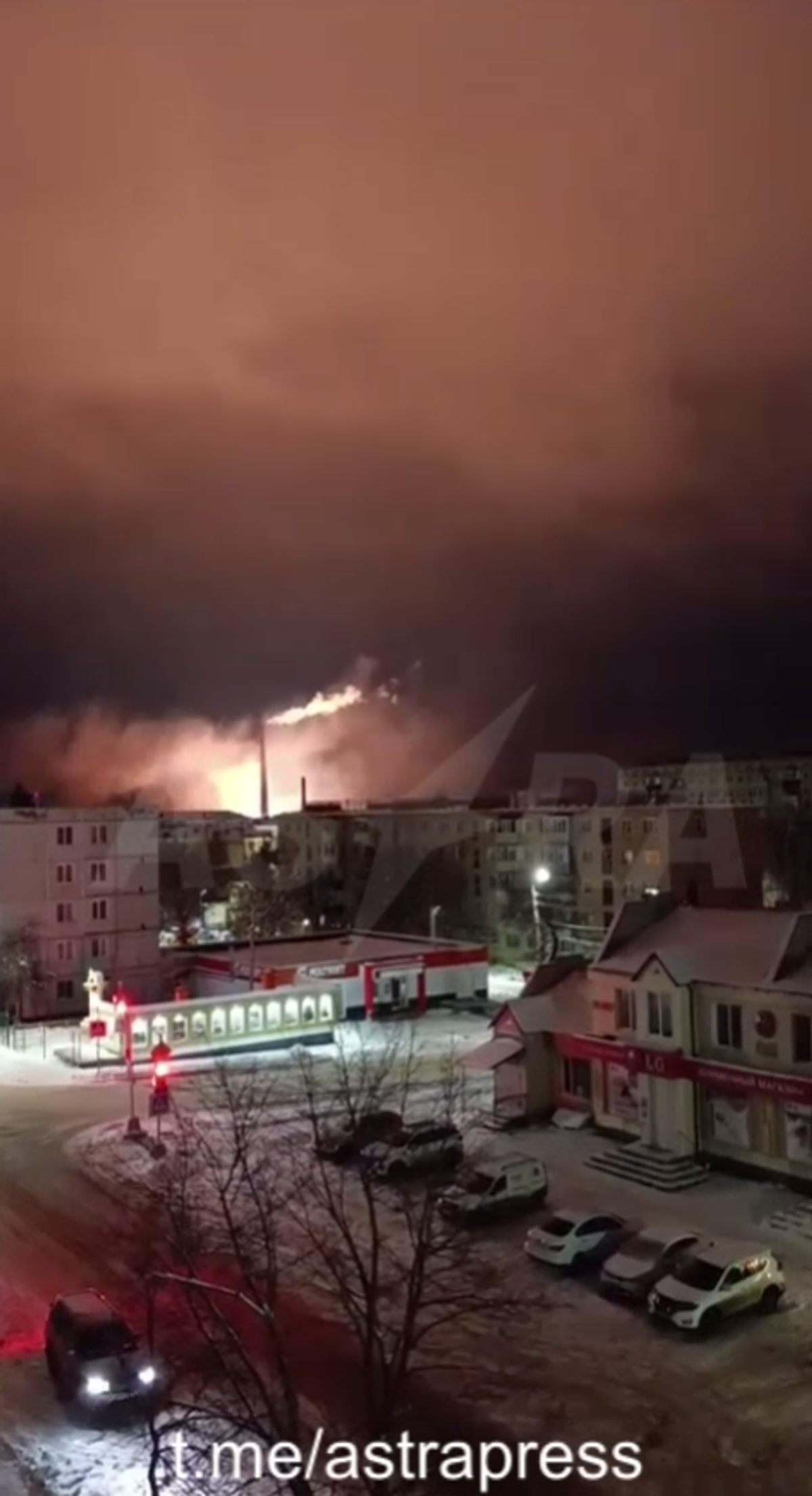

Ukrainian forces struck a Russian missile propellant plant in Tula and naval vessels in Libya and the Gulf of Finland, Kyiv and open-source reports said on Friday.
Overnight into Friday, drones hit the Yefremov Synthetic Rubber Plant in Tula Oblast, which produces solid rocket propellant for Iskander ballistic missiles used against Ukrainian cities, according to open-source analysis and regional officials. The attack also damaged a thermal power plant in Yefremov, while Tula Oblast Governor Dmitry Milyayev said air defenses downed four Ukrainian drones over the region. [1] [2]
On Monday, Ukrainian forces attacked two Russian vessels near Benghazi, Libya, sinking one of Russia's most modern military ships and killing two Libyan naval officers, Ukrainian officials said. Foreign Minister Andrii Sybiha told his Libyan counterpart, Taher Al-Baour, that Ukraine had "no intention of expanding the war to Libya" and that strikes targeted only Russian military objects serving Russia's war against Ukraine. Sybiha also expressed regret over the "unintended consequences" that killed the two Libyan officers. [3] [4]
The following day, President Volodymyr Zelensky confirmed Ukraine attacked a Russian cargo ship in the Gulf of Finland. The strike occurred in the Baltic Sea. [5]
The strikes form part of a broader campaign. Ukraine launched nearly 500 strikes at Russian targets more than 500 kilometers away in 2026, according to data from the ACLED conflict monitor. That is more than in the first four years of the war combined. Polish Foreign Minister Radosław Sikorski said Ukraine is striking bases, airbases, refineries and the Kerch Bridge. [6] [7]
An analysis published by the Atlantic Council said the operations in Libya and Finland demonstrate the geographic expansion of Ukraine's offensive drone capabilities. The author, Peter Dickinson, described Ukraine as a "drone superpower" across maritime, land and air domains. [5]