Loading…
 Saturday, September 26Saturday, September 26
3 months · 5 summary articles
A new opinion poll published Friday shows that Israel’s opposition would secure a parliamentary majority if elections were held today, winning 61 seats in the 120-member Knesset while Prime Minister Benjamin Netanyahu’s ruling coalition would trail with 49 seats, according to the Lazar Research Institute survey . The findings, released on 20 June 2026, mark the first time in Netanyahu’s current term that his coalition has fallen behind the opposition bloc, underscoring deepening public dissatisfaction with his government’s handling of security and diplomacy.
The survey arrives as the Trump administration publicly distances itself from Netanyahu’s policies, despite maintaining strategic ties with Israel’s far-right supporters in Washington. Two documents reviewed by *The Independent* reveal long-standing and deep-rooted connections between elements of the U.S. administration and Israel’s far-right political circles . U.S. Vice President J.D. Vance, speaking on 21 June 2026, went further, stating that criticism of Netanyahu’s government does not automatically constitute antisemitism. “The U.S. and Israel are partners but do not always share aligned interests,” Vance told *Yeni Şafak*, adding that opposition to Israeli policies can be expressed without bigotry .
Vance’s remarks followed his blunt admission on the *Diary of a CEO* podcast that he does not trust Netanyahu. “I don’t trust anybody,” he said, reflecting growing skepticism within the Trump administration toward Israel’s prime minister . Analysts in Lisbon suggested that Netanyahu had been “completely sidelined” from U.S.-Iran negotiations, with Washington pressuring Israel to halt hostilities in Lebanon. Luís Tomé, writing for *Observador*, described Netanyahu as “the big loser” in the emerging U.S.-Iran framework, which excludes Israel from key diplomatic agreements .
Netanyahu’s Likud party and its far-right allies have faced mounting criticism over their approach to regional security, particularly following escalations in Lebanon and stalled negotiations with Palestinian factions. The opposition, led by figures such as Yair Lapid and Benny Gantz, has capitalized on public frustration, advocating for a return to negotiations and a more conciliatory stance toward Washington. With the Knesset’s summer session approaching, the poll signals a potential turning point in Israeli politics, though Netanyahu retains control through a fragile coalition that could fracture under further pressure.
The White House has yet to issue an official response to Vance’s comments or the poll results, but the signals from Washington suggest a recalibration of U.S.-Israel relations that could reshape Netanyahu’s political fortunes in the coming months.
Follow us for live European news

11h. Encerrada a votação para os órgãos nacionais do PSD A votação dos órgãos nacionais do PSD está encerrada. Ainda, Israel vai tentar boicotar ao máximo as negociações entre os EU e o Irão, opinião de Luís Tomé no Gabinete de Guerra da Rádio Observador.
observador · 3 months ago

Israeli opposition would secure Knesset majority, poll shows A new opinion poll published Friday shows that Israels opposition would secure a parliamentary majority if elections were held today, winning 61 seats in the 120-member Knesset while Prime Minister Benjamin Netanyahus ruling coalition would trail with 49 seats, according to the Lazar Research Institute survey.
yenisafak · 3 months ago
I dont trust anybody During an appearance on the Diary of a CEO podcast, U.S. Vice President J.D. Vance was asked whether he trusted Israel and Netanyahu. He replied: I dont trust anybody.
yenisafak · 3 months ago
Israelerne mener Iran vant krigen mot USA Et overveldende flertall av israelerne mener at Iran vant krigen og kom sterkere ut av avtalen med USA, viser en…
aftenposten · 3 months ago
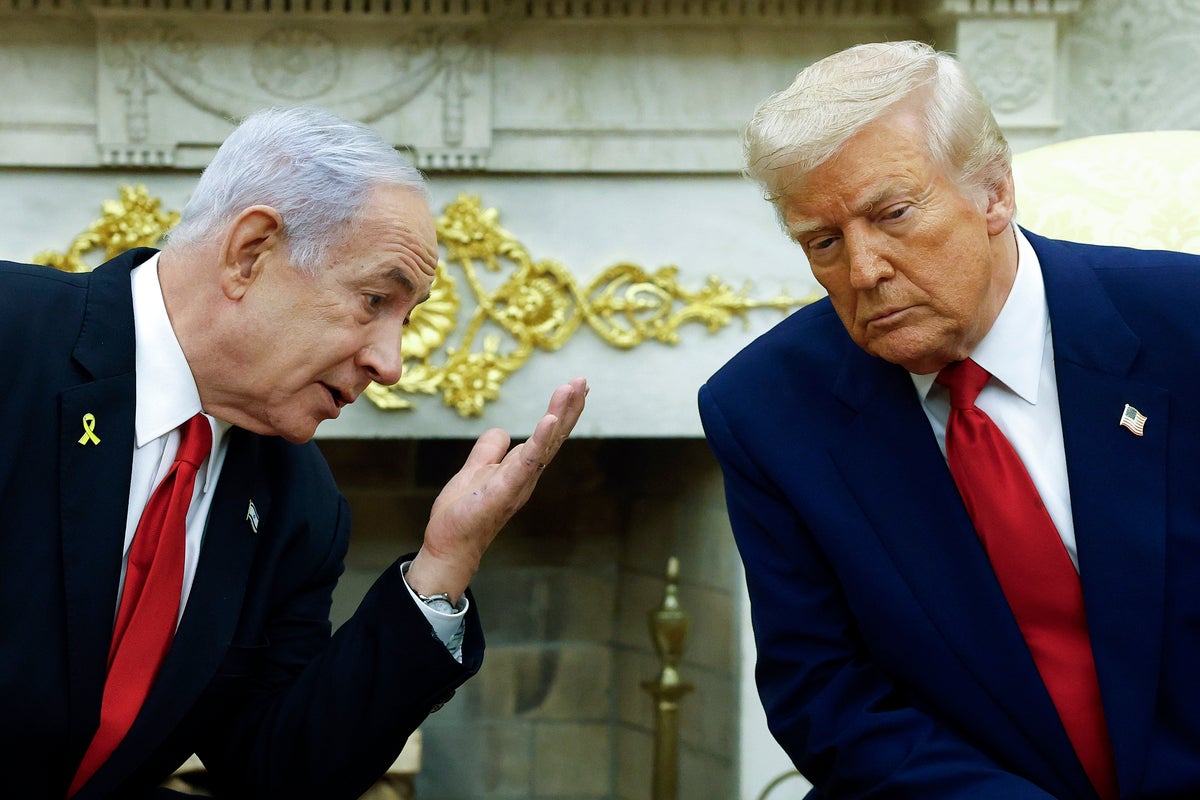
The Trump administration is angry with Netanyahu - but it wont break with Israels far right Supporters of Israels far right have long and deep roots in the US administration revealed in two documents, world affairs editor Sam Kiley explains
independent · 3 months ago

Negociações EUA-Irão. "Netanyahu é o grande perdedor" Excluído do memorando de entendimento, o governo israelita enfrenta pressão de Washington para cessar hostilidades no Líbano. Donald Trump tirou o tapete a Netanyahu? A análise de Luís Tomé.
observador · 3 months ago
Vance: Criticism of Israel not always antisemitism Vice President JD Vance stated that criticising Israeli Prime Minister Benjamin Netanyahus policies does not automatically equate to antisemitism. He said the US and Israel are partners but do not always share aligned interests, and that opposition to Israeli government policies can be expressed without bigotry.
yenisafak · 3 months ago