Russian investigative newspaper Novaya Gazeta closed its Moscow office on Monday after being designated a "foreign agent" and cut off from reader donations.
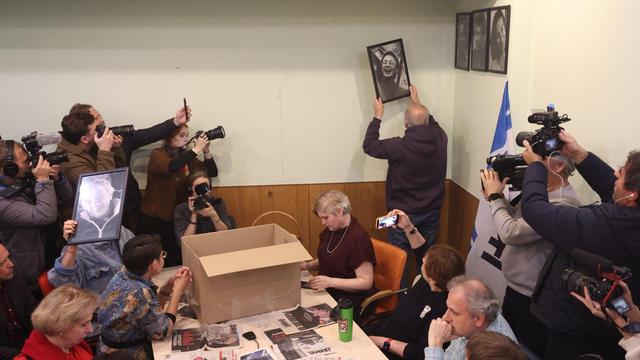
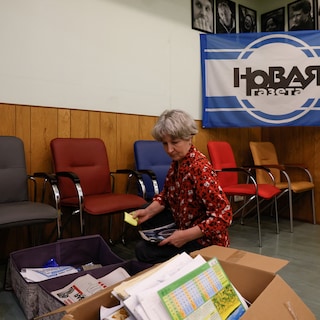
The paper held its final editorial meeting on Monday at its offices on Potapovsky Lane in central Moscow, where staff had worked for 29 years. The publication had been around for 33 years. Editor-in-chief Sergei Sokolov led the meeting, attended by co-founder Dmitry Muratov and journalists from other outlets. After the meeting, staff left the building to applause and cries of "Thank you!" from readers gathered outside.
The closure follows the paper's designation as a "foreign agent" by Russian authorities in September, after which banks stopped processing reader donations the outlet relied on for survival. The paper had moved wholly online after Russia's 2022 invasion of Ukraine. In October, authorities searched Sokolov's home and took him in for questioning, and another editor, Oleg Roldugin, was arrested in April.
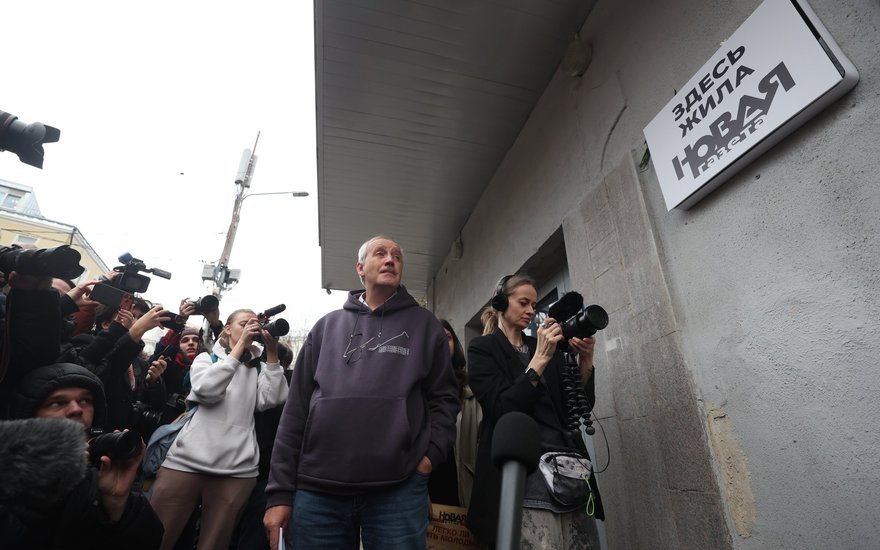
During the final hours, Sokolov took down portraits of six journalists killed in the line of duty and packed them into a box. A new plaque outside the building reads: "Novaya Gazeta lived here." The Russian rock band DDT's song "Eto vsyo" ("That's All") played as staff departed, and Sokolov said: "Novaya Gazeta will return to you, our readers and our colleagues."
Muratov, the 2021 Nobel Peace Prize laureate, told the gathering that constitutional guarantees for political and civil rights had "effectively ceased to function." He called for the release of around 4,000 political prisoners and urged observers to distinguish between the Russian authorities and the Russian people.
Sokolov said the newspaper no longer exists but the journalists remain. "Novaya Gazeta still exists as an idea," he said, adding that there are "far more ways to exist than the Russian authorities can handle." The Telegram channel would continue until midnight.
The paper was co-founded in 1993 by former Soviet leader Mikhail Gorbachev, who used money from his 1990 Nobel Peace Prize as seed funding. Six of its journalists have been murdered since launch, including Anna Politkovskaya, who was found dead in 2006. The paper was one of the few remaining outlets openly criticizing Russia's war on Ukraine.
United Nations human rights chief Volker Turk called the closure "yet another devastating blow for remaining independent media" in Russia. Kremlin spokesman Dmitry Peskov described it as "a normal cycle of change." Journalist Irina Vorobyova said the paper's spirit would survive like a "good virus."