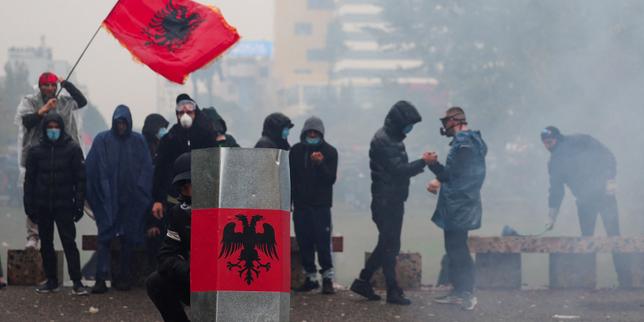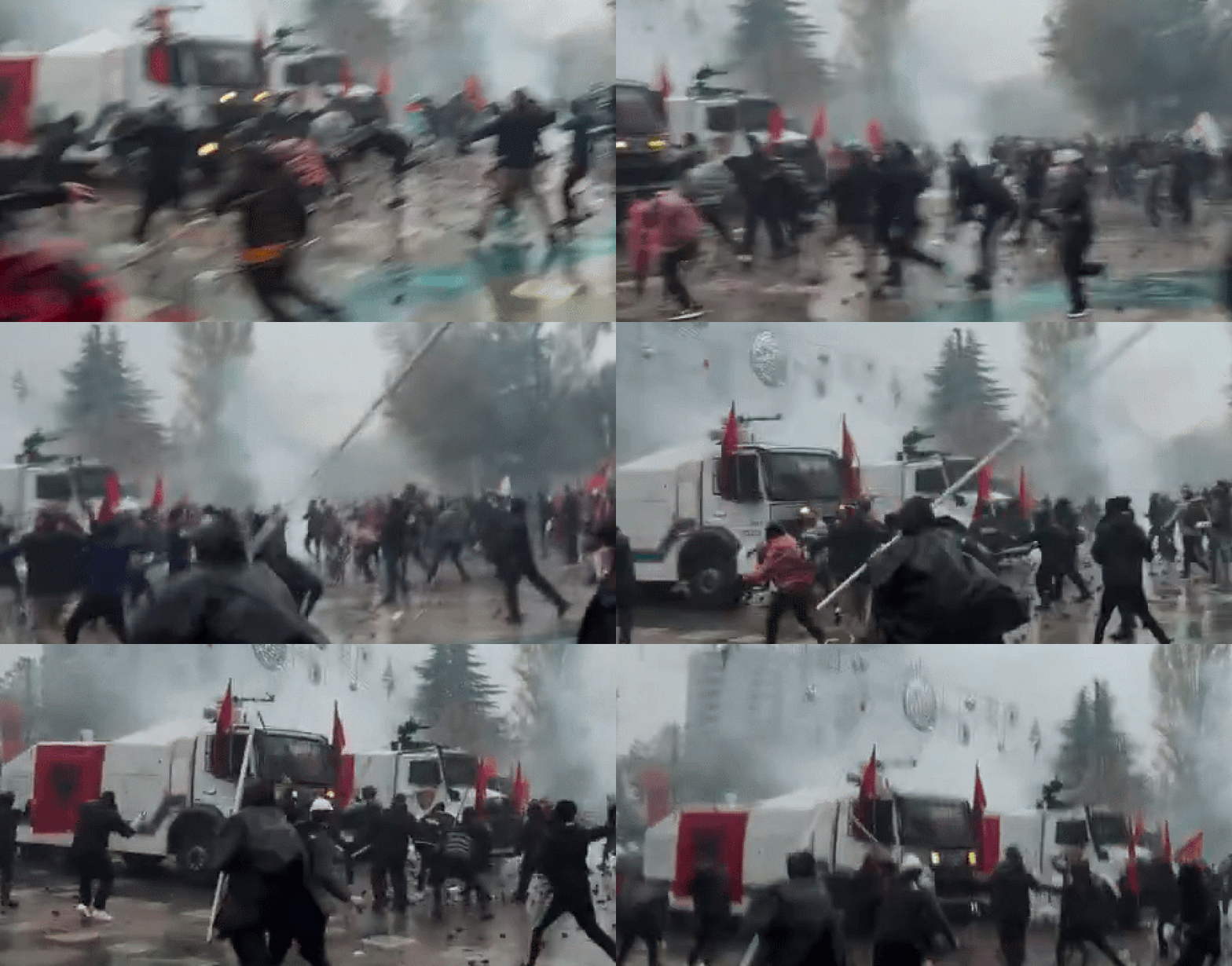
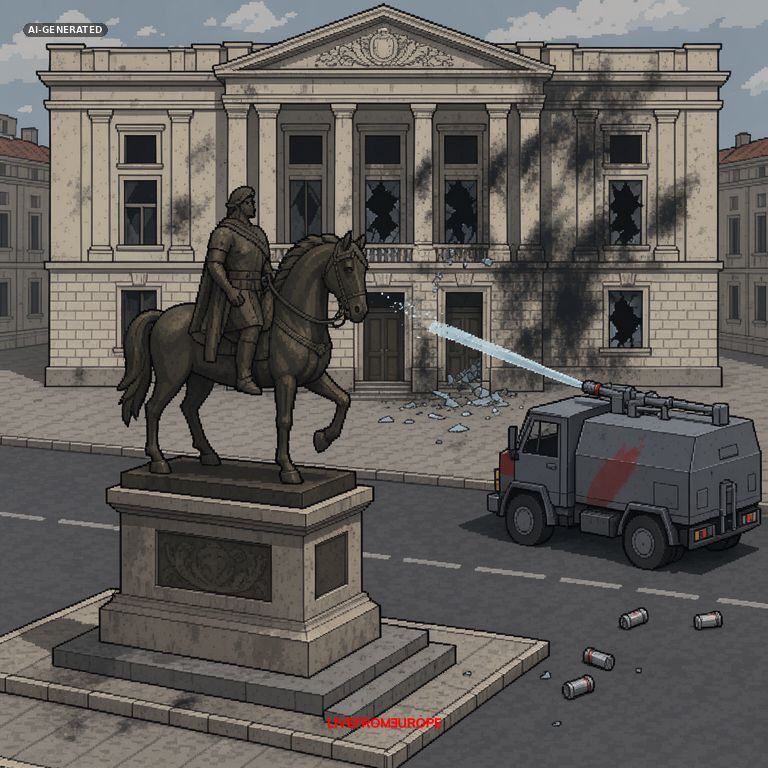
Anti-government protesters clashed with police in Tirana on Saturday, hurling stones and Molotov cocktails at government buildings while officers responded with tear gas, water cannons and drones [1].
Thousands gathered in central Tirana on Saturday for a protest that began at 10 a.m. in Skanderbeg Square and coincided with the 114th anniversary of Albania's independence [2]. Demonstrators demanding the resignation of Prime Minister Edi Rama threw stones, fireworks and petrol bombs at government buildings [3]. They targeted the environment, transport and interior ministries, setting at least one building ablaze [3]. They also smashed windows at the central bank and attacked the ruling Socialist Party headquarters [2]. Police fired tear gas, rubber bullets and pepper spray, and the health ministry said 35 people were injured, including police officers and journalists [3].
The clashes follow months of protests that began in May over a luxury coastal resort project linked to Jared Kushner, the son-in-law of US President Donald Trump [2]. The demonstrations, dubbed the "Flamingo Revolution," have since broadened to target alleged corruption, poor healthcare, lack of jobs and education standards [1]. One protester, 45-year-old engineer Eralda Baze, said: "Enough of corruption, poverty, emigration" [4]. Many demonstrators rejected both the ruling Socialists and the opposition Democratic Party, carrying banners reading "Albania is not for sale" [2].
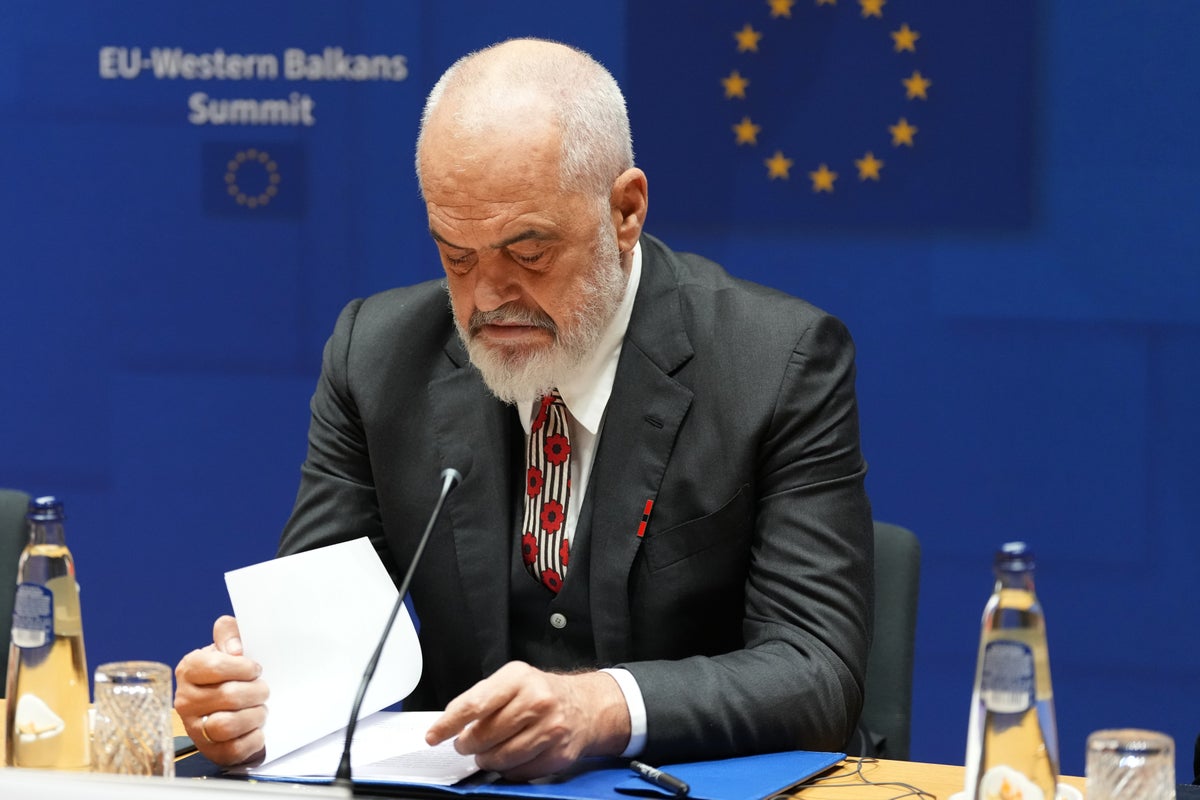
In late October, the government adopted legislation imposing fines of up to 500,000 leks (€6,000) for violence or concealing one's identity during protests [3]. The new laws gave police power to restrict gatherings near public institutions. Rama, who has led the Socialist government since 2013 and won a fourth term in disputed 2025 elections, has refused to step down, denying corruption allegations and calling for dialogue [2]. The government has also introduced measures such as fuel price cuts and increased aid to poor families [4].
The European Union, which Albania aspires to join, called for an investigation into excessive force by police and urged all sides to de-escalate [3]. EU Commissioner for Enlargement Marta Kos said the protests showed that democracy was working in Albania, which is a leader among EU accession candidates with a perspective of joining by 2030 [5].
Police used drones to drop tear gas canisters into the crowd, and protesters brought down at least one drone [6]. Masked demonstrators smashed windows and tried to break down the interior ministry door, while the main boulevard was blanketed in thick smoke [3]. A police officer was set on fire during the clashes [7]. The College of Europe campus in Tirana was looted and set on fire [5]. Protesters have vowed to continue marching on Sunday [5].