chatham house
How Argentina lost its bid to stop oil drilling off the Falkland Islands How Argentina lost its bid to stop oil drilling off the Falkland Islands
Expert comment
sfarrell.drupa…
28 November 2026
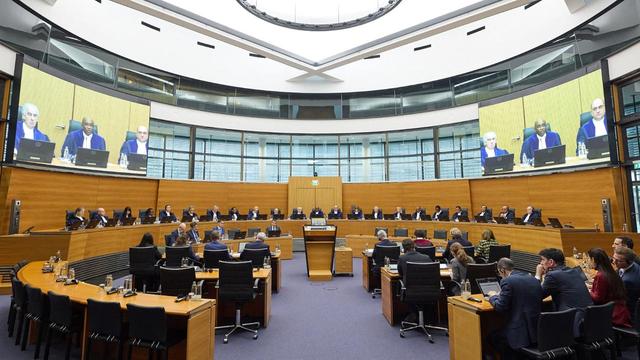
Argentina's preliminary attempt to halt oil drilling at the Sea Lion oilfield off the Falkland Islands was rejected on Saturday by an international court. Professor Marc Weller, head of the International Law Programme at Chatham House, gives his initial analysis.
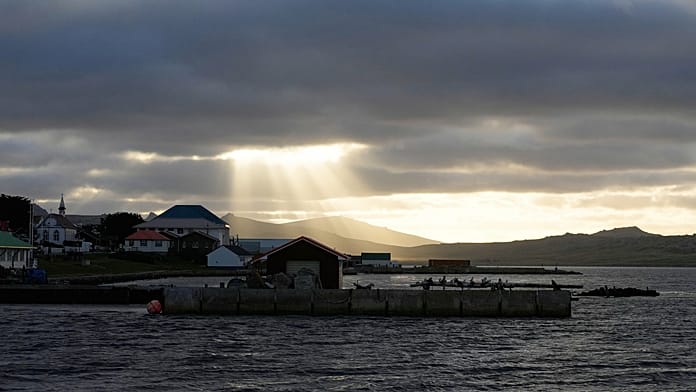
Argentina's legal challenge to the UK over the 'Sea Lion' project for the exploitation of undersea hydrocarbons off the Falkland Islands has provisionally, but spectacularly, fallen at its first hurdle. While this is only a ruling in a preliminary phase of the case which may be heard more fully by an arbitral panel next year, this outcome casts doubts on the viability of the Argentina's claim in those proceedings.The caseThe case was brought by Argentina against the background of the energetic campaign of President Javier Milei over sovereignty over the Falkland Islands, South Georgia and the South Sandwich Islands. Superficially, it sought to restrain further exploration and exploitation of the Sea Lion oil field in the South Atlantic by two companies, Navitas Petroleum and Rockhopper exploration, licensed by the Falkland authorities.
The case was likely meant to go beyond its economic implications, seeking to undermine the UK claim to sovereignty over the Falkland Islands
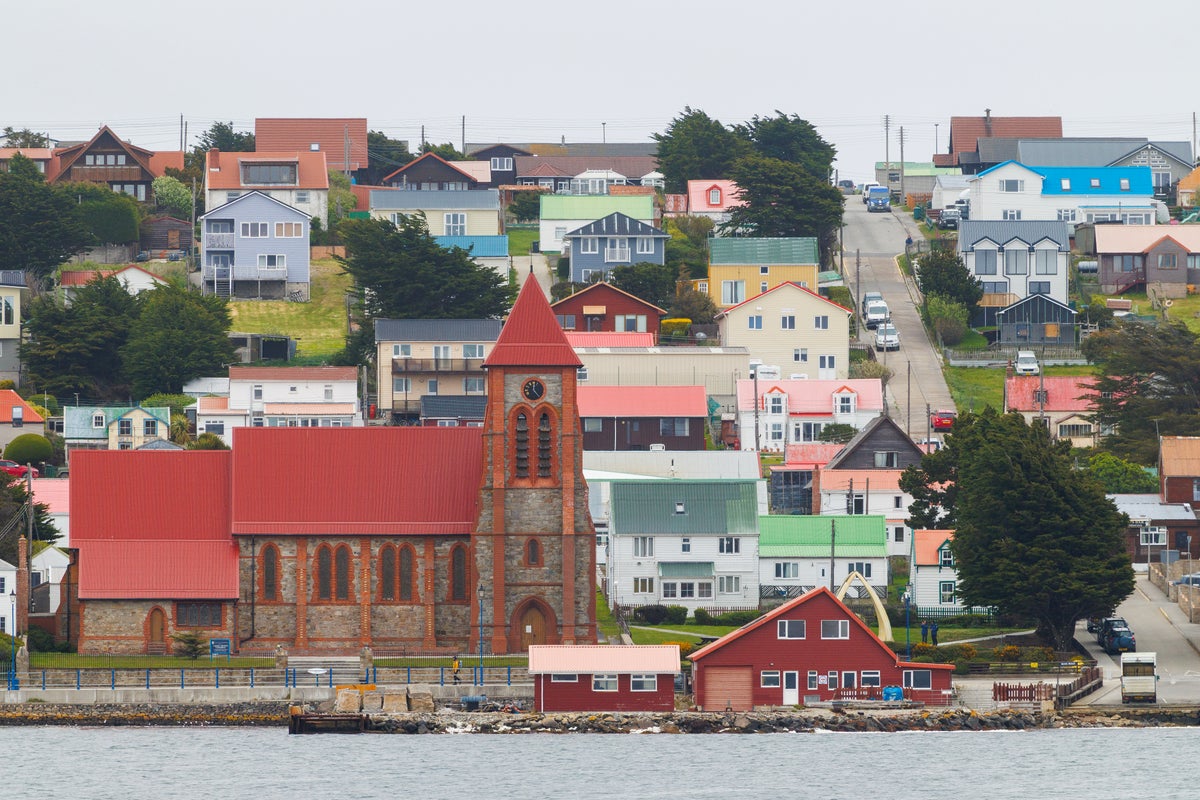
The oilfield lies about 130 miles North of Port Stanley and hence well within the 200-nautical mile entitlement to sovereign rights over its continental shelf (and entitlement that may reach even further in some circumstance). It boasts an estimated oil wealth of some 1.7 billion barrels.However, the case was likely meant to go beyond its economic implications, seeking to undermine the UK claim to sovereignty over the Falkland Islands. But it was this very fact that led to a comprehensive defeat for Argentina before the International Tribunal for the Law of the Sea in Hamburg.Shelf and sovereigntyArgentina invoked the authority of the tribunal to preserve its claimed rights even before the smaller, specialized, arbitration panel that will actually deal with its case – and that could issue injunctions protecting claimed rights of Argentina – has been established. This is expected by the end of the year, or in January at the latest.However, like the subsequent actual arbitration, the Hamburg tribunal only has the authority to address disputes concerning the interpretation or application of the 1982 UN Convention on the Law of the Sea to which both Argentina and the UK are parties. That authority specifically excludes sovereignty disputes. Argentina attempted to walk a tightrope on this issue. On the one hand, Argentina argued that it sought to protect its sovereign rights over the continental shelf in question, including its claimed authority to licence exploration or preserve the marine environment. On the other hand, Buenos Aires asserted that it was not bringing a case about sovereignty over the islands as such. But the entitlement to sovereign rights over the continental shelf depends on the sovereignty held over the land territory to which the continental shelf attaches. A continental shelf is considered the natural, geomorphological prolongation of state territory. Hence, the tribunal found that it is not possible to pronounce itself on sovereign rights related to the continental shelf unless it has first addressed the underlying title to sovereignty of the associated land, in this instance the Falkland Islands.EnvironmentArgentina also argued that the UK was preventing it from exercising its duties relating to environmental protection of the maritime area in question. Again, the court found that the question of who holds that duty depends on who has sovereignty.In addition, Argentina attempted to move the dispute onto more political territory. It invoked the findings of the UN General Assembly, where states have been more sympathetic to its argument that this issue represents a remnant of UK colonialism. It invoked a resolution adopted along with the Law of the Sea Convention, but not part of it, addressing the rights of non-self-governing territories. But at the time of its adoption, Argentina strongly denied the application of that text to the issue of the Falklands.In fact, Argentina is keen to invoke the context of colonialism and its associated sins in the political realm. But legally, the remedy to a case of colonialism would be the application of the right to self-determination, as the UK insists. And the people of the Falkland Islands have voted overwhelmingly in a referendum of 2013 to remain with Britain.Argentina also referred to the obligation to settle disputes peacefully. However, that does not mean that the UK simply has to give in to an opposing claim to sovereignty advanced by Argentina. In fact, quite recently, there were constructive negotiations between the UK and Argentina, for instance over humanitarian visits.Moreover, Argentina argued that London, or the Falkland authorities, are under an obligation not to aggravate the dispute. Rather incongruently with this claim before the Hamburg tribunal, President Milei introduced a National Sovereignty and Defence Law to his Congress more or less at the time of commencing this legal action. This would, in fact, lead to a significant aggravation of the dispute, involving sanctions, penalties and other steps directed against those active in the area.JurisdictionOverall, therefore, in a major slap to Argentina, the tribunal ruled that there was no plausible prima facie jurisdiction for this case to be heard by an arbitration panel at all. Hence, no provisional measures of protection could be granted. Accordingly, the Court did not proceed to addressing other requirements for interim measures, like the risk of irreparable harm or the urgency of the situation.
Any subsequent arbitration will find it difficult to ignore the quite clear findings of the tribunal
In theory, this ruling does not prejudice or bind the actual arbitration panel when it starts hearing the case early next year. In practice, though, the UK will challenge the jurisdiction of that body to hear the case as well, and on the same grounds.That challenge has been significantly boosted by this ruling. After all, the tribunal is the world's principal standing international court addressing the law of the sea. It adopted its decision by a strong majority of 18 to 3. Any subsequent arbitration will find it difficult to ignore the quite clear findings of the tribunal determining that none of the claims put forward by Argentina are likely covered by the 1982 Convention – the only source of jurisdiction in this instance.This early defeat was entirely unnecessary from the perspective of Argentina. There is no prospect for drilling to commence before the arbitration panel that is actually meant to hear this case is fully constituted. This preliminary action therefore had no real purpose in protecting any claimed rights at risk of prejudice on the part of Argentina. It could be considered grandstanding for political reasons – before the more major Hamburg tribunal – that has backfired.
about 14 hours ago