
Spain deploys military to Ceuta as EU splits over migrant surge from Morocco
Story Timeline
2 months · 14 summary articles
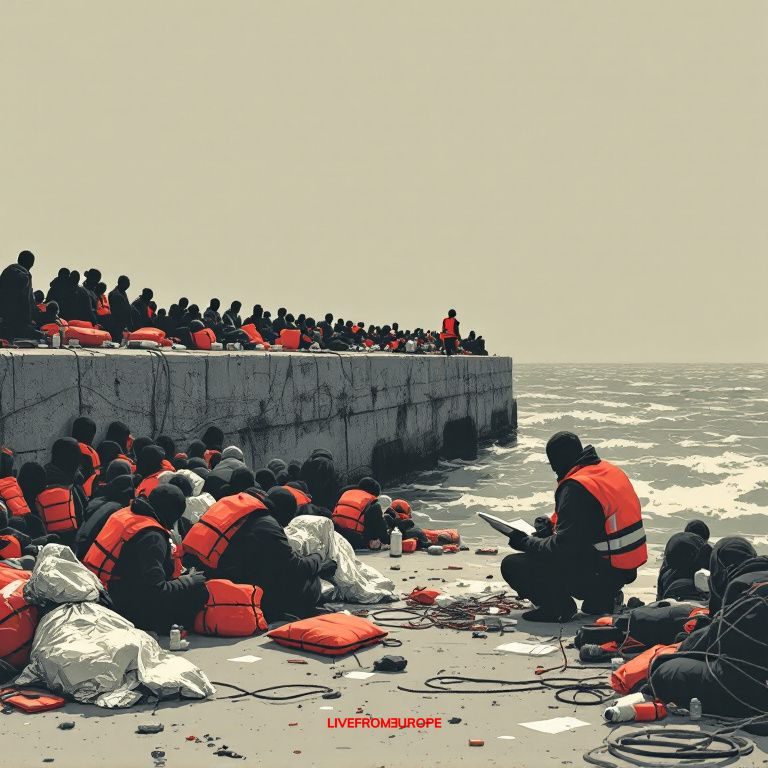
Spanish Prime Minister Pedro Sánchez deployed the military to support the Civil Guard in Ceuta after an estimated 50,000 to 60,000 migrants crossed from Morocco into the Spanish exclave in North Africa within 24 hours, with at least 88 deaths reported in the attempt. Most of the migrants have since returned to Morocco, according to Spanish authorities .
The surge has triggered sharp divisions within the EU, with 22 member states, including Italy and Germany, criticizing Spain’s migration policies. A letter signed by these leaders indirectly accused Madrid of creating incentives for migration, citing Spain’s recent regularization program for up to 500,000 migrants already in the country before December 2025. Sánchez dismissed the criticism as driven by “prejudice, fake news, ignorance or political self-interest” and noted that Ceuta is not part of the Schengen Area, meaning migrants cannot freely travel to other EU states .
Morocco and Spain have offered conflicting accounts of the crisis. Spanish intelligence and local reports suggested Moroccan border guards abandoned their posts, allowing the crossings, while Morocco blamed social media misinformation and a misinterpreted Spanish court ruling that deemed immediate deportations from Ceuta unlawful. The European Commission President, Ursula von der Leyen, thanked Spain for its crisis management but warned against any attempt to use irregular migration as leverage, while pledging financial support to Morocco for border security .
EU interior ministers are set to hold an emergency video conference on Tuesday to address the fallout. The crisis has reignited debates over solidarity and border control, with some far-right leaders, including Italy’s Giorgia Meloni, calling for Spain’s exclusion from Schengen—a move legal experts say is not possible under current EU mechanisms .
Follow us for live European news
Articles

Ceuta at the Fault Lines of European Solidarity On Friday morning, Europeans woke up to unsettling news. Within 24 hours, approximately 60,000 migrants successfully managed to reach the Spanish enclave of Ceuta in North Africa, and several dozen have been reported dead in the attempt to swim across the border. Spanish Prime Minister Pedro Sánchez has ordered the military to support the Civil Guard on the ground. What caused this sudden influx? Does EU law offer the procedures and mechanisms to respond to the spontaneous arrival of such large numbers of people? And what do these events reveal about the internal functioning of the EUs migration and asylum regime and solidarity between Member States? The post Ceuta at the Fault Lines of European Solidarity appeared first on Verfassungsblog.
verfassungsblog · about 2 months ago
Debate: Migration to Ceuta triggers row in EU Almost all of the more than 50,000 people who reached Ceuta in recent days – most of them by swimming – have now returned to Morocco. However the mass border crossing into the Spanish exclave in North Africa has triggered fierce discussion within the EU, with several capitals voicing sharp criticism of Spains migration policy. Spanish Prime Minister Pedro Sánchez has responded by accusing critics of a lack of solidarity driven by "prejudice, fake news, ignorance or political self-interest".
eurotopics.net · about 2 months ago
UK jails man for claiming late mums benefits while keeping her body in freezer A British man who kept his mothers body in a freezer for nearly three years while he received almost £80,000 (US$108,000) of her welfare benefits was jailed on Monday. Christopher Phillips, 60, had admitted preventing the lawful and decent burial of his 89-year-old mother Sylvia Phillips after she died in March 2023 until his arrest at their home in Porthcawl, south Wales, in February this year. Phillips also pleaded guilty to fraud after he received about £78,000 in benefits and pension...
south china morning post · about 2 months ago
Fugitive suspect in Estonian criminal case caught at Latvian-Russian border After nearly a year avoiding criminal proceedings, ArmyLaw OÜ owner Andrei Vesterinen is in Estonian custody following his capture at the Latvian-Russian border last week.
news.err · about 2 months ago
EU calls for united action on border protection after Ceuta mass crossing The European Commission President, Ursula Von der Leyen, has reiterated the EUs support to help tackle illegal migration following last weeks chaos in the Spanish enclave of Ceuta in North Africa. The crisis has fanned anti-immigrant rhetoric by right wing politicians in Europe and sparked diplomatic tensions between Spain and some EU members, notably Italy. An emergency video conference of EU interior ministers is due to be held on August 3, on Romes call.
france24 · about 2 months ago
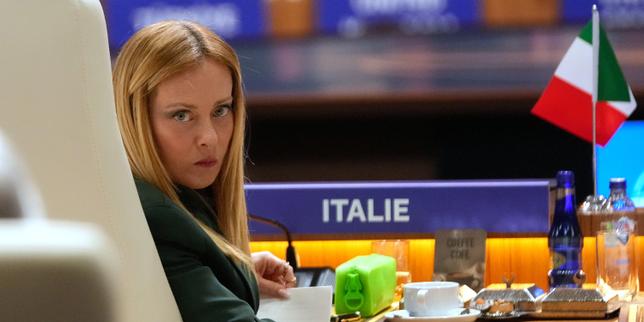
Meloni, who benefited from European solidarity in Lampedusa in 2023, seeks to isolate Spain The far-right Italian prime minister wants to position herself as a European leader on migration, as Italy heads into an election campaign expected to be dominated by identitarian politics.
le monde · about 2 months ago

Spains Leader Is Seen as Soft on Migrants, but He Acted Fast on Ceuta After thousands poured into the Spanish territory in North Africa, the pro-immigration policies of Prime Minister Pedro Sánchez were blamed. The reality is more complex.
new york times · about 2 months ago

Spanish Prime Minister Pedro Sánchez described last weeks sudden influx of 50,000 migrants into the exclave of Ceuta in North Africa as an attack, but has been careful to accuse people smugglers rather than the Moroccan authorities of orchestrating it.
bluesky_Politico Europe · about 2 months ago

European Commission President Ursula von der Leyen sought to smooth over tensions with Spain after Prime Minister Pedro Sánchez accused many of his fellow EU leaders of exploiting the migration crisis in Ceuta to attack his government.
bluesky_Politico Europe · about 2 months ago
Hard-right Reform UK vows to use navy to stop small migrant boats crossing Channel Britain and France signed a new three-year deal in April to stop irregular migrants making the risky Channel journeys, with London paying Paris up to €766 million in return for boosted law enforcement of the issue.
euronews · about 2 months ago
We demand solidarity, Spain says ahead of EU video call to discuss response to uncontrolled crossings At least 88 people died during the recent mass influx of migrants into Ceuta from Morocco, Spanish officials said on Monday, though Moroccan officials later presented a lower estimate.
euronews · about 2 months ago
European Commission: TikToks protections for minors are inadequate - The Baltic Times TALLINN – The European Commission on Friday sent TikTok its preliminary findings, concluding that the platforms measures for minors&#......
baltic times · about 2 months ago
ECB unveils selected design concepts for new euro banknotes - The Baltic Times TALLINN - The European Central Bank (ECB) on Thursday unveiled the design concepts for the next series of euro banknotes and launched a public s......
baltic times · about 2 months ago
Lithuania signs Southeast Asia treaty to bolster business, trade ties, FM says - The Baltic Times VILNIUS - Foreign Minister Kestutis Budrys signed Lithuanias accession to the Treaty of Amity and Cooperation in Southeast Asia in Manila o......
baltic times · about 2 months ago
Metrosert Appoints New Management Board - The Baltic Times Estonian applied research centre and national metrology institute, Metrosert, has appointed a new management board led by physicist, mat......
baltic times · about 2 months ago
Palestines new ambassador to Spain calls for deeper friendship Palestines new ambassador to Spain, Fadi Elhusseini, has shared his first message since taking office.
aljazeera · about 2 months ago
Deputy police chief on migration pressure: No cause for panic in Estonia Estonia is sending another border guard unit to Latvia to help secure the Latvia-Belarus border amid rising illegal migration pressure, while officials warn that similar attempts could potentially shift toward Estonias own borders.
news.err · about 2 months ago
Hard-right Reform UK proposes navy-led operation to stop small migrant boats The hard-right Reform UK party on Monday revealed plans for "the largest military operation" in the Channel "since World War II", which would deploy Britains Royal Navy to return small migrant boats to France. The proposal – which experts and other political parties promptly rubbished – comes as Reform and its leader Nigel Farage are embroiled in a series of scandals.
france24 · about 2 months ago
Farage needs the border to be the battle of the summer The Reform UK leader is back on his core issue amid intense scrutiny of his financial arrangements.
politico.eu · about 2 months ago
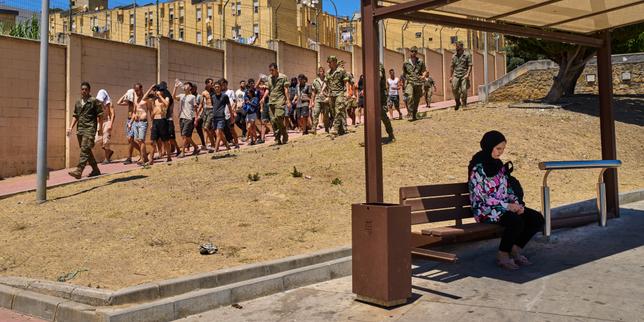
Anger, anxiety, and compassion in Ceuta after border crisis Two days after 50,000 people surged into the Spanish enclave, Ceuta was calm again on Sunday, but residents said they felt abandoned by Madrid.
le monde · about 2 months ago
UK, Clacton national parliament by-election, Survation poll: Farage (REFORM~NI): 73 (+27) Count Binface (CBP-*): 20 (new) Fox (RECLAIM-*): 2 (new) +/- vs. 2024 election Fieldwork: 16-24 July 2026 Sample size: 502 ➤ europeelects.eu/uk
telegram_Europe Elects · about 2 months ago
Braze meets with U.S. Congressional delegation - The Baltic Times RIGA - On July 26, Foreign Minister Baiba Braze (New Unity) met with a U.S. Congressional delegation (CODEL) to discuss strengthening the securi......
baltic times · about 2 months ago
Security partnership between Latvia and United States is of strategic importance - Kulbergs - The Baltic Times RIGA - Security partnership between Latvia and the United States is of strategic importance, Prime Minister Andris Kulbergs (United List) emphas......
baltic times · about 2 months ago
Lithuanian minister sees no signs of airBaltic reducing flights, exiting country - The Baltic Times VILNIUS - Lithuanian Transport Minister Juras Taminskas said on Monday there was no evidence that Latvian airline airBaltic planned to reduce it......
baltic times · about 2 months ago
Estonian film Morten wins three awards at Italian film festival - The Baltic Times TALLINN – Director Ivan Pavljutškovs debut feature film "Morten" won three awards at the Giffoni Film Festival for c......
baltic times · about 2 months ago
Lithuanias FM meets Thai prime minister in Bangkok - The Baltic Times VILNIUS - Lithuanian Foreign Minister Kestutis Budrys met Thai Prime Minister Anutin Charnvirakul on Monday, the Foreign Ministry said. ......
baltic times · about 2 months ago
Ten ministers to form thematic committee for implementation of Rail Baltica project - The Baltic Times RIGA - The government has established a thematic committee for Rail Baltica implementation, consisting of ten government members, according to i......
baltic times · about 2 months ago
Lithuanian, Estonian interior ministers discuss border security - The Baltic Times VILNIIUS - Lithuanian Interior Minister Martynas Katelynas met his Estonian counterpart Igor Taro on Tuesday to discuss European Union external ......
baltic times · about 2 months ago
Two foreigners charged with smuggling drug-laced paper to UAE, Bahrain - The Baltic Times VILNIUS - A criminal case involving two foreign nationals accused of attempting to smuggle drug-laced paper to the United Arab Emirates and Bahr......
baltic times · about 2 months ago
Lithuania warns of Mere attempts to bypass EU sanctions via rebranding - The Baltic Times VILNIUS - Lithuanias Economy and Innovation Ministry has warned of possible attempts to circumvent European Union sanctions following the s......
baltic times · about 2 months ago