
US vows "toughest sanctions in history" on Iran, warns allies of economic consequences
Story Timeline
7 days · 3 summary articles
US vows "toughest sanctions in history" on Iran, warns allies of economic consequences
Trump threatens "most crushing" economic measures against Iran as Middle East war enters sixth month
ContinuationU.S. threatens Iran with "economic isolation like the world has never seen" as naval blockade tightens in Strait of Hormuz
The United States will impose the “toughest sanctions in history” on Iran, Treasury Secretary Scott Bessent said on Thursday, framing the measures as part of a broader economic campaign to “collapse this regime” in Tehran.
President Donald Trump warned that any country allowing its financial institutions, businesses, airports or government entities to provide “any type of lifeline to Iran” would face “tremendous economic consequences.” Bessent echoed the call, urging allies to choose sides. “You are either with us or against us,” he told CNBC. Iran’s Foreign Ministry condemned the sanctions as “economic terrorism” and “a crime against humanity,” adding that those imposing them “deserve prosecution for committing heinous crimes against the Iranian people.”
The U.S. has also targeted individuals and entities linked to Iran and Hezbollah with new sanctions, according to an OSINT report. Bessent said details of the broader measures would be announced at a press conference on Monday, describing the approach as a “one-two punch” combining a naval blockade with the new sanctions. He suggested the economic pressure could reduce the need for large-scale military operations, as the war with Iran nears its six-month mark.
Trump’s threats extend to allies that have mediated peace talks, with Bessent urging China to “get with the programme.” China, which buys over 80% of Iran’s shipped oil according to 2025 Kpler data, has called for political and diplomatic solutions. “Sanctions and pressure do not help resolve the problem,” a Chinese embassy spokesperson in Washington said. Bessent noted that 50% of China’s energy comes from the Gulf, implying leverage for Washington.
The conflict has already injured 757 U.S. military personnel and killed 18, with more than 50 soldiers added to the Pentagon’s casualty database on Wednesday. Iran’s Foreign Minister Abbas Araghchi dismissed the sanctions as a “diversion from America’s own crisis: unprecedented debt and surging interest costs.”
Vice President JD Vance told a conservative podcast that economic pressure is now the “most effective tool” against Iran, acknowledging a “delicate dance” as Tehran may retaliate with its own economic measures. Bessent declined to specify whether China would be directly targeted, saying some conversations are “best to have in private.” Chinese President Xi Jinping is scheduled to visit the White House on Sept. 24.
Oil prices rose to a three-week high on Thursday amid the U.S. threats, which aim to end the nearly six-month war that has disrupted shipping through the Strait of Hormuz. The U.S. and Iran have twice announced ceasefires to restore shipping, but both collapsed. Iran has also accused Trump of seeking to divert attention from domestic economic struggles .
Follow us for live European news
- 3
- 2
- 1
- 1
- 1
- 1
- 1
- 1
- 1
- 1
- 1
- 1
- 1
- 1
- 1
5 further sources not geolocated
Articles
Iran prüft laut Medien Möglichkeit, US-amerikanische Militärziele in Europa anzugreifen Im Fokus könnten Ziele in Südosteuropa stehen. Athen reagiert mit erhöhter Wachsamkeit, besonders die Lage in Zypern ist sensibel. Der Schiffsverkehr in der Straße von Hormus geht indes weiter zurück
der standard · about 2 hours ago

Tisíc startů ročně. Trump chce do roku 2030 šestkrát zvýšit počet amerických vzletů do vesmíru Americký prezident Donald Trump ve čtvrtek podepsal memorandum, které počítá s téměř šestinásobným ročním zvýšením počtu amerických vzletů do vesmíru. Do roku 2030 by ze Spojených států mělo být prováděno 1000 startů a návratů do atmosféry ročně, napsala agentura Reuters. Trumpův dokument rovněž nařizuje úřadům hledat nová místa vhodná pro starty raket.
irozhlas.cz · about 2 hours ago
Donald Trump podpísal memorandum o podpore komerčných vesmírnych štartov Biely dom chce do roku 2030 dosiahnuť najmenej tisíc komerčných štartov ročne. Vládne agentúry majú hľadať nové miesta na raketové rampy a pristávacie plochy.
aktuality.sk · about 2 hours ago
#USA #Iran The United States has imposed new sanctions against Iran and Hezbollah, targeting individuals and entities associated with these groups to counter their activities and influence. Subscribe to @OSINTdefender | 💬 Chat room
telegram_OSINTdefender · about 2 hours ago
Trump vil sende flere kommercielle raketter i rummet
dr.dk · about 2 hours ago

Iran condemns new US sanctions as economic terrorism Irans Foreign Ministry on Thursday denounced the latest US economic measures as economic terrorism and a crime against humanity, warning that those who impose such sanctions deserve prosecution for committing heinous crimes against the Iranian people.
yenisafak · about 2 hours ago
Trump will Zahl der US-Raumfahrt-Raketenstarts drastisch erhöhen Die Raketenstarts sollen Auf mindestens 1000 jährlich bis 2030. Die private Raumfahrtindustrie soll gestärkt werden
der standard · about 2 hours ago
US warns allies and China to join Iran economic pressure campaign The United States on Thursday urged allies and China to join its campaign to isolate Irans economy, as President Donald Trump seeks to intensify pressure on Tehran amid a stalemate in the war and growing domestic criticism. 👉 Read more:
telegram_France 24 · about 2 hours ago
U.S. will impose toughest sanctions in history on Iran, Bessent says The U.S. will impose "the toughest sanctions in history" on Iran, Treasury Secretary Scott Bessent said on Thursday, a focus on economic measures he suggested would lessen the need…
japantoday · about 2 hours ago
🇮🇷❌🇺🇸 – The Iranian Foreign Ministry said the U.S. sanctions against the country are "economic terrorism" and "a crime against humanity" that will not weaken the Iranian resolve in the war. @GeoPWatch
telegram_GeoPWatch · about 2 hours ago

Is America Still Capable of Enforcing the World Order? As the Iran war drains vital stockpiles of missile interceptors, American allies increasingly question Washingtons capacity to wage multi-front conflicts.
wsj · about 2 hours ago
„Este o lovitură dublă. SUA amenință Iranul cu „cele mai dure sancțiuni din istorie Șeful Trezoreriei SUA, Scott Bessent, a declarat că Statele Unite vor impune „cele mai dure sancțiuni din istorie împotriva Iranului, o măsură care, potrivit lui, ar reduce necesitatea unor noi operațiuni militare de amploare, scrie Reuters. Declarațiile lui Bessent de joi vin după ce cu o zi în urmă președintele american Donald Trump a amenințat …
hotnews.ro · about 3 hours ago
🇮🇷❌🇺🇸 - Iran is reportedly preparing to conduct strikes on oil terminals across Gulf nations in response to Trumps Economic D-Day sanctions. It would be an attempt at surging global energy prices by destroying Hormuz bypasses. @GeoPWatch
telegram_GeoPWatch · about 3 hours ago
🇮🇷❌🇺🇸 - A Senior Iranian Official stated that Iran is preparing to damage Trumps presidency through economic warfare, aimed at making him lose the November midterms. @GeoPWatch
telegram_GeoPWatch · about 3 hours ago
US urges allies and China to join Iran economic pressure campaign The United States on Thursday urged allies and China to join its campaign to isolate Irans economy, as President Donald Trump seeks to intensify pressure on Tehran amid a stalemate in the war and growing domestic criticism.
france24 · about 3 hours ago

The Message Behind Trumps Threats of Economic Warfare Against Iran President Trumps threats of an economic D-Day carry a clear signal to Iran that he does not want to go back to war.
new york times · about 3 hours ago

US says it will impose toughest sanctions in history on Iran reut.rs/4zrYJqi
bluesky_Reuters · about 3 hours ago
Reuters: Η Τουρκία κι οι άλλοι οκτώ εμπορικοί εταίροι του Ιράν που απειλούνται από την «D-Day» του Τραμπ Η νέα εκστρατεία οικονομικής πίεσης του Τραμπ κατά του Ιράν δεν αφορά μόνο την Τεχεράνη, αλλά ανοίγει ένα ευρύτερο μέτωπο με χώρες διατηρούν μαζί της σημαντικές εμπορικές και ενεργειακές σχέσεις
protothema · about 3 hours ago
Iran war live: US vows toughest Iran sanctions, urges China support US Treasury Secretary Bessent says new economic measures will collapse Iranian government.
aljazeera · about 3 hours ago
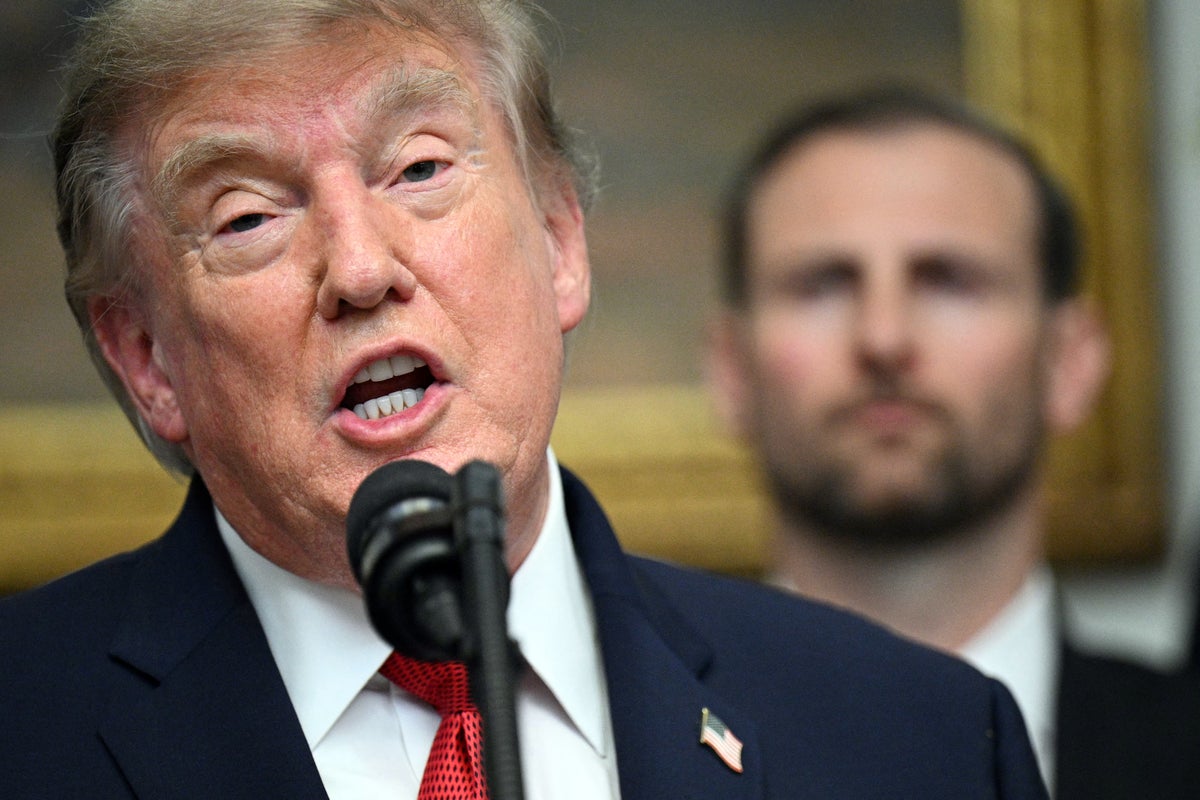
Iran-US war latest: Tehran accuses Trump of economic terrorism after he vows to crush it with sanctions At least 18 deaths are included in the statistics
independent · about 3 hours ago
US prepares sweeping new Iran sanctions, Bessent says The U.S. will impose the toughest sanctions in history on Iran, Treasury Secretary Scott Bessent said on Thursday, a focus on economic measures he suggested would lessen the need for new major military operations against Tehran. His statement followed President Donald Trumps threat a day earlier of Economic Warfare and warning of economic consequences against […]
cyprus mail · about 4 hours ago

US has entered new phase of economic pressure on Iran: Vance US Vice President JD Vance has declared that Washington is moving into a new phase of applying economic pressure on Iran, calling it the most effective tool to achieve American objectives. The remarks came as the Treasury Department imposed fresh sanctions and the administration vowed unprecedented economic isolation.
yenisafak · about 4 hours ago

Trump orders push to expand US space launches to more than 1,000 a year by 2030 President Donald Trump has signed a memorandum directing federal agencies to partner with private firms to dramatically expand Americas space launch capacity. The initiative aims to exceed 1,000 launches and reentries from US soil annually by 2030 while bolstering national security and commercial space exploration.
yenisafak · about 4 hours ago
Iran-US war latest: Over 770 US service members killed or injured since conflict began, new data shows At least 18 deaths are included in the statistics
independent · about 4 hours ago

Oil set for second weekly rise as unsettled US-Iran war crimps supply reut.rs/4goBrsK
bluesky_Reuters · about 4 hours ago
US tightens sanctions on Cuba once again The United States is again tightening sanctions against Cuba. On Thursday, US Secretary of State Marco Rubio announced new sanctions targeting Cubas construction ministry, state-owned metal and mining companies, and three high-ranking leaders of the Cuban Institute of Friendship with the Peoples (ICAP). Rubio stated that the Trump administration will not tolerate the regimes efforts […]
cphpost · about 4 hours ago
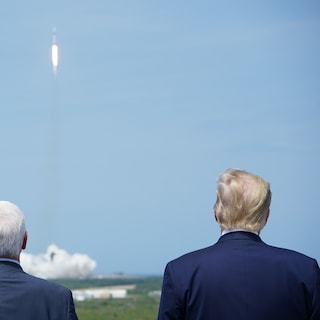
Live - Trump wil duizend ruimtelanceringen per jaar • VS gaat eerder over op winterbenzine om prijs aan pomp te drukken
de morgen · about 4 hours ago
Trump wil tegen 2030 duizend ruimtelanceringen per jaar De Amerikaanse president Donald Trump wil het aantal Amerikaanse ruimtelanceringen flink opvoeren. Donderdag ondertekende hij een memorandum waarmee hij overheidsinstanties de opdracht gaf om nieuwe lanceer- en terugkeerlocaties te vinden. Tegen 2030 wil de president jaarlijks minstens duizend lanceringen mogelijk maken.
rtl nieuws · about 4 hours ago
USA: Trump will Zahl der US-Raketenstarts drastisch erhöhen US-Präsident Donald Trump will die US-Raumfahrt massiv ausbauen. Das Weiße Haus will bis 2030 jährlich mindestens 1000 Raketenstarts und Rückflüge ermöglichen.
sueddeutsche · about 4 hours ago
New space transportation policy focuses on increased launch rates The White House released a new space transportation policy Aug. 20 with an emphasis on enabling a sharp increase in the number of launches and reentries. The post New space transportation policy focuses on increased launch rates appeared first on SpaceNews.
spacenews · about 5 hours ago