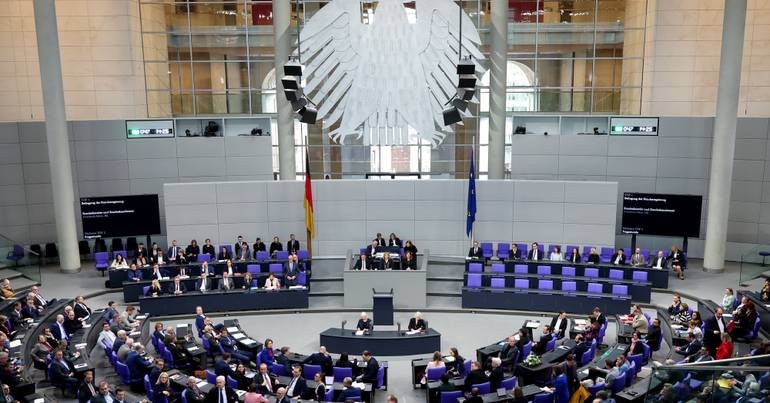
Germany's parliament approved sweeping new powers for its intelligence agencies on Friday, allowing them to conduct cyberattacks and sabotage against foreign adversaries. The Bundestag passed the legislation by 309 votes to 190, with 71 abstentions. The law expands the authority of the Federal Intelligence Service (BND), Germany's foreign intelligence agency, and the Federal Office for the Protection of the Constitution (BfV), the domestic security service. Interior Minister Alexander Dobrindt of the Christian Social Union called the measure a "reform of the century."
Under the new rules, BND agents will be able to conduct covert operations abroad, including sabotage. They may paralyze servers used by state-sponsored hacker groups, disrupt disinformation networks, and interfere with weapons supply chains. The agency can carry out cyberattacks in response to attacks on Germany, and Dobrindt said: "Anyone who attacks us in this way must know that we are prepared to strike back." Targeted assassinations remain prohibited.
The BfV will gain the right to take protective action against property and IT systems when specific threats are identified, and agents may dismantle explosives and block data flows during cyberattacks. They can delete malicious data and plant false information. Under certain conditions, they can enter homes covertly with prior authorization. The service will also gain wider digital surveillance powers including monitoring encrypted communications and AI biometric analysis, and may recruit informants as young as 16 in exceptional cases.
The government says the reform addresses growing hybrid threats from Russia, China and Iran. In August, authorities discovered an explosive-laden drone at Leipzig Airport near Ukrainian cargo planes and attributed the attempt to Moscow. Dobrindt told parliament: "We are the target of hybrid threats. Germany is a theatre of operations for terrorism, extremism and foreign powers."
Opposition lawmakers criticized the law. Clara Bünger, security spokeswoman for the Left Party, told broadcaster ARD the legislation was "a monster… summoning ghosts that we will probably never be able to get rid of." She warned that the separation between police and secret services was being eroded, a lesson from the Nazi era. The far-right Alternative for Germany also opposed the measure.
Sonja Eichwede of the Social Democratic Party, part of the governing coalition, said the reforms would help ensure democracy remains "robust and resilient." An independent oversight board including former judges will review proposed measures for legality before they are carried out. BND chief Martin Jaeger had warned that Moscow wages a "shadow war" against Germany using drones, espionage and sabotage.