eldiario.es
Ciberataques, el boom de la IA y teorías de la conspiración: qué se esconde detrás del colapso de sistemas por todo el mundo Tras el caos que se ha producido en los aeropuertos de EEUU, en supermercados y empresas como Microsoft y Apple, la gente se ha convencido, ayudada por ciertas teorias que corren por las redes sociales, que los sistemas mundiales de comunicación están bajo ataquePor qué ha suspendido EEUU todos los vuelos durante horas y qué riesgo hay de que pueda repetirse
El vuelo de American Airlines en el que viajaba Nicole Reindorf estaba listo para despegar en Phoenix cuando el piloto anunció a los pasajeros lo que terminaría siendo la interrupción más prolongada del tráfico aéreo a nivel nacional desde los atentados del 11S.
Reindorf, de 70 años, había visto horas antes los titulares sobre una interrupción global de los servicios de Microsoft. Inmediatamente, sospechó que ambos sucesos estaban conectados de alguna manera con amenazas relacionadas con la inteligencia artificial y que, por tanto, no podría asistir a la boda del hijo de su mejor amiga en California. "Supuse que se había producido un ataque informático al sistema de aviación y que estaría inoperativo durante días", aseguró.
Sin embargo, los vuelos se reanudaron horas más tarde ese mismo día y Reindorf pudo asistir a la boda, aunque se perdió la cena de ensayo de esa noche. No obstante, según ella, los pasajeros parecían estar convencidos de dos cosas: "Que se trataba de un ciberataque y que no nos iban a decir la verdad al respecto".
Esta no era una opinión aislada. Lo que ocurrió en los días posteriores a la suspensión del tráfico aéreo, que comenzó el jueves 12 de noviembre, dejó a muchos preguntándose si Estados Unidos, y el mundo occidental en general, estaban siendo objeto de un ataque coordinado.
Días después, el martes, los grandes bancos estadounidenses, Apple y la Agencia de Seguridad Nacional también se vieron afectados por fallos técnicos. Los investigadores también señalaron un ciberataque dirigido contra 178 organizaciones de todo el mundo, aunque las pérdidas económicas parecen ser mínimas.
Sin embargo, la verdad es más prosaica. El caos de las últimas semanas —aviones en tierra, servidores de correo electrónico colapsados o fallos en los iPhone— parece ser, al analizarlo más detenidamente, más bien una sucesión de coincidencias que otra cosa, impulsada, en parte, por los temores ante los avances de la inteligencia artificial.
Pero las narrativas que han surgido en torno a ello son un reflejo de un estado de ánimo global inestable y frenético, que se enfrenta a dos tendencias poderosas: al deterioro de unas infraestructuras obsoletas debido a una falta crónica de inversión y al nacimiento y génesis de la IA, una de las tecnologías más potentes que la humanidad ha creado.
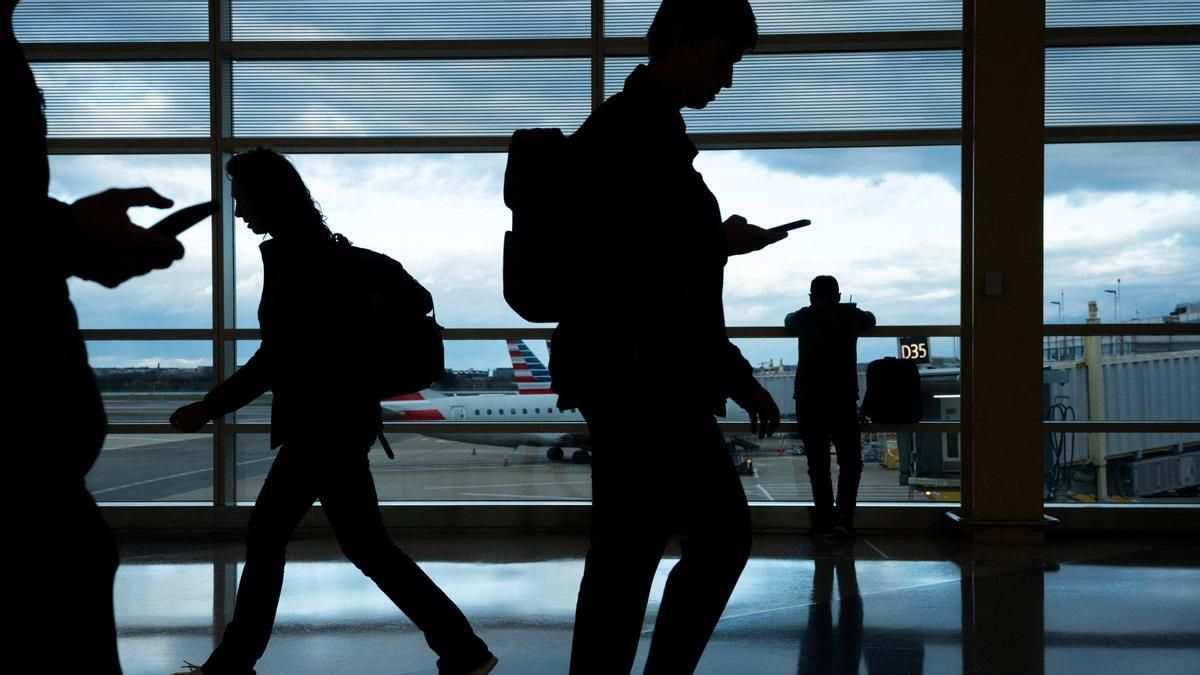
Periodistas informan sobre la prohibición nacional de aterrizajes de FAA en las inmediaciones del Aeropuerto Nacional Ronald Reagan de Washington, en Arlington, Virginia.
El fallo que retrasó el despegue de Reindorf tuvo su origen en un router defectuoso en la ciudad de El Dorado, Arkansas, con una población de 16.609 habitantes.
Ese router se instaló en medio de un procedimiento de mantenimiento que lleva más de dos décadas en marcha. En 2002, el Gobierno de EEUU contrató a una pequeña empresa, ahora conocida como L3Harris, para modernizar el sistema de comunicaciones de la Administración Federal de Aviación (FAA, por sus siglas en inglés), encargada de los aeropuertos estadounidenses. Como parte de este proyecto, L3Harris ha estado desmantelando las líneas de comunicación de cobre en todo el país y sustituyéndolas por cables de fibra óptica.
Esta laboriosa tarea desencadenó una catástrofe repentina y sin precedentes: el router, recién sustituido, falló y provocó el colapso de las comunicaciones del tráfico aéreo en todo EEUU, paralizando por completo todos los vuelos de salida a nivel nacional. Se cancelaron más de 18.000 vuelos.
Los contratos de L3Harris, que ascienden ya a miles de millones de dólares, son un símbolo de la situación actual del mundo: sumido en unas infraestructuras obsoletas que se deterioran poco a poco, pero cuya sustitución resulta inmensamente costosa.
Existe la percepción generalizada de que los gobiernos de todo el mundo no están preparados para afrontar esta situación. En EEUU, los informes de supervisión llevan años reclamando urgentemente mejoras en la FAA. La FAA no anunció hasta el año pasado que eliminaría progresivamente el uso de disquetes con décadas de antigüedad que contienen información meteorológica vital y otros datos críticos.
Mientras tanto, hay cuestiones más sutiles en torno a otros incidentes, como la interrupción del servicio de Microsoft. Una actualización realizada en julio dejó sin corregir un error de software que permaneció latente durante meses hasta que una serie de coincidencias lo activó, lo que saturó los servidores de la compañía e interrumpió el funcionamiento de la mayoría de los sistemas de Microsoft en todo el mundo. La interrupción paralizó procedimientos cotidianos como la puesta en libertad de detenidos en cárceles estadounidenses y el acceso a los historiales de algunos pacientes en hospitales del Reino Unido.
La caída de Microsoft revela la vulnerabilidad de la dependencia tecnológica mundial.
Esto solo fue el principio de más caos. Un error de software en JP Morgan Chase, el banco más grande de EEUU, retrasó las transacciones. Una interrupción que se extendió por todos los bancos del país y que afectó a todos sus clientes.
Una actualización interna de Apple provocó la caída de algunas de sus aplicaciones para iPhone. Un mantenimiento rutinario salió mal en la Agencia de Seguridad Nacional (NSA), lo que paralizó temporalmente la red interna que la agencia del Departamento de Defensa de EEUU utiliza para enviar y recibir información clasificada.
Puede que Microsoft, JP Morgan Chase y Apple hayan dejado atrás, en gran medida, los cables de cobre y los disquetes, pero tanto ellos como las empresas de software en general se han visto obligadas a trabajar al doble de ritmo en los últimos meses debido a la avalancha de errores detectados por la IA.
Es posible que esta no sea la razón específica de estas actualizaciones, ya que parte del mantenimiento es rutinario. Pero los ataques informáticos impulsados por la IA han marcado el comienzo de una nueva realidad para los profesionales de las tecnologías de la información. La NSA comunicó al Congreso que la interrupción de sus comunicaciones se debió a soluciones rápidas aplicadas a sistemas identificados como vulnerables por la IA.
En resumen: esta primavera, tanto Anthropic como OpenAI lanzaron potentes modelos de IA capaces de detectar errores en líneas de código. Inmediatamente, difundieron esta información a los medios de comunicación, sugiriendo que todo el software, en todas partes, es extraordinariamente vulnerable a los ataques informáticos impulsados por la IA, y ofreciendo además sus herramientas a bancos y agencias de espionaje.
Algunos argumentan que todo este revuelo no está del todo justificado, sugiriendo que muchas de las vulnerabilidades que descubren estos modelos no resultan especialmente útiles para los hackers. Pero la amenaza de hackeos impulsados por la IA ha cambiado las reglas del juego.
Un experto en ciberseguridad declaró a The Guardian que la constante detección de fallos informáticos había dejado a su equipo "agotado".
En octubre, la IA ayudó a descubrir un error en el lenguaje de programación PHP. A esto le siguió el descubrimiento el martes de una vulnerabilidad en el lenguaje de programación Java, y posteriormente otro error en NGINX, un servidor web. "Cuando se produjo lo de NGINX, pensé: 'Venga ya, ¿otro más?", comentó este profesional.
Tanto Java como PHP forman parte de la columna vertebral esencial de Internet, una infraestructura vital que mantiene a la mayor parte del mundo conectado. "La IA acelera tanto el descubrimiento de vulnerabilidades que las organizaciones se ven obligadas a aplicar parches a un ritmo y volumen para sus sistemas no están ni diseñados ni preparados para soportar", explicó Jamieson O'Reilly, especialista en ciberseguridad.
Las empresas tecnológicas están constantemente detectando posibles fallos y corrigiéndolos. Ahora tienen que hacerlo mucho más rápido, según O'Reilly: "El volumen y la velocidad de los descubrimientos impulsados por la IA hacen que sus problemas sean mucho más acuciantes".
El telón de fondo de todo esto es un panorama de ciberseguridad que ya se encontraba en un momento tenso por los recientes ataques contra los frigoríficos de los supermercados en toda Europa, las alarmas mundiales como el descubrimiento del fallo en PHP y el ciberataque millonario contra la plataforma de intercambio de criptomonedas Binance.
Cámara de frío vacía en un supermercado de Países Bajos.
Las redes sociales llenaron los vacíos que las organizaciones no podían cubrir de inmediato con información. Laura Loomer, una destacada difundidora de teorías conspirativas, publicó en X que "es evidente que estamos siendo atacados por adversarios extranjeros a través de ciberataques" y añadió que había que acudir a por "dinero en efectivo". En TikTok, hay publicaciones sobre el #90daypoweroutage, una teoría conspirativa desencadenada por una prueba a nivel nacional del sistema de alertas de emergencia de EEUU y una escena de Los Simpson que, en su línea, pronosticaría este apagón.
Las consecuencias de estas teorías de la conspiración se pueden ver claramente en Costco, una cadena de tiendas de venta al por mayor donde se ha producido un aumento de las compras de artículos para emergencias, incluyendo las compras de generadores, o en Reino Unido donde se está produciendo un acaparamiento generalizado de provisiones Los analistas del Mizuho Bank afirmaron que esto se debía a la "ansiedad de los consumidores" tras los apagones y a las "preocupaciones apocalípticas que se han disparado y extendido en las redes sociales".
Estas preocupaciones no se han limitado a los sectores marginales. El Gobierno británico recomendó recientemente a sus ciudadanos que fueran a sacar dinero en efectivo para tres días, entre otros artículos básicos, como parte de una campaña de preparación para crisis.
Stephan Lewandowsky, profesor de psicología cognitiva en la Universidad de Brístol, cuya investigación se centra en la difusión de mitos y desinformación, afirmó que la "acumulación" de eventos como los apagones o los recientes fallos informáticos "puede percibirse como un indicio de una coordinación deliberada en lugar de una simple casualidad".
Para alimentar aún más la ansiedad, también se han dado ejemplos de actores estatales y criminales que han provocado incidentes, desde los ataques de Rusia contra los cables submarinos de Internet hasta la paralización el año pasado del mayor fabricante de automóviles británico, Jaguar Land Rover, lo que da una mayor credibilidad a las preocupaciones de la ciudadanía. Según Lewandowsky, una solución sería que "los gobiernos responsables fueran transparentes y precisos en sus comunicaciones" para evitar explicaciones descabelladas.
¿Qué se puede hacer?
En conjunto, los expertos afirman que la sucesión de cortes de servicio pone de manifiesto la asombrosa fragilidad de las infraestructuras estadounidenses y mundial, donde un solo error o fallo puede paralizar por completo los sistemas de transporte, comunicación y seguridad.
"Hemos construido un mundo en el que los sistemas esenciales están tan interconectados que un fallo en uno de ellos puede propagarse en cadena por todos los demás con gran rapidez", afirmó Aarathi Krishnan, fundadora de Raksha Intelligence Futures, una empresa global de inteligencia. "Todos nuestros sistemas, ya sean de comunicaciones, finanzas, capital o cualquier otro, están tan interconectados y concentrados que se crea una dependencia entre ellos. Y esa dependencia genera fragilidad", añade.
¿Qué se puede hacer? No está claro. La detección de fallos impulsada por la IA no va a ralentizarse y los sistemas heredados con los que el mundo se enfrenta son lo que son. La infraestructura es la columna vertebral de la sociedad, a menudo pasada por alto, y quienes hace décadas construyeron carreteras, sistemas de tráfico aéreo y redes eléctricas no pudieron prever estas amenazas modernas.
Mike Chapple, director académico del programa de informática empresarial de la Universidad de Notre Dame, afirmó que era "lamentable" que un único router defectuoso pudiera tener tal repercusión en el sistema de comunicaciones aviación de un país. "Eso solo pone de manifiesto que el diseño carece de resistencia: no debería estar concebido de tal forma que un único fallo en un punto concreto pueda provocar el colapso de todo el sistema a nivel nacional", añadió.
Es probable que se avecinen más ataques informáticos preocupantes y más teorías de la conspiración. Este experto en ciberseguridad señaló que la mayor concienciación pública sobre las perturbaciones cibernéticas ha dado lugar a una hipersensibilidad ante cualquier incidente. "Es como si la marea hubiera bajado drásticamente en lo que respecta a la percepción pública de la ciberseguridad, cuando sigue habiendo tantos incidentes como los que ha habido en los últimos años. Cada vez que se modifica un sistema complejo, ocurren imprevistos", argumenta.
Sin embargo, a este experto le preocupa que la IA, con su capacidad para identificar fallos, ayudar a planificar ataques y ejecutarlos, sea utilizada por adversarios "ya de por sí muy competentes". Refiriéndose al estado general de la seguridad informática a nivel mundial, la fuente añadió: "Menos mal que no hemos tenido una vulnerabilidad derivada de la IA que sea fácil de explotar. Porque eso sería una auténtica carnicería".
Para muchos, sin embargo, los acontecimientos recientes ya han sido lo suficientemente preocupantes y graves. Cuando la solicitud de receta de litio de Josephine (el nombre ha sido cambiado) para su trastorno bipolar se perdió "en el ciberespacio" durante la interrupción global de Microsoft, admite que "se asustó muchísimo". "Mi medicación me ha cambiado la vida y me mantiene estable", afirmó esta joven de 26 años, una estudiante que vive en el este de Inglaterra.
Tras una angustiosa espera, por fin pudo recoger su receta, pero la experiencia la ha dejado profundamente preocupada. "Tanto yo como muchas otras personas tuvimos dificultades para acceder a una medicación que nos salva la vida", afirmó. "Es alarmante que no hubiera un plan de contingencia", añadió.
about 17 hours ago