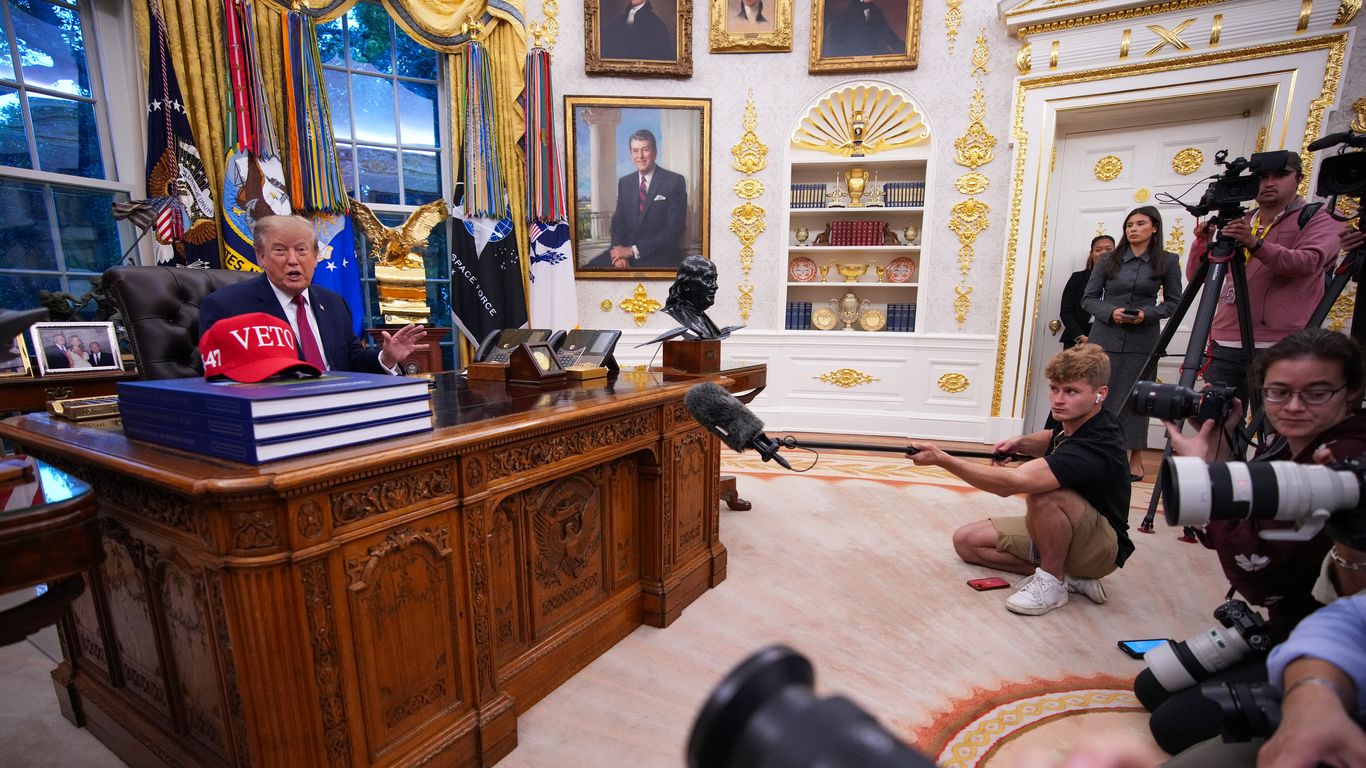
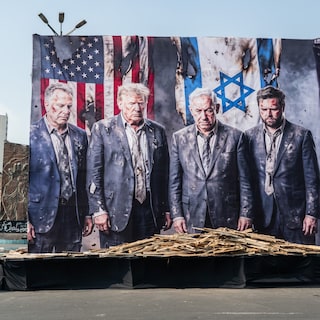
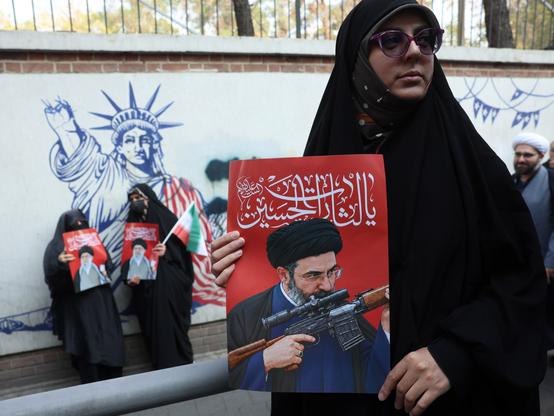
President Trump said on Thursday that he will soon decide whether to resume major strikes on Iran, warning that he may have to "destroy the rest of the country."
The announcement came after Trump met with his national security advisers in the Oval Office for the first time since Tuesday's midterm elections, which Democrats won amid voter anger over the war. The president is considering three options: launching new strikes, continuing to strangle Iran's economy, or cutting a deal that includes significant concessions to Tehran.
"Now we will make a decision," Trump told reporters. "Do we want to go further" with strikes to ensure Iran's nuclear program is dead and "it will never happen again?" He added: "I would rather not destroy the rest of the country if possible, but maybe I will have to. You'll know soon enough."
The threat coincides with a flurry of diplomatic activity. Iranian Foreign Minister Abbas Araghchi held calls on Thursday with mediators from Qatar, Saudi Arabia, Turkey, the UAE, Oman and Egypt. Qatari mediators are working with the White House on a draft proposal to build mutual confidence over two days: on the first day, the U.S. would lift its naval blockade and release frozen Iranian funds while Iran would issue an official invitation to the International Atomic Energy Agency to send inspectors to bombed nuclear sites; on the second day, the Strait of Hormuz would reopen and nuclear talks would resume, focusing on Iran's stockpile of highly enriched uranium.
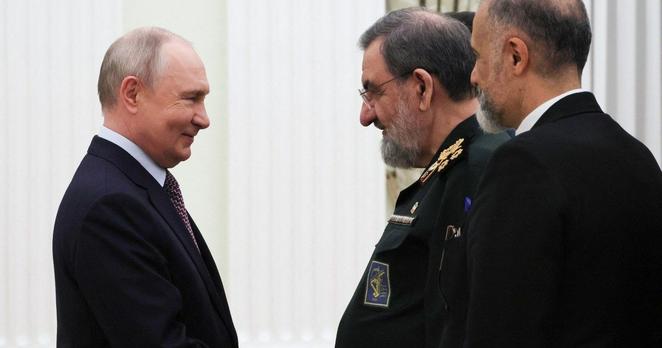
On the same day, Mohsen Rezaei, secretary of Iran's Supreme National Security Council, met Russian President Vladimir Putin at the Kremlin and delivered a message from Supreme Leader Mojtaba Khamenei. Rezaei said Iran has announced seven conditions to the Americans, and until they are fulfilled, "neither the Strait of Hormuz will be opened nor will there be any negotiations."
As Trump weighs his options, U.S. Central Command is finalizing preparations to potentially resume major combat operations, though it has not received a new directive from Washington, a U.S. official said. One signal of renewed strikes could be the arrival of a third U.S. Navy aircraft carrier strike group in the Middle East; the USS Theodore Roosevelt is currently in Singapore and will not reach the region before mid-November.
Trump defended the war's conduct, saying no American soldier has been killed in Iran over the past seven months and that the United States controls the Strait of Hormuz, with more oil passing through than before the fighting began. He estimated that rebuilding Iran would take 20 to 30 years, and acknowledged that the American presence could be described as "a kind of occupation."
Iran has sent a nuclear proposal to the United States via Qatar, a senior Iranian official told Reuters. Trump dismissed the proposals, saying Iran cannot make any move without American approval.