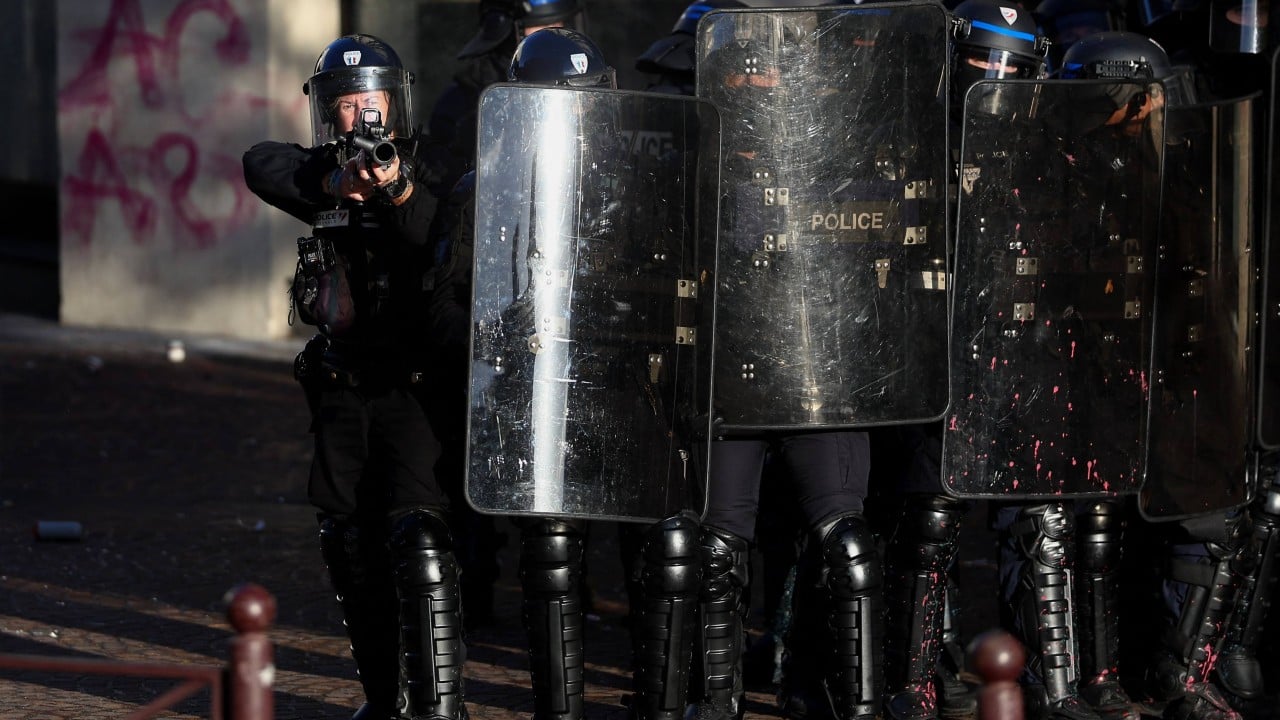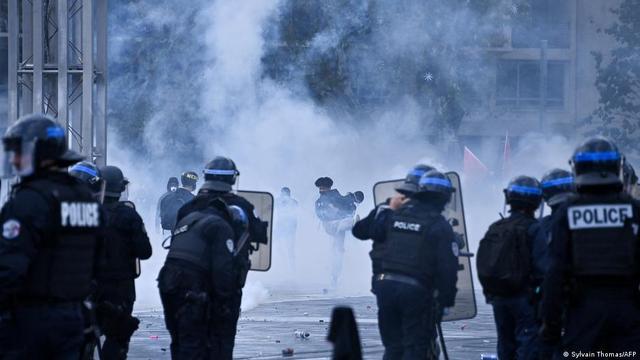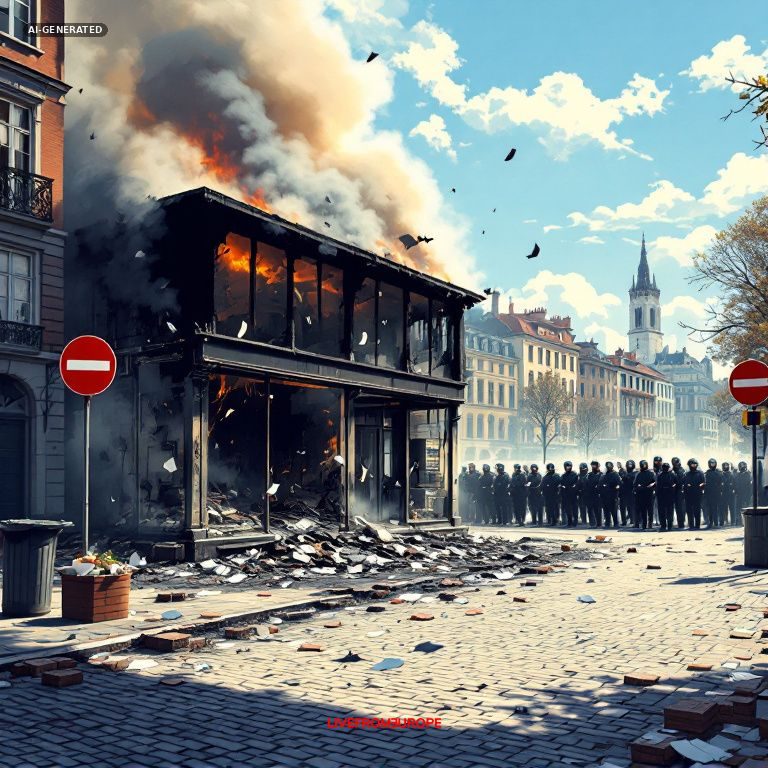
France banned or restricted protests nationwide on Friday as authorities braced for another weekend of unrest after last Saturday’s riots left hundreds of shops looted, public buildings vandalized, and over 2,700 people arrested.
President Emmanuel Macron said only demonstrations organized by labor unions would be permitted on Saturday, while all others would be prohibited to prevent further violence. The decision followed a meeting with intelligence officials and senior ministers, with Macron announcing a defense council session on Friday to finalize security measures .
Paris extended a curfew and banned gatherings near key sites, including the Élysée Palace, parliament, the Louvre, and the Champs-Élysées, from 8 a.m. to 8 p.m. Lyon and Marseille imposed total bans on Saturday protests, while other cities restricted marches to designated routes. Authorities said 20 percent more police would be deployed than last weekend, supported by soldiers from the Sentinelle anti-terrorism force, elite units, helicopters, and armored vehicles .
The crackdown came after last weekend’s unrest, which saw the Limoges town hall burned down, over 2,000 shops looted, and 1,000 police officers injured. Justice Minister Gérald Darmanin said 217 people had been jailed, with 900 under criminal investigation .
Macron blamed “seditious” ultra-left groups for the violence, accusing them of seeking to destabilize the Republic. He described the restrictions as a matter of “common sense” to ensure calm .
Businesses boarded up storefronts and hired private security ahead of the planned demonstrations. The Louvre, d’Orsay, and other major museums in Paris announced they would remain closed on Saturday .