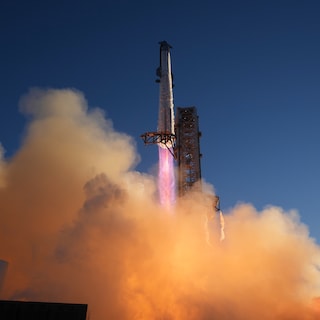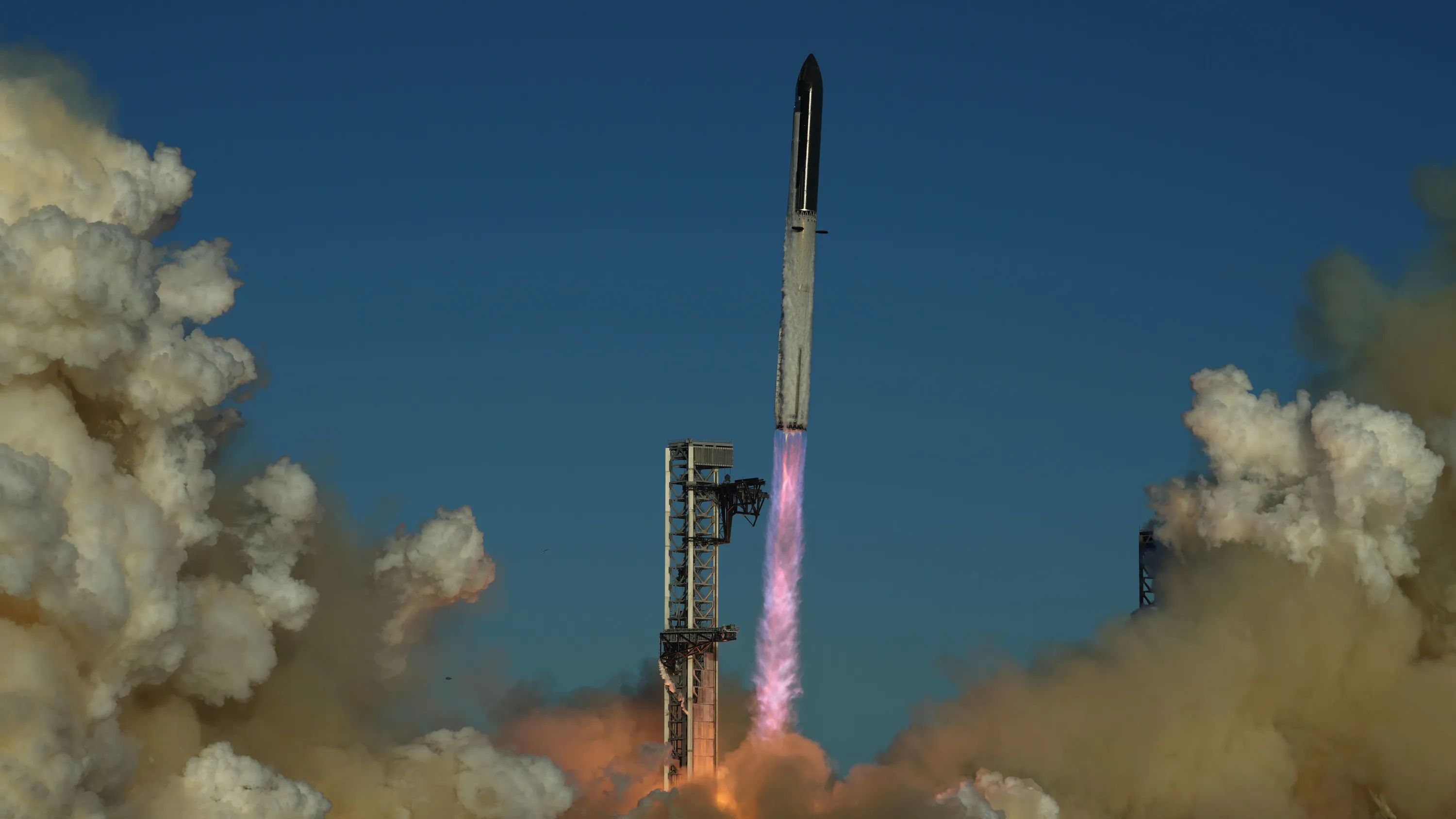
SpaceX aborted its attempt to catch the Super Heavy booster of its Starship rocket during a test flight from Texas on Friday, diverting the stage to the ocean instead .
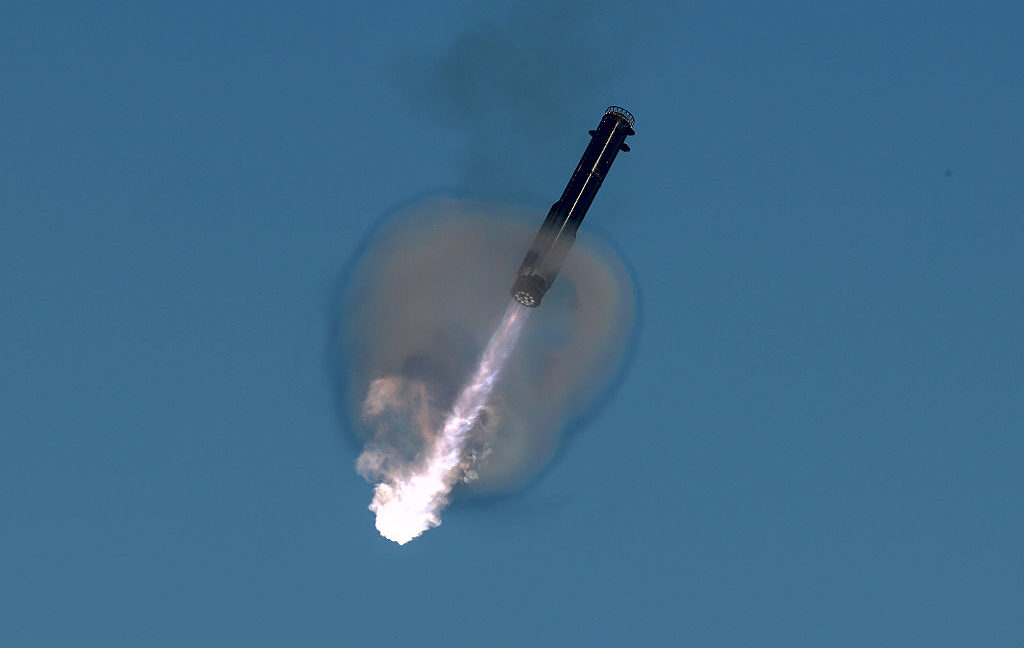
The 124-meter rocket lifted off from the Starbase launchpad in Boca Chica at 16:45 local time on Friday . It was supposed to catch the bottom part of the rocket six and a half minutes later using mechanical arms on the launch tower. Instead, due to a technical issue , the booster was diverted to the ocean.
The booster burst into flames as it came down in the Gulf of Mexico . During the launch stream, a SpaceX spokesperson said safety was the priority. He said the company was "still testing out things that we haven't done before on these vehicles" and was "prioritising making sure that we can perform each maneuver safely" .
The top part of the rocket, called the Ship, is continuing its journey to space. It is deploying 26 satellites that will form part of the Starlink constellation. The Ship is due to complete 14 orbits around the Earth before returning to the launch tower 22.5 hours after taking off. SpaceX will decide whether to attempt a second catch at about 15:15 local time on Saturday .
SpaceX has caught the Super Heavy Booster on three earlier test flights. But the upper stage, which only reached orbit for the first time in September, has never been grabbed by the chopsticks. Before the flight, SpaceX said it would only decide to try to catch the Ship after carefully assessing the vehicle while it is in space .
Building a fully reusable rocket is a long-held ambition for SpaceX. In 2015, it became the first company to vertically land part of a rocket with its Falcon 9 booster. Prof Malcolm Macdonald, president of the Royal Aeronautical Society, said: "Full reusability has the potential to fundamentally change the economics of accessing space" .
After SpaceX went public earlier this year, its shareholders will be carefully monitoring this flight, as will the US Space Agency. The progress of Starship has direct implications for NASA's attempt to land humans on the Moon in 2028. SpaceX has been given a NASA contract to configure the Ship into a lander for the lunar surface. Both SpaceX and Blue Origin will play key roles in Artemis III, currently planned for summer 2027 .