Loading…
 Saturday, September 26Saturday, September 26
4 months · 14 summary articles
Ukraine launched its largest drone strike on Moscow in years on Thursday morning, setting a key oil refinery ablaze, forcing the closure of all the capital’s airports, and prompting Russia to claim it had downed more than 180 incoming drones. Mayor Sergei Sobyanin said the attack targeted the Gazprom Neft refinery in the southeastern Kapotnya district, where flames and thick plumes of smoke were visible across the city. Flights at Sheremetyevo, Vnukovo and Domodedovo airports were suspended, while air-defence forces continued to engage multiple waves of drones.
President Volodymyr Zelensky described the strike on the refinery as a “fully justified response” to recent Russian missile and drone attacks on Ukrainian cities. “This is not escalation,” he said in televised remarks. “It is a measured reply to the terror Russia has been inflicting on our people.” The refinery, which supplies more than a third of Moscow’s fuel including jet kerosene, was struck for the second time this week, according to Russian officials cited by Reuters .
Moscow’s mayor said air defences had intercepted at least 180 drones bound for the city, while local media reported sirens sounding for the first time in months. Social media posts showed residents posting panicked videos of explosions and searchlights criss-crossing the night sky. The Guardian reported that the scale of the long-range attack caught Muscovites by surprise, since the capital rarely issues air-raid warnings .
The strike came hours after Russia launched ballistic missiles into central Kyiv, killing at least three civilians and damaging critical infrastructure, according to Ukraine’s State Emergency Service. In parallel, President Zelensky held separate calls with US President Donald Trump and French President Emmanuel Macron to press for a new diplomatic push to end the war. “We need a peace deal now,” Zelensky told reporters. “Every day of delay costs lives.”
Analysts said the dual strikes—Ukraine deep inside Russia and Russia back into Ukraine—signal a dangerous escalation in the 28-month-old conflict. The Moscow refinery attack, in particular, risks disrupting domestic fuel supplies and could trigger further Russian retaliation. The European Union’s foreign policy chief called for “maximum restraint” and urged both sides to return to negotiations.
Follow us for live European news
3 further sources not geolocated

Oil depot and military warehouses on fire in Russia after drone attack – photos, videos Overnight drone attacks triggered fires at an oil depot in Russias Rostov Oblast and at a military storage facility in Belgorod Oblast.
ukrpravda · 3 months ago
Zelenskyy on Moscow in flames: "justified response" to Russian attacks – video Ukrainian President Volodymyr Zelenskyy has stressed that the latest long-range strikes by Ukraines defence forces on military targets inside Russia are a justified response to Russian attacks on Ukrainian cities.
ukrpravda · 3 months ago
Guerre en Ukraine: Moscou visée par une attaque «à grande échelle» de drones ukrainiens Une attaque « à grande échelle » de drones ukrainiens a eu lieu dans la nuit de mercredi 17 à jeudi 18 juin sur Moscou, plusieurs projectiles touchant une raffinerie, a annoncé le maire de la ville. Cette annonce intervient alors que le président russe Vladimir Poutine accueille depuis mercredi soir des dirigeants asiatiques pour un sommet de deux jours Russie-Asean à Kazan, dans le centre du pays. Pour le président ukrainien, lattaque est une « riposte justifiée ».
rfi.fr · 3 months ago
Ukraine Sets Major Oil Refinery Ablaze in Largest-Ever Drone Attack on Moscow Mayor Sergei Sobyanin said several drones managed to strike the Gazprom Neft-operated refinery located just south of the capital.
themoscowtimes · 3 months ago
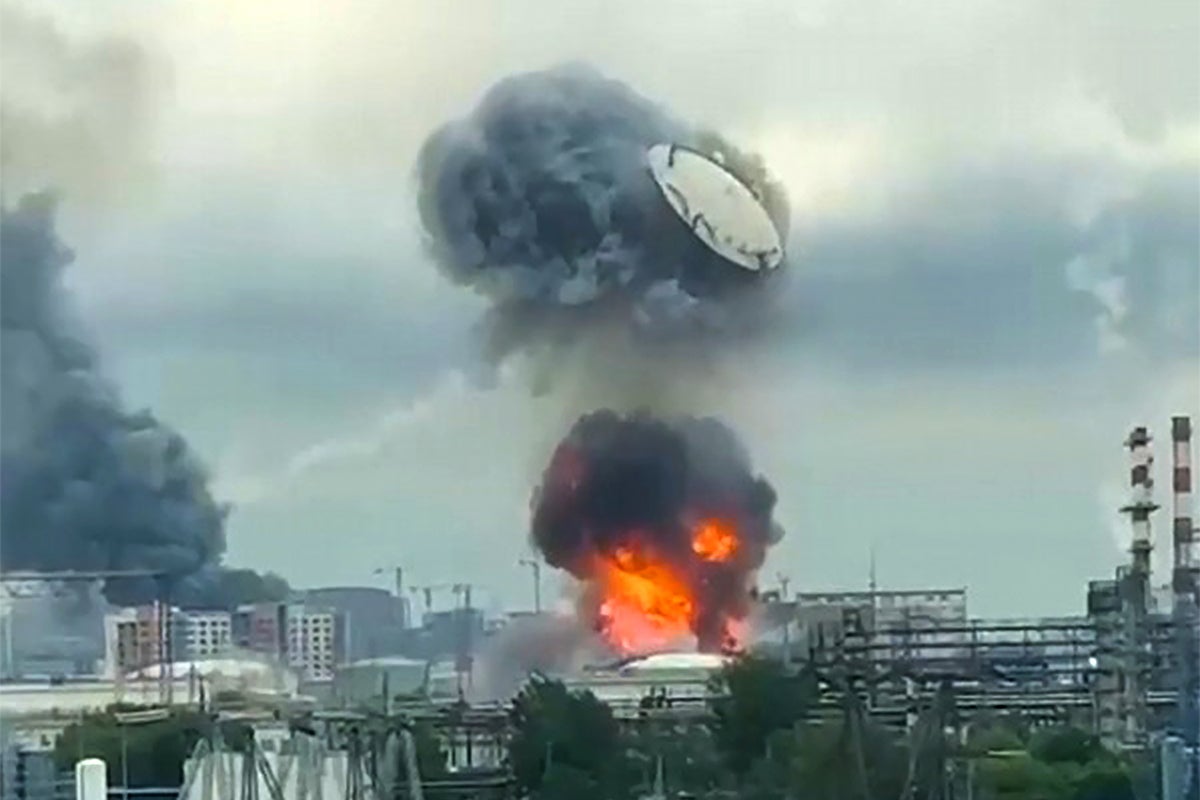
Ukraine-Russia war latest: Moscow suspends all flights as massive Ukrainian drone attack sparks oil refinery fire Moscows mayor says around 180 drones heading for the Russian capital alone have been downed so far
independent · 3 months ago
Ukraine hits Moscow oil refinery in response to strikes on Ukraine – Europe live
gdeltproject.org · 3 months ago
Ukraine strikes key Moscow oil refinery for the second time in a week - Breaking News
gdeltproject.org · 3 months ago
Ukraine launches largest attack on Moscow in two years, Russian media says
gdeltproject.org · 3 months ago
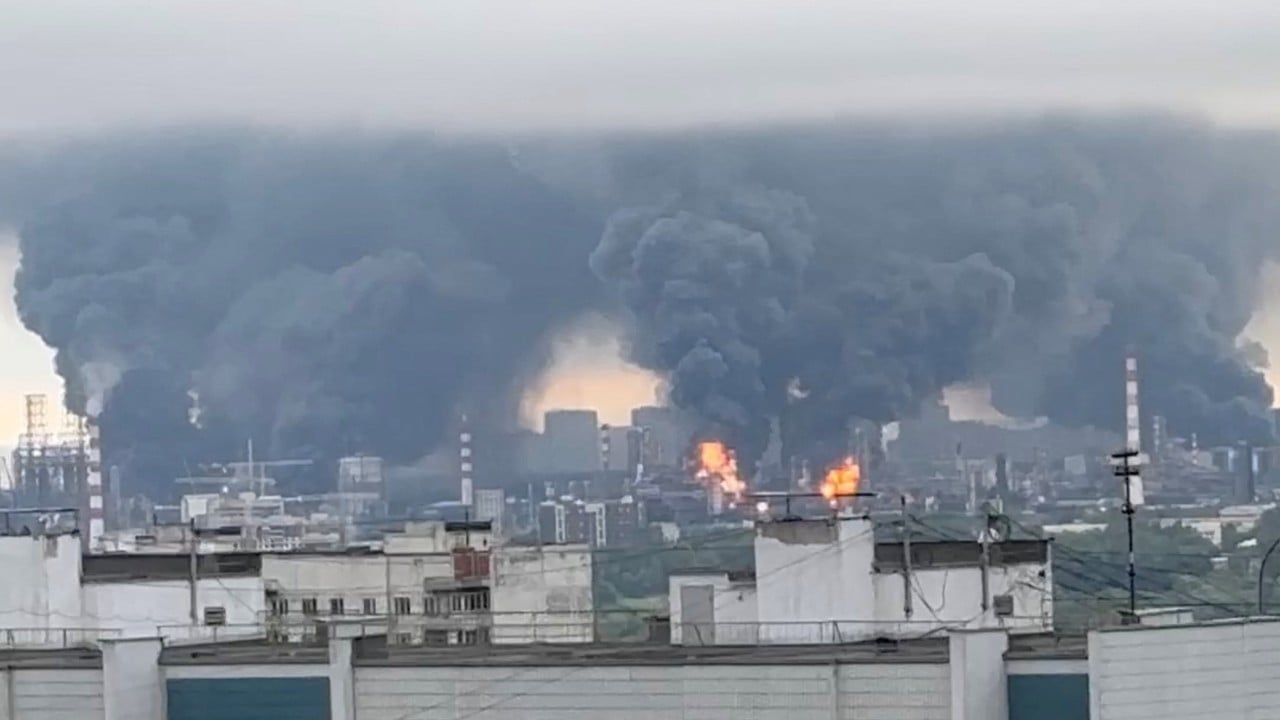
Drones hit Moscow oil refinery as Russia and Ukraine exchange strikes Ukrainian drones hit Moscows oil refinery for the second time this week while Russia fired missiles into Kyiv, as President Volodymyr Zelensky sought support from the US and Europe to reach a peace deal. Moscow downed over five dozen drones on Thursday, Mayor Sergei Sobyanin said on Telegram, and a Reuters witness saw flames and plumes of smoke over the southeastern district of Kapotnya where the Moscow refinery is located. Air defence forces continue to repel a massive attack. Several drones...
south china morning post · 3 months ago
Ukraine hits Moscow with large-scale attack, oil refinery strike justified, Zelensky says Smoke rose over Moscow Thursday morning after Ukraine launched its largest drone attack in years, hitting the Moscow oil refinery and sparking fires in and around the capital. The attack on the oil refinery was a "justified response" to Russian strikes in Ukraine, said President Volodymyr Zelensky.
france24 · 3 months ago
Russian oil refinery on fire after barrage of Ukrainian drones strike Moscow Scale of long range-attack catches Muscovites by surprise, prompting panicked messages on social mediaEurope live – latest updatesUkrainian drones have hit several locations across Moscow, including setting an oil refinery on fire, sending out flames and towering plumes of smoke over the city and forcing the capitals airports to suspend flights.The scale of the long-range attack, apparently designed to shut down operations at the key oil refinery in the Kapotno area, caught most Muscovites by surprise in a city that does not typically warn residents with air raid alarms, and prompted panicked messages on social media. Continue reading...
theguardian · 3 months ago
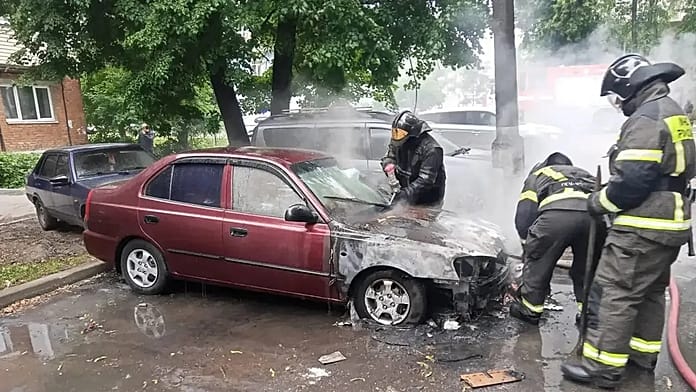
Ukraine strikes Moscow oil refinery for second time this week It comes as Ukrainian President Volodymyr Zelenskyy met with NATO Secretary General Mark Rutte in Brussels.
euronews · 3 months ago
Second Strike In Days Hits Key Moscow Oil Refinery Moscow Mayor Sergei Sobyanin said on the morning of June 18 that drones had attacked the Moscow Oil Refinery, the largest fuel supplier to the Moscow region.
radio free europe · 3 months ago
Moscow oil refinery on fire after large-scale Ukrainian drone strike Mayor of Russian capital claims about 180 drones heading to the city were shot down as flames and smoke billow over outskirts
telegram bot · 3 months ago
Ukrainian drones strike Moscow oil refinery, city shrouded in thick smoke – videos Ukrainian drones penetrated Moscows layered air defences and struck the Moscow Oil Refinery in Kapotnya, sparking a major fire at the facility.
ukrpravda · 3 months ago
Ukraine launches largest attack on Moscow in two years, Russian media says
gdeltproject.org · 3 months ago
Ukraine launches largest attack on Moscow in two years, Russian media says
gdeltproject.org · 3 months ago

Moscow oil refinery on fire after large-scale Ukrainian drone strike #Russia #Ukraine #Europe
mastodon bot · 3 months ago