Nyke Slawik, one of the few transgender members of Germany's Bundestag, said "Gesundheitsversorgung ist die wichtigste Suizidprävention" — healthcare is the most important suicide prevention. She made the remarks even as the trans community faces rising hostility and political attacks. [1]
The 32-year-old Green Party lawmaker from Leverkusen, who has served in parliament since 2021 and is her party's queer policy spokesperson, made the remarks in an interview published on Sunday. The comments came ahead of the Trans Day of Remembrance on Nov. 20, for which the newspaper taz published a special 22-page edition on trans lives. [1]
Slawik said trans people have become more visible internationally and in Germany, but that without political protection, this visibility can make them feel like targets. She described constant hate from the far-right AfD party in parliament, including instances where Beatrix von Storch deadnamed her former colleague Tessa Ganserer, prompting intervention by the Bundestag presidency. She said right-wing politicians particularly target trans women, combining misogyny with transphobia after finding they could no longer win votes with homophobia following marriage equality in the United States. She said the current government is waging a culture war against queer people by removing rainbow flags and cutting projects. She noted legal progress including a third gender option, marriage equality and the Self-Determination Act. Despite the hostility, she said "Ich bin Politikerin und gewählte Abgeordnete und ich nehme mir meinen Raum" — she is a politician and elected member who takes up her space. [1]
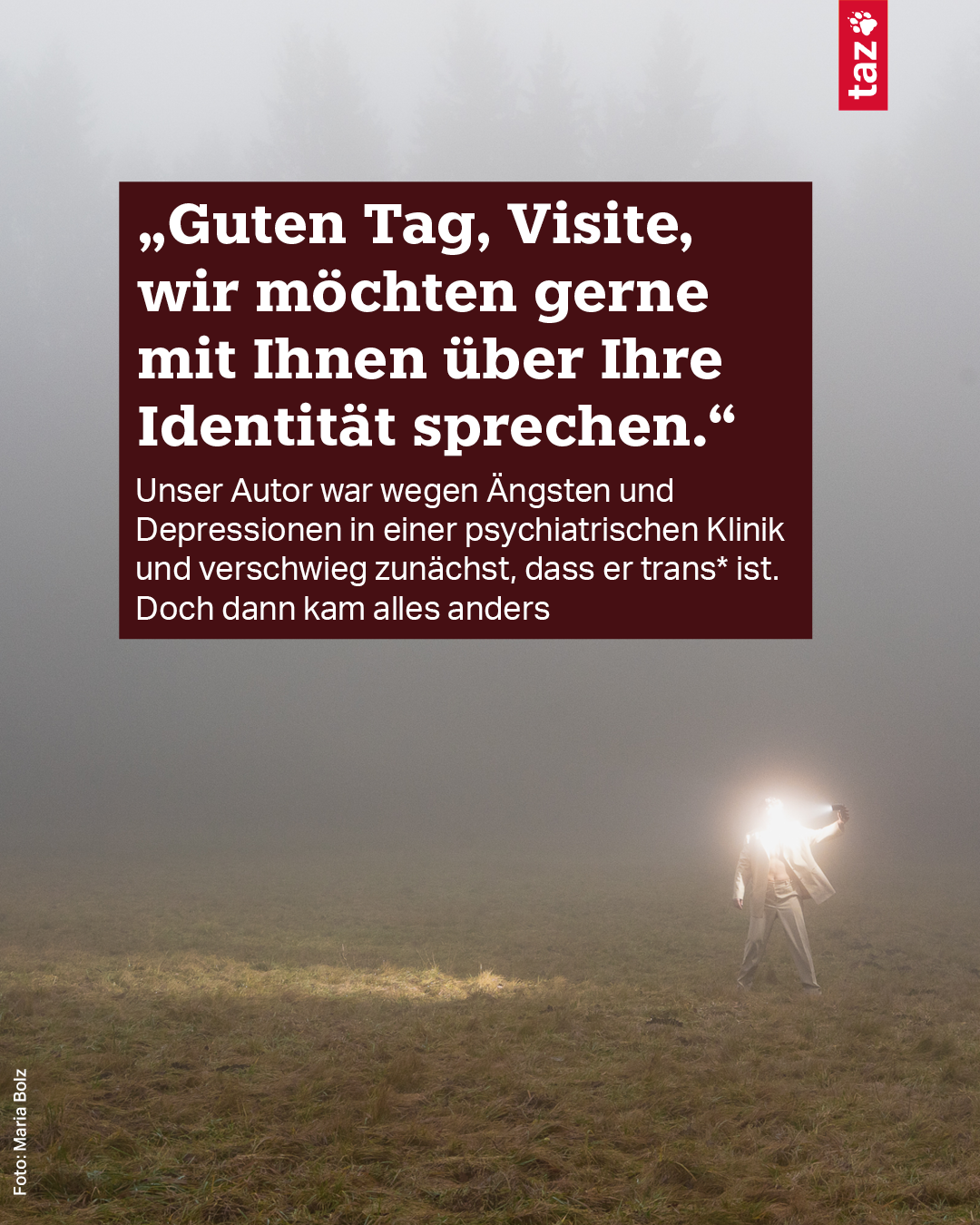
The stakes of healthcare access were illustrated in a separate first-person account of a trans man's stay at a psychiatric clinic for anxiety disorders and depression. [2] The author concealed his identity from his cisgender roommate. He described the fear of being outed, such as when buying sanitary pads at a drugstore and hiding them in his suitcase rather than the shared bathroom. [2]
He wrote that in a 2025 day clinic, fellow patients had googled his name and discovered he was trans. In the current clinic, his roommate knew only his first name. After he moved rooms, the roommate told him in the patient garden that he had enjoyed sharing the room, a moment the author described as feeling like passing a test. [2]