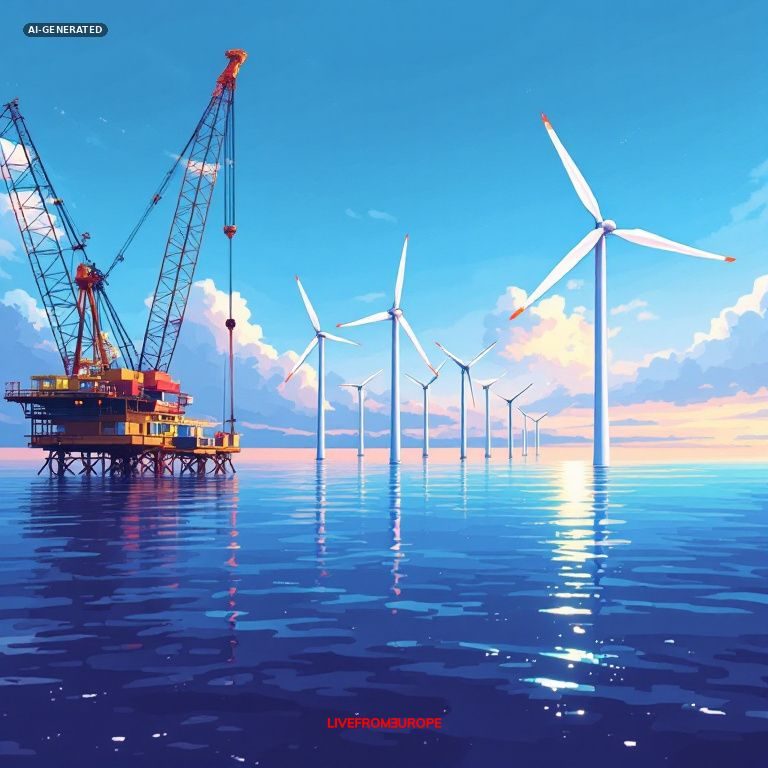
Europe is accelerating offshore wind projects to strengthen energy resilience as supply disruptions strain the continent’s fuel markets. Poland’s Baltic Power wind farm, a joint venture between Orlen and Northland Power, reached a milestone this week with the installation of all 76 turbines in the Baltic Sea, and the project has already begun test deliveries to the grid.
Roman Kowszewicz, Orlen’s executive director for procurement, said the project offered critical lessons for future offshore developments, emphasizing the need for long-term preparation, deep market analysis for each component, and systematic communication with suppliers. Orlen is building dedicated procurement teams to manage future projects, collaborating closely with its subsidiary Orlen Neptun to secure key components and foster local supply chains. Kowszewicz noted that local content policies aim to reduce risk for buyers while building technological independence among suppliers, though being Polish alone does not guarantee contracts.
The push for offshore wind aligns with broader efforts to diversify energy sources amid volatile global markets. Supply disruptions in the Middle East and Russia, compounded by refinery constraints, have left Europe with historically low fuel stocks and unstable prices, according to Indrek Sassi, head of motor fuel pricing at Circle K. European refineries, including TotalEnergies’ plants, are operating at full capacity to meet demand, with maintenance deferred to maintain output.
Orlen’s Baltic Power project is expected to provide decades of contracts for Polish firms, opening what Maciej Stryjecki of Orlen called a “huge field” for domestic suppliers, with guaranteed orders for the next 30 years. The project’s progress will be a focus at the upcoming New Industry Forum in Katowice on Oct. 13–14, where local content strategies will be discussed.