
Trump defiant in Independence Day address as storms force evacuation of National Mall spectators
Story Timeline
2 months · 10 summary articles
President Donald Trump delivered a defiant Independence Day address in Washington, D.C., on Saturday night, hours after severe storms forced the evacuation of 375,000 spectators from the National Mall and delayed his speech by 90 minutes. Speaking to a reduced crowd of roughly 150,000 who returned after the storm passed, Trump framed the United States as “the most extraordinary, most exceptional, most incredible nation ever to exist on the face of the earth,” while warning that communism posed an existential threat to American values. “We don’t want communists in our country,” he declared. “Never worked, and it never will work.”
The president’s address capped a day of national celebrations marred by extreme weather and political tensions. Earlier, a heat wave and thunderstorms disrupted parades, fireworks displays, and military flyovers across the country, including the cancellation of Washington’s Independence Day parade. In New York, a flotilla of historic ships sailed the Hudson River, including a schooner carrying a 1776 edition of the *Boston Gazette* that printed the full text of the Declaration of Independence. In Philadelphia, church bells rang precisely at noon to mark the moment in 1776 when the Continental Congress voted for independence.
Trump’s speech, delivered just before midnight, was preceded by a dramatic evacuation of the National Mall after lightning strikes forced officials to clear the area. Police used whistles to disperse hundreds of spectators who initially refused to leave, with some booing the order. The president, who had vowed on Truth Social to deliver his address “no matter what,” later sat with First Lady Melania Trump to watch a record-breaking fireworks display of 850,000 rockets over 40 minutes.
The celebrations unfolded against a backdrop of deep political polarization. Hundreds of members of the neofascist group Patriot Front marched through Washington, chanting “reclaim America” and waving Confederate flags, drawing condemnation from Democratic senators. Interior Secretary Doug Burgum dismissed the demonstration as a matter of free speech, while critics accused the Trump administration of downplaying the threat of white nationalism.
Trump’s rhetoric during the day had already set a combative tone. Speaking at Mount Rushmore on Friday, he declared communism a “mortal enemy” and accused domestic opponents of launching a “new offensive” against American identity. “We will never be a communist country,” he said, linking patriotism to military strength and economic resurgence.
The extreme weather, which killed at least 25 people nationwide and left 156 million under heat alerts, underscored the challenges of the semiquincentennial celebrations. Yet the mood in Washington remained defiant. Chants of “USA! USA! USA!” erupted as the fireworks lit up the sky, despite the late hour and lingering tensions.
As the nation marked 250 years since its founding, Trump’s speech reinforced his campaign-style messaging ahead of November’s midterm elections. He touted his record on gun rights, military recruitment, and foreign policy, declaring that “we are entering a new era of dominance.” Yet the day’s disruptions—from the storm to the supremacist march—hinted at the fractures in a country still grappling with its identity.
Follow us for live European news
- 3
- 2
- 1
- 1
- 1
- 1
- 1
- 1
- 1
- 1
- 1
- 1
- 1
- 1
- 1
2 further sources not geolocated
Articles
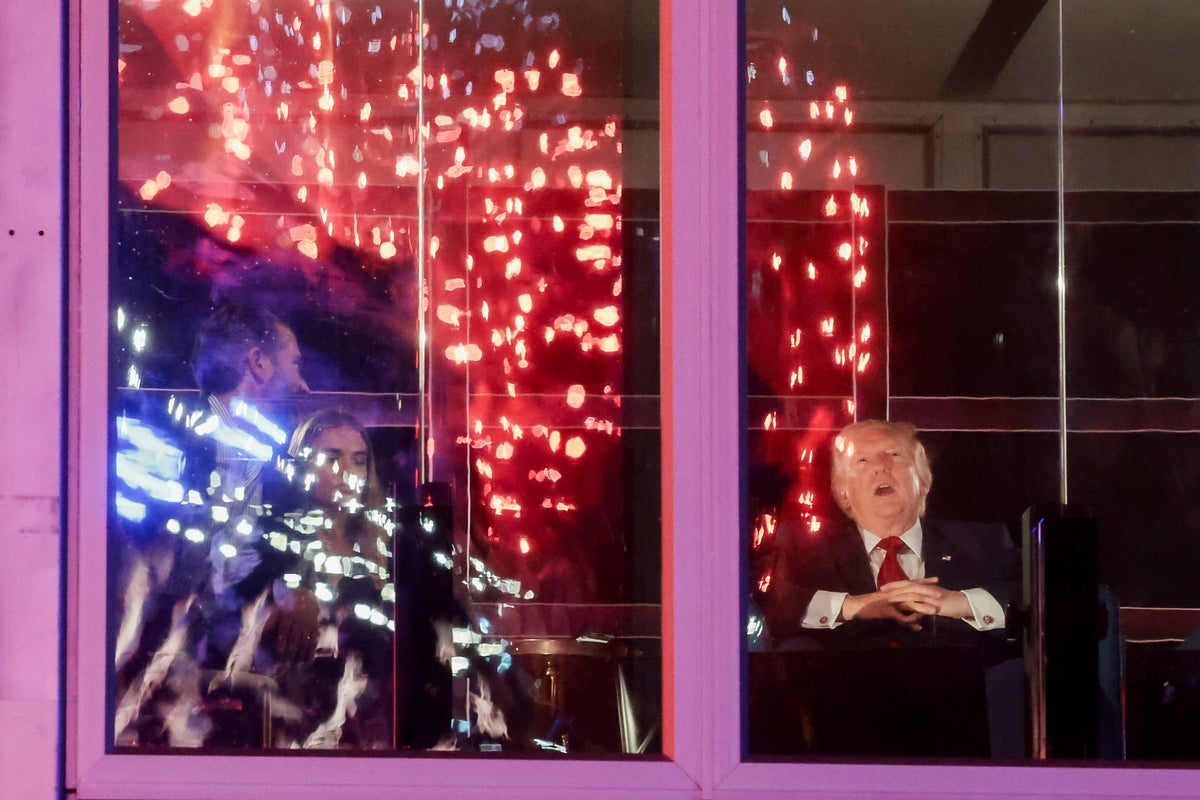
July 4 live: Trump rants about communism in delayed America 250 speech before he joins Melania to watch fireworks There was chaos on the National Mall as Freedom 250 attendees tried to return after being told to leave due to weather
independent · about 2 months ago

Extreme weather disrupts USs 250th anniversary celebrations Extreme weather disrupted the USs 250th anniversary celebrations, forcing evacuations, cancellations and delays.
aljazeera · about 2 months ago
Mărturia comandantului „Bricului Mircea care a participat la New York de ziua SUA: A fost o emoție intensă Nava-Școală „Mircea a participat, alături de ambarcațiuni din 20 de țări, la Parada Velierelor de la New York, chiar de Ziua Independenței Statelor Unite. Marinarii au povestit pentru Digi24 cum a fost întreaga experiență.
digi24 · about 2 months ago
Administraţia Trump minimalizează o defilare a militanţilor pentru supremaţia albilor Secretarul pentru afaceri interne din administraţia Trump, Doug Burgum, a relativizat duminică defilarea a câtorva sute de militanţi pentru supremaţia albilor, desfăşurată la Washington, cu ocazia celebrării a 250 de ani de la semnarea Declaraţiei de Independenţă, el subliniind importanţa libertăţii de exprimare în democraţia americană, transmite France Presse, preluată de Agerpres.
digi24 · about 2 months ago
US celebrates 250 years of independence amid polarising political landscape The 250th anniversary of American independence is colliding with a country gripped by political polarisation and a heat wave bearing down on millions of people across multiple states as celebrations got underway Saturday throughout the United States.
france24 · about 2 months ago
Trump praises US military as it marks 250 years of independence
aljazeera · about 2 months ago
Trump vagyonnyilatkozatában is megjelent a kolozsvári Trump-torony terve A Trump International Cluj-Napoca nevű komplexumhoz összesen 1850 lakást építenének.
444.hu · about 2 months ago

Les Etats-Unis fêtent leurs 250 ans, Trump les dépeint en "chef doeuvre" Au bout dun 250e anniversaire perturbé par la météo à Washington, Donald Trump a tressé samedi les lauriers des Etats-Unis, "chef doeuvre de lhistoire de lhumanité" selon lui, et renouvelé ses attaques contre ses opposants politiques qualifiés de "communistes". ...
la libre · about 2 months ago
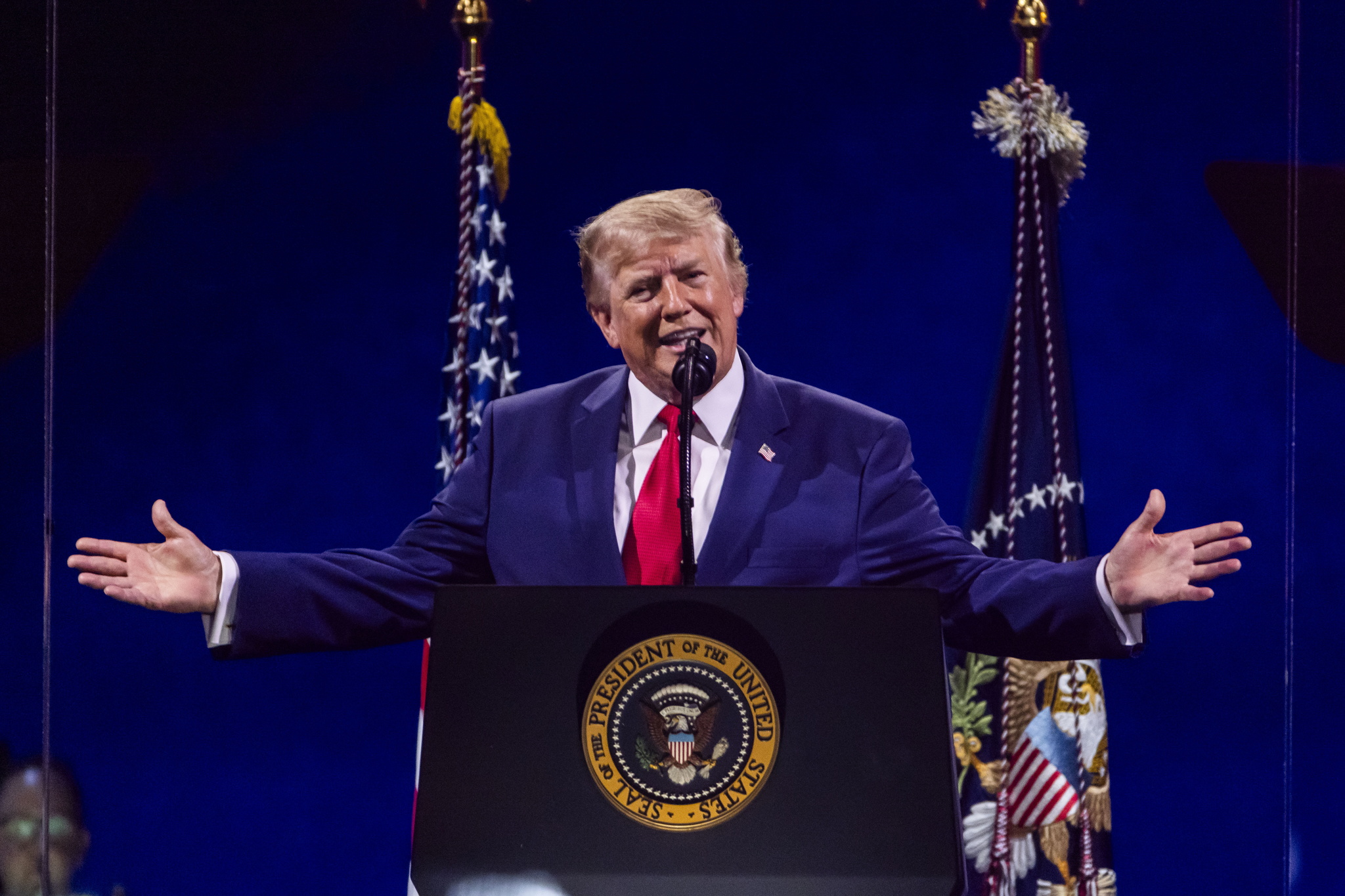
Trump ensalza la grandeza de EEUU en su 250 aniversario: "Nadie puede ser como nosotros" El presidente Donald Trump ensalzó este sábado la grandeza de Estados Unidos en el discurso central de los festejos por los 250 años de la Independencia del país, en una aparición demorada por el mal tiempo en la que aseguró que nadie podrá emular el poderío de la nación norteamericana. Leer
expansion · about 2 months ago
Las Vegas, Monster Truck-uri, NASA și Hollywood. Cum arată conceptul parcului „Donald Trump propus de Daniel Băluță Primarul Sectorului 4 Daniel Băluţă a prezentat într-o postare pe Facebook conceptul Parcului Prieteniei Româno-Americane „Donald Trump. El a explicat că arhitecții au imaginat un loc în care „educația, recreerea și tehnologia se îmbină în mod firesc.
digi24 · about 2 months ago
Grazie a me nessuno ha toccato il diritto di possedere e portare armi: il discorso di Trump alla cerimonia per i 250 anni degli Usa A metà tra comizio elettorale e celebrazione ufficiale, il presidente degli Stati Uniti Donald Trump è intervenuto nella cerimonia per il 250esimo anniversario degli Usa, con un intervento di 40 minuti in cui ha definito lAmerica il massimo traguardo della storia umana, rinnovando i suoi attacchi contro gli oppositori interni che ha etichettato come comunisti. […] Larticolo Grazie a me nessuno ha toccato il diritto di possedere e portare armi: il discorso di Trump alla cerimonia per i 250 anni degli Usa proviene da Il Fatto Quotidiano.
il fatto quotidiano · about 2 months ago

„Es war beschämend zu hören, wie Donald Trump BMW bedroht hat Einst Profi-Sportler, will Jermaine Johnson heute Gouverneur von South Carolina werden. Dreimal wählte der Bundesstaat Donald Trump. Dennoch glaubt der Demokrat an den Umschwung. Im Interview erklärt er, warum – und wie er auf BMW blickt, das in South Carolina sein weltweit größtes Werk betreibt.
welt.de · about 2 months ago
US capital braces for very unhealthy air as July 4 fireworks loom Health officials warned that Washington DC and surrounding suburbs will face dangerous air pollution levels on Saturday as extreme heat combines with a massive Independence Day fireworks display, urging vulnerable residents to remain indoors and avoid outdoor activities.
yenisafak · about 2 months ago
Türkiyes TCG Orucreis anchors in New York for US 250th anniversary Türkiyes TCG Orucreis frigate has anchored in New York Harbor to participate in the International Naval Review and Parade of Sail commemorating the 250th anniversary of the United States, joining allied warships for Sundays ceremonies on the Hudson River.
yenisafak · about 2 months ago
Trump warns on national cohesion marking US 250th anniversary US President Donald Trump warned Saturday that the nation risks losing its cohesion as it marks its 250th Independence Day, calling for fair elections and a free press.
yenisafak · about 2 months ago
Heat wave kills 25 as US Independence Day celebrations disrupted The National Weather Service warned that extreme heat and severe thunderstorms disrupted Independence Day celebrations across the United States on Saturday, with officials confirming that the death toll from the persistent heat wave has risen to 25 and nearly 156 million people remained under heat alerts.
yenisafak · about 2 months ago
Trump attacks communists, touts military might in July 4 speech US President Donald Trump used his Independence Day address on Saturday to condemn communism as a "cancer" that must be "cut out" and tout resurgent US military strength, while marking the 250th anniversary of American independence in Washington.
yenisafak · about 2 months ago
Trump varoval před komunismem. Oslavy 250 let USA zahalilo rozdělení společnosti i dým z ohňostrojů Spojené státy o víkendu oslavily 250. výročí nezávislosti. S rekordním ohňostrojem, historickými plachetnicemi na Hudsonu i projevem prezidenta Donalda Trumpa, kterého nezastavila ani čtyřicetistupňová vedra, ani bouřky.
denik n · about 2 months ago
Gute Stimmung dank Fußball: Kann die WM das Image der USA retten? Die Welt erwartete zur WM das Gegenteil eines Sommermärchens in den USA – nicht zuletzt wegen Donald Trump. Doch es kam anders. Was das für das Bild des Landes bedeutet, beschreibt Friedensforscherin Nicole Deitelhoff.
tagesspiegel · about 2 months ago

Avec 850 000 fusées, Washington soffre le plus grand feu dartifice de lhistoire du monde Point dorgue des célébrations du 250e anniversaire de lindépendance des États-Unis samedi 4 juillet, un immense feu dartifice tiré à Washington. Un nouveau record a été établi.
courrier international · about 2 months ago
America Celebrates 250 Years of Independence as Greek Americans Mark the Historic Milestone The United States commemorated its 250th Independence Day in a spectacular, if stormy, fashion on Saturday as celebrations for the nations semiquincentennial anniversary was broadcasted from the National Mall to communities across the globe. Despite extreme heat and a severe thunderstorm that temporarily evacuated crowds in Washington, DC, the historic milestone was marked by an […]
greek reporter · about 2 months ago
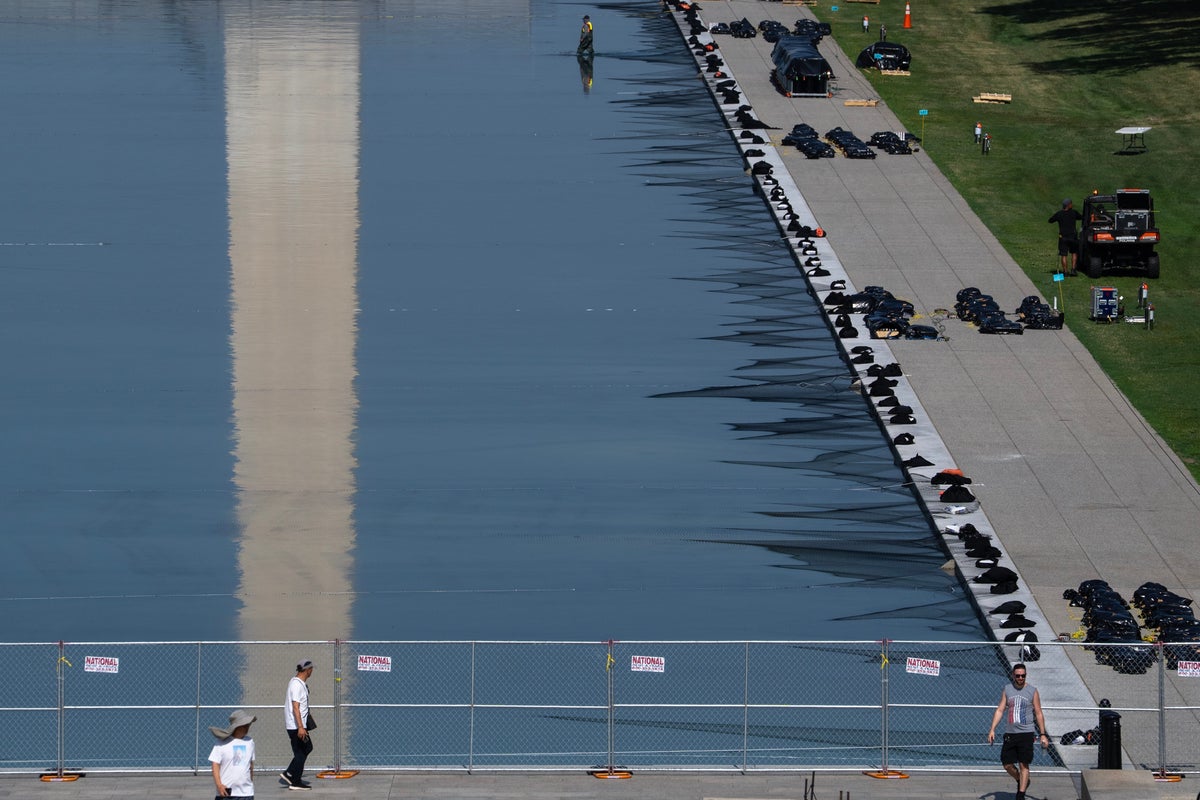
Trumps administration wont seek new bids to repair the Lincoln Memorial Reflecting Pool The Trump administration wont seek new bids to repair the Lincoln Memorial Reflecting Pool
independent · about 2 months ago

🎇America marked its 250th birthday with fireworks, fighter jets and storms. See all the celebrations on the Reuters World News podcast reut.rs/44x2b53
bluesky_Reuters · about 2 months ago
JUST IN - Trump posts about banners that have been hung on front of Dept of Interior building: "The wording above President Trump is "America First"—which needs no explanation!" Source: @disclosetv
telegram_Disclose.tv · about 2 months ago
Wo ist eigentlich Donald Trump bei „seiner Fußball-WM? [premium] Noch hat US-Präsident Donald Trump nicht einmal ein WM-Spiel seiner US-Amerikaner besucht. Dahinter steckt Kalkül. Nur welches? Darüber kursieren mehrere Theorien.
die presse · about 2 months ago
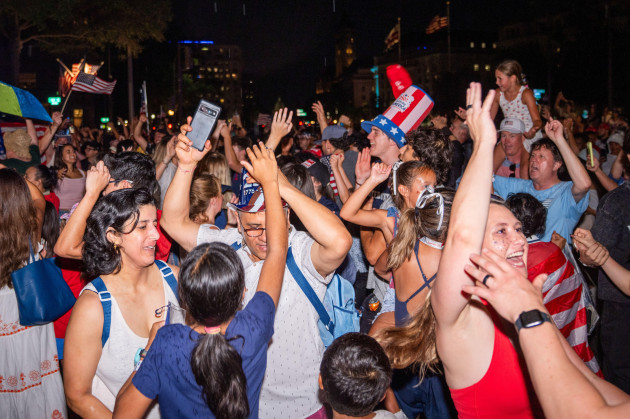
Extreme heat and thunderstorms induced chaos, but didnt stop Americans celebrating 4 July Despite the weather, the mood was joyous, with chants of USA! USA! USA! breaking out on the streets of Washington DC.
thejournal · about 2 months ago
France highlights role in American independence with historical re-enactments Over the weekend, the Palace of Versailles celebrated the 250th anniversary of American Independence with a historical re-enactment. The French government provided covert support to US states to help them obtain independence from the British.
france24 · about 2 months ago
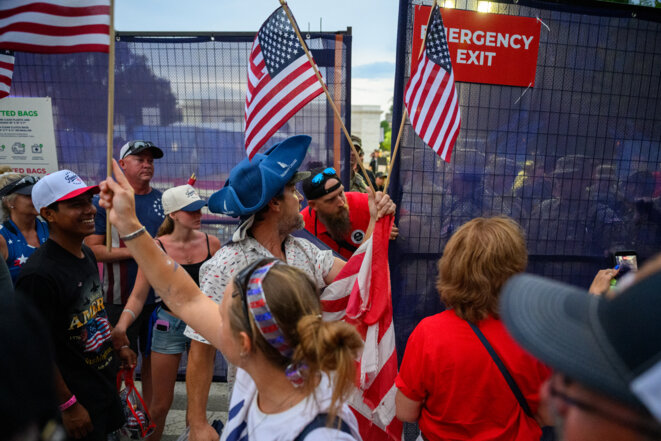
À Washington, une fête de lindépendance sur mesure pour lAmérique blanche et chrétienne pro-Trump Dans la capitale états-unienne, la vague de chaleur et les orages violents ont perturbé la «Grande Foire des États-Unis» samedi 4 juillet. La fête, devant célébrer les 250 ans de lindépendance du pays, a en réalité été façonnée pour servir lidéologie du président Trump.
mediapart · about 2 months ago
Germania: 1 milion de spectatori la Parada Pride de la Köln. „Cea mai mare manifestaţie în favoarea democraţiei din ţara noastră Parada Pride de la Köln a început duminică la prânz cu 60.000 de participanţi împărţiţi în 250 de grupuri şi până la 1 milion de spectatori, conform estimărilor organizatorilor evenimentului, unul dintre cele mai mari de acest gen din Europa, transmite agenţia de presă DPA.
digi24 · about 2 months ago
USA podľa Trumpa žiaria viac než kedykoľvek. Kritikov označil za komunistov a varoval pred odpornou hrozbou v krajine Donald Trump pri národných oslavách označil USA za vrcholný úspech ľudstva a politických rivalov za komunistov. Prejavom cieli na voličov pred voľbami.
aktuality.sk · about 2 months ago