Germany has narrowed the potential sites for a high-level nuclear waste repository to under 5% of its territory, the Federal Company for Radioactive Waste Disposal (BGE) announced on 27 October.
The remaining candidate areas span a belt from western Lower Saxony to Saxony-Anhalt, with additional pockets in southern Brandenburg, western Baden-Württemberg, eastern Bavaria, and parts of Schleswig-Holstein. Five federal states—Berlin, Hesse, Saxony, Rhineland-Palatinate, and Saarland—are no longer under consideration, while Hamburg was also excluded .
BGE chief executive Iris Graffunder said the agency will further reduce the list to a handful of regions by the end of 2027, which will then be proposed for above-ground exploration. The final decision rests with the Bundestag, with a target date of 2050 for selecting a site .
The search focuses on geologies of granite, salt, and clay, which are deemed best at containing radiation, resisting water and gas, and withstanding high temperatures. BGE geologist Lisa Seidel described the ideal site as “a geology that has been as uneventful as possible for the past million years and will remain so for the next million” .
Bavaria’s environment minister, Thorsten Glauber, reiterated his opposition to granite formations, arguing that containers cannot be guaranteed to remain sealed for a million years. He called for greater use of state geological data to accelerate the process .
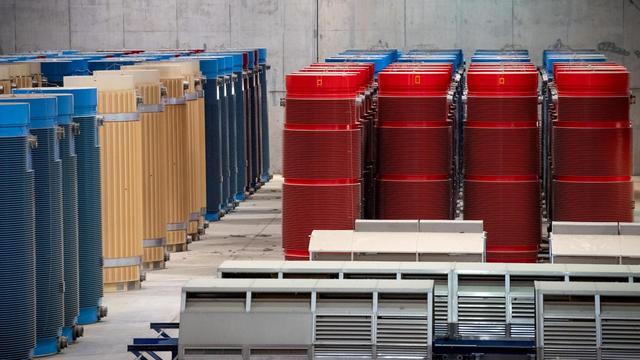
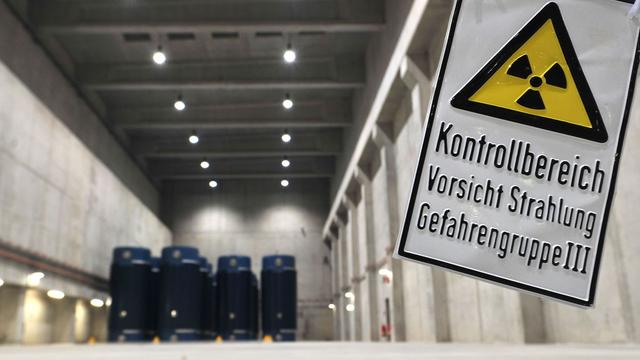
The repository must safely store roughly 27,000 cubic meters of high-level waste, equivalent to 10,500 tonnes of heavy metal in about 1,900 Castor containers. The site must lie at least 300 meters underground, surrounded by a 100-meter-thick barrier layer, and ensure containment for at least one million years .