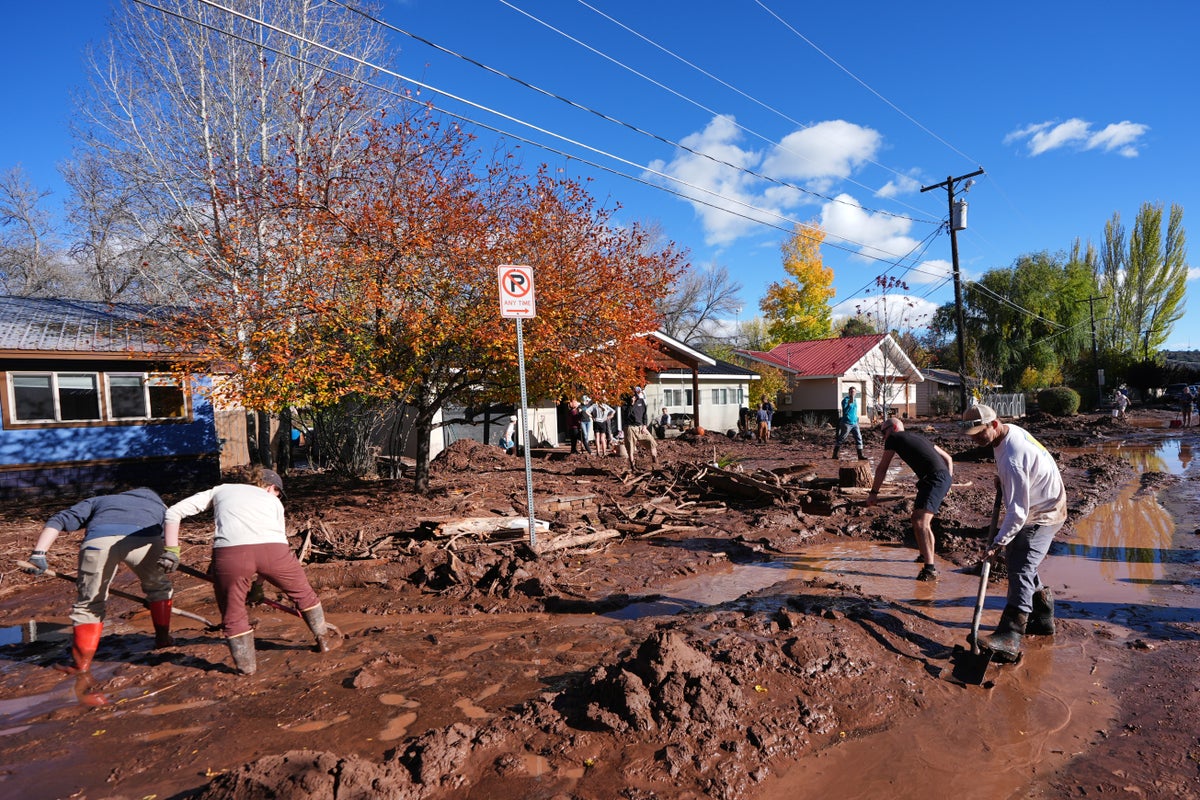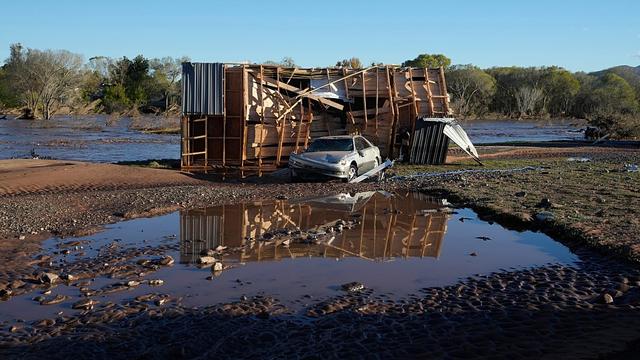
Catastrophic flash floods swept across the US Southwest this week, turning communities in Colorado and New Mexico into lakes of mud and forcing hundreds to evacuate.
More than 20 trillion gallons of rain fell on the Four Corners states and Nevada over the past two weeks, according to calculations by former National Oceanic and Atmospheric Administration chief scientist Ryan Maue. At least one person died in the floodwaters, and police suspect a second death was weather-related. Hundreds of residents were forced to evacuate, with rescue teams carrying out dozens of operations, including helicopter rescues. In Arboles, Colorado, cars, motorhomes and homes were swept away, while in Camp Verde, Arizona, residents scrambled to safety as water rose around an RV park.
In Pagosa Springs, Colorado, retired school teacher Jack Ellis surveyed damage along the San Juan River, which went through two rounds of severe flooding in recent weeks. "This is quite a disaster for everybody, especially in the low-lying areas," Ellis said. In Durango, about 60 miles to the west, Willow Bradner's ranch-style home was surrounded by about two feet of mud. Nearly five feet of water from the overflowing Junction Creek poured inside at one point.
"Our basement became a soup bowl," Bradner said. She and her husband had asked if they needed flood insurance and were told they were outside the flood zone. "The majority of our savings is in this house," she said. "We have to dig deep and we have to rebuild."
Officials in New Mexico's San Juan County said the major rivers, including the San Juan, Animas and La Plata, had all crested. None were below flood stage, with waters expected to recede over 24 to 48 hours. In Durango, the San Juan River reached 16.81 feet, flooding parts of the town before its level began to fall. While hundreds of evacuees were returning home on Tuesday, swift-water rescue teams remained busy and flood risks persisted as the water moved through the dry landscape.
Officials said cleanup and repairs in Pagosa Springs could take weeks or more, as walkways and bridges collapsed or were heavily damaged. Around 200 residents in Durango joined cleanup efforts on Monday, clearing mud and debris from homes and streets. The heavy rainfall also brought some relief to reservoirs in a region enduring a prolonged drought.
Some communities in Colorado and Utah made alternative Election Day voting plans because of the flooding. "I hope the federal government helps out a little bit. I know we're a blue state," Ellis said. "I just hope that they come through because we all pay taxes and we all work for each other in a time like this."