Romania is facing a surge of Russian-coordinated sabotage threats in the Black Sea, with recent drone attacks targeting commercial vessels near its coastline and a newly exposed espionage network operating across the region.
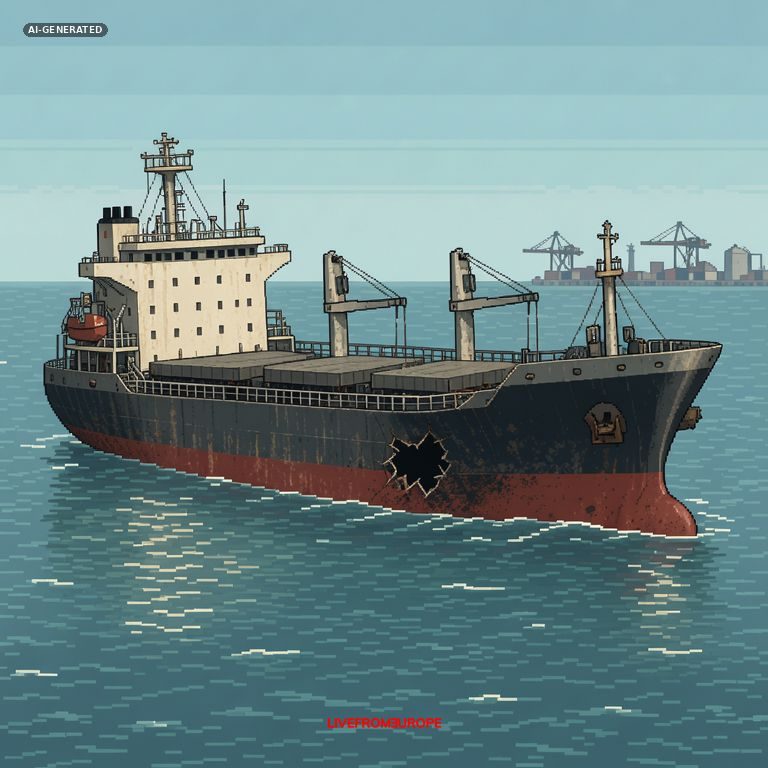
On 23 October, the cargo ship *Khoryv* sank 13 nautical miles off Constanța after a drone strike, killing one crew member and leaving three missing. The vessel, flying the Comoros flag, was en route to Sulina when it issued a distress call. President Nicușor Dan confirmed the attack involved drones and linked it to Russia’s escalation in the Ukraine war, while Prime Minister Luca Niculescu called it a “flagrant violation of international law.” The incident followed earlier strikes near Sulina on 14 and 15 October, where two chemical tankers were hit—one inside Romanian territorial waters.
Romania’s intelligence service, the SRI, revealed on 26 October that it had dismantled a Russian-directed sabotage network responsible for a September fire at the Carfil industrial site in Brașov, near a state-owned arms manufacturer. The network, involving Belarusian and Ukrainian nationals, targeted defense and industrial facilities across Romania and other EU states. Two suspects were arrested in Germany, and a third was located in Poland, with European Arrest Warrants issued for their extradition.
NATO responded to Romania’s request for support by deploying additional surveillance assets, including maritime patrol aircraft, radars, drones, and explosive analysis teams from eight member states. The alliance’s spokesperson, Allison Hart, announced the measures on 20 October, the same day Romania’s new government took office. President Dan later described allied solidarity as “unwavering.”
The Black Sea has seen a sharp rise in attacks this year, with over 163 commercial vessels struck in the first eight months, according to Turkey’s IMEAK maritime chamber. Ambrey, a maritime security firm, reported that Russian strikes accounted for 90% of recent attacks on commercial shipping, particularly near NATO members Romania and Bulgaria. The region’s strategic importance has grown as Ukraine relies on Black Sea routes for exports, while Romania’s Neptun Deep gas project raises the stakes for regional energy security.