
Liechtenstein princely house ends male-only throne succession for future heirs

Story Timeline
18 hours · 2 summary articles
Liechtenstein princely house ends male-only throne succession for future heirs
Liechtenstein ends male-only royal succession, allowing firstborn child to inherit throne
Continuation
Liechtenstein’s ruling princely house announced on Saturday a change to its succession rules, ending the tradition of male primogeniture and allowing the firstborn child to inherit the throne regardless of gender.
The reform was disclosed during the country’s National Day celebrations. Hereditary Prince Alois, who has managed day-to-day affairs since 2004, stated in a speech that the decision was approved by a two-thirds majority of voting family members. “The order of succession to the throne will be changed, moving from male primogeniture to absolute primogeniture,” he said, according to the text of his address published on the princely house’s website. “This means that in the future, the firstborn, regardless of gender, will become the heir to the throne and subsequently the prince or princess of Liechtenstein” .
The change applies only to future descendants of Alois and his wife, Hereditary Princess Sophie, and will not affect the current line of succession. Prince Hans-Adam II remains the head of state, though he delegated most powers to Alois in 2004, in line with Liechtenstein’s tradition of monarchs ceding authority to their successors. Alois and Sophie have four children, with their eldest, 31-year-old Prince Joseph Wenzel, currently first in line .
The princely house framed the decision as a means to ensure the most prepared individual leads the country. “We wish to guarantee that both the Principality of Liechtenstein and the princely house are led by the person who has been best prepared for it,” Alois said in a statement. “These are the sons and daughters of the sovereign who grow up in Vaduz and are familiarized from a young age with the particularities of the principality and the princely house” .
Liechtenstein, a constitutional monarchy with a population of around 40,000, is situated between Switzerland and Austria. The country granted women the right to vote in national elections in 1984, following a referendum. Last year, Brigitte Haas became the first female prime minister in the nation’s history .
Follow us for live European news
- 3
- 2
- 2
- 1
- 1
- 1
- 1
- 1
- 1
Articles

Nu kan kvinnor ta över tronen i Liechtenstein Hittills har bara män fått sitta på tronen i Liechtenstein. Men nu har furstendömet bestämt att även kvinnor får göra det.
expressen · about 3 hours ago
Le Liechtenstein ouvre la succession au trône aux femmes Cest lune des plus petites monarchies dEurope. Et lune des dernières à adopter le principe dégalité homme-femme au sein même de la couronne. Le Liechtenstein accepte douvrir la succession du trône aux femmes. Une décision pas facile à prendre dans ce petit pays conservateur coincé entre la Suisse et lAutriche.
rfi.fr · about 5 hours ago
Monarkiat | Liechtenstein sallii jatkossa naistenkin nousta valtaistuimelle Kruununprinssi Alois ilmoitti muutoksesta lauantaina maan kansallispäivän juhlallisuuksien yhteydessä.
helsingin sanomat · about 9 hours ago
O monarhie europeană schimbă regulile de succesiune. Femeile vor putea moșteni tronul Regulile de succesiune la tron vor fi schimbate, astfel încât, în viitor, și o femeie să poată deveni șef al principatului.
adevarul · about 11 hours ago

Mostantól már nem csak fiúk örökölhetik a trónt Liechtensteinben Az uralkodóház azt akarja biztosítani, hogy a jövőben a legfelkészültebb személy kerüljön a fejedelemség élére.
hvg.hu · about 12 hours ago
Liechtenstein schimbă regulile de succesiune: O femeie poate moşteni tronul Casa regală din Liechtenstein a anunţat sâmbătă că regulile de succesiune ale acestei mici ţări vor fi modificate, astfel încât, în viitor, o femeie să poată moşteni tronul principatului, relatează AP.
digi24 · about 13 hours ago
Liechtenstein: Frauen dürfen künftig Fürstin werden
orf.at · about 13 hours ago
Már nemcsak fiúgyerek örökölheti a lichtensteini trónt Az öröklési rendben a férfi elsőszülöttség jogát felváltja az abszolút elsőszülöttség. Ezzel azt szeretnék elérni, hogy a legfelkészültebb személy örökölje a trónt.
444.hu · about 14 hours ago
Liechtenstein changes succession rule to allow women to ascend the throne The declaration was made on the national day of the central European country, which has a population of just 44,000.
bbc · about 14 hours ago
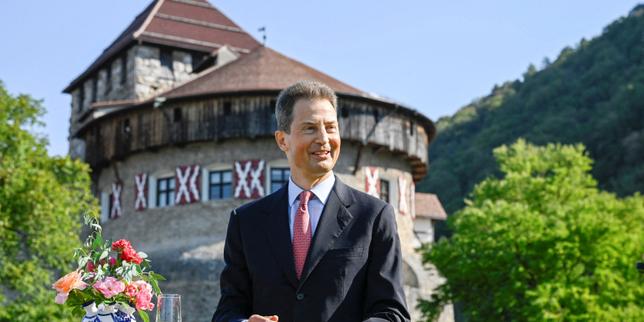
Liechtenstein changes its rules to allow women to inherit the Alpine principalitys throne Hereditary Prince Alois announced the change in his speech marking the countrys national day.
le monde · about 14 hours ago
Monarhia din Europa care schimbă ordinea de succesiune la tron. „De la primogenitura masculină la primogenitura absolută O casă princiară a Europei a anunțat, sâmbătă, instaurarea egalității de gen în succesiunea la tron. Astfel, tronul din Liechtenstein va fi moștenit de primul născut, indiferent dacă acesta este băiat sau fată, informează AFP. „Ordinea de succesiune la tron trece de la primogenitura masculină la primogenitura absolută. Asta înseamnă că pe viitor, primul născut …
hotnews.ro · about 15 hours ago
Rozhodovat už bude pouze věk. Lichtenštejnsko zavádí rovnost pohlaví v nástupnictví na trůn Lichtenštejnský vládnoucí rod v sobotu oznámil zavedení rovnosti pohlaví v nástupnictví na trůn. Dědicem a následně knížetem či kněžnou malé alpské země se tak nově stane nejstarší potomek bez ohledu na to, zda půjde o muže, či ženu. O změně rozhodla samotná dynastie, informovala agentura AFP.
irozhlas.cz · about 15 hours ago
Liechtenstein past regels aan voor gelijke troonopvolging Ook vrouwelijke leden van het vorstenhuis kunnen in de toekomst de troon opvolgen in Liechtenstein. Het vorstenhuis heeft de regels aangepast, waardoor het oudste kind van de vorst troonopvolger wordt, ongeacht het geslacht. Dat meldt het vorstenhuis zaterdag in een persverklaring op de website.
rtl nieuws · about 15 hours ago