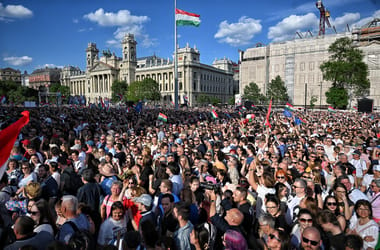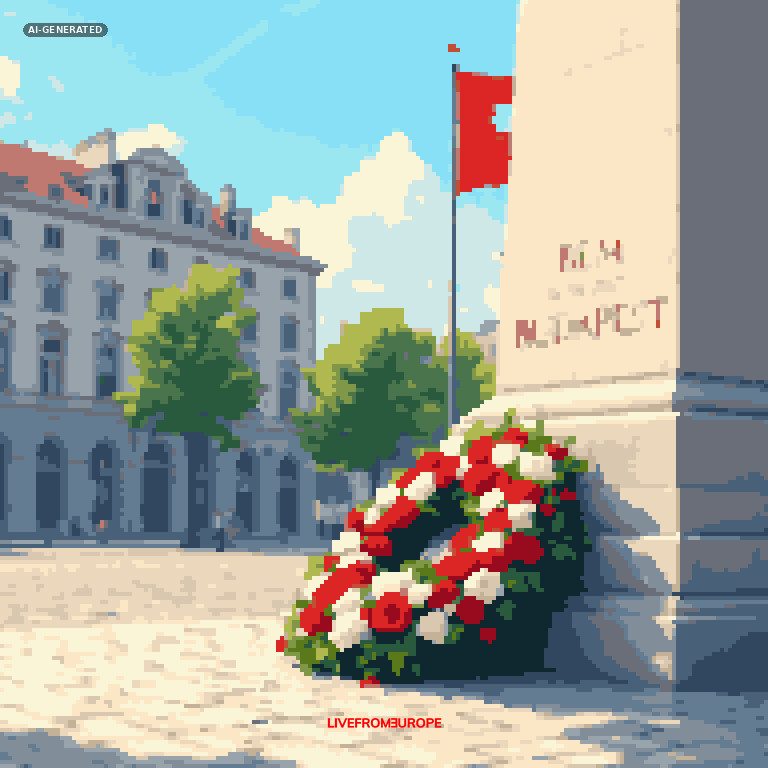
Hungary marked the 70th anniversary of the 1956 Revolution on Friday with ceremonies in Budapest, including a wreath-laying at Bem Square and a parliamentary session addressed by Prime Minister Péter Magyar and European Commission President Ursula von der Leyen.
Magyar paid tribute to the demonstrators in a speech at Bem Square, calling their march a moment when Hungarians became "free citizens" and announcing plans to build a museum dedicated to the revolution’s heroes and victims. He described the flag with a hole, where the communist coat of arms was cut out, as a lasting symbol of Hungarian freedom and condemned attempts to divide the nation .
In Sarajevo, Anikó Gyenge, Chargé d’Affaires of Hungary’s embassy in Bosnia and Herzegovina, delivered an address recalling the revolution’s origins in student protests and its rapid escalation into a nationwide uprising against Soviet rule. She noted the human cost—2,652 Hungarians and 720 Soviets killed—and the exodus of 200,000 Hungarians after the suppression, while emphasizing the revolution’s enduring legacy in Europe’s struggle for freedom .
The parliamentary ceremony in Budapest featured von der Leyen’s speech, while Magyar later addressed crowds at Kossuth Square. The events underscored Hungary’s renewed cooperation with the European Union following the fall of Viktor Orbán’s government, with European Council President António Costa also in attendance .
Magyar reiterated his commitment to peace and stability, linking Hungary’s participation in the EU’s EUFOR Althea mission in Bosnia and Herzegovina to the lessons of 1956. He stressed that freedom and democracy must never be taken for granted, a message echoed in Gyenge’s remarks in Sarajevo .