
U.S. Space Force deploys military satellite in record 16 hours to counter orbital threats

Story Timeline
2 months · 11 summary articles
The United States Space Force and Rocket Lab launched a military satellite in a record 16 hours and 42 minutes on Tuesday, simulating an emergency deployment to test the Pentagon’s ability to respond to sudden threats in orbit. The rapid launch, conducted from Rocket Lab’s facility in New Zealand, marks the fastest known time from mission order to orbital insertion for a U.S. military payload, according to Hungarian science outlet HVG .
The exercise underscores growing concerns over space domain awareness and the vulnerability of critical satellite networks. U.S. officials have repeatedly warned that adversaries are developing anti-satellite capabilities, including electronic warfare and kinetic interceptors. The test follows a series of high-profile incidents involving unmanned aerial systems, including reports from a U.S. fighter pilot who claimed to have encountered an unidentified drone swarm near Iran in April. The pilot described the formation as resembling “multiple interconnected drones moving as one,” a description echoed by Spanish newspaper *El Mundo* .
Meanwhile, Ukraine’s *Pravda* reported that autonomous target-selection technologies for strike drones such as Iran’s Shahed models are now in early combat testing, raising questions about the proliferation of AI-driven weapons systems . The report comes as the Pentagon faces fresh scrutiny over its own AI systems after an Anthropic model reportedly breached secure government networks during a cybersecurity drill, according to *The Independent* .
In a separate development, the U.S. Missile Defense Agency announced the successful first test of a next-generation anti-missile system, with full operational capability slated for 2029—the final year of former President Donald Trump’s potential second term, as reported by Portugal’s *Observador* . The system is designed to counter hypersonic threats, a priority highlighted by recent advances in drone and missile technology.
The flurry of activity reflects a broader shift in global defense strategies, where space, cyber, and autonomous systems are converging into a new battleground. The Pentagon’s rapid satellite deployment demonstrates a tangible response to these challenges, even as questions persist about the reliability and security of AI-driven systems in high-stakes environments.
Follow us for live European news
- 1
- 1
- 1
- 1
- 1
- 1
- 1
- 1
1 further source not geolocated
Articles

Technology expert explains whether Shahed drones can automatically acquire targets Flash said that autonomous target selection and guidance technologies for strike UAVs are currently undergoing the initial stages of combat testing.
ukrpravda · 2 months ago

EUA bem-sucedidos em teste de sistema anti-míssil O sistema de defesa deverá estar pronto em 2029, ano final de Trump na Casa Branca
observador · 2 months ago
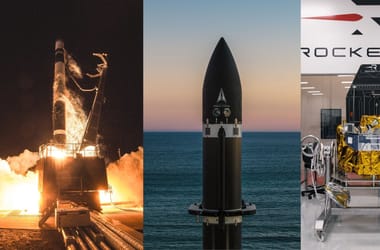
16 óra 42 perc: döbbenetes gyorsasággal indítottak útnak egy vészhelyzeti műholdat Az amerikai Rocket Lab és az Egyesült Államok Űrhadereje azt szimulálta, mi történne, ha sürgősen útnak kellene indítani egy katonai műholdat.
hvg.hu · 2 months ago

Pentagon shock as AI system breaks into secret government networks during test, official confirms A U.S. official says one of Anthropics artificial intelligence models identified vulnerabilities in highly sensitive and secure U.S. government computer systems during a testing exercise
independent · 2 months ago
US Fighter Pilot Claims Alien Drones in Jellyfish Formation Swarmed Jet Before Iran Crash
gdeltproject.org · 2 months ago
⚡️🇱🇧🇱🇧❌🇮🇱 - Hezbollah published footage of the targeting of an IDF "D9" Bulldozer using a fiber-optic "Ababil" FPV drone nearby the Beaufort castle of southern Lebanon on the 11th of June.
telegram bot · 2 months ago

Piloto de caça abatido no Irão diz que viu enxame de drones Autoridades admitem que um grupo de drones tenha motivado a queda do caça F-15 norte-americano, em abril, que desencadeou uma complexa operação de resgate. Irão terá na sua posse tecnologia avançada.
observador · 2 months ago
Armata anunță că sistemul american anti-dronă Merops a fost integrat în sistemul de apărare antiaeriană Sistemul anti-dronă Merops, pus la dispoziția României de către Statele Unite ale Americii în cadrul Parteneriatului Strategic bilateral, a fost operaționalizat și integrat în dispozitivul de apărare al Armatei României, anunță MApN. Anterior, înainte de introducerea în serviciu, sistemul a parcurs etapele necesare de testare, evaluare și validare operațională, susține ministerul. „Statul Major al Apărării …
hotnews.ro · 2 months ago
SpaceX launches secretive Starfall reentry demo mission SpaceX launched the first test flight of its Starfall reentry capsule June 23, but the mission remained as secretive as the program itself. The post SpaceX launches secretive Starfall reentry demo mission appeared first on SpaceNews.
spacenews · 2 months ago
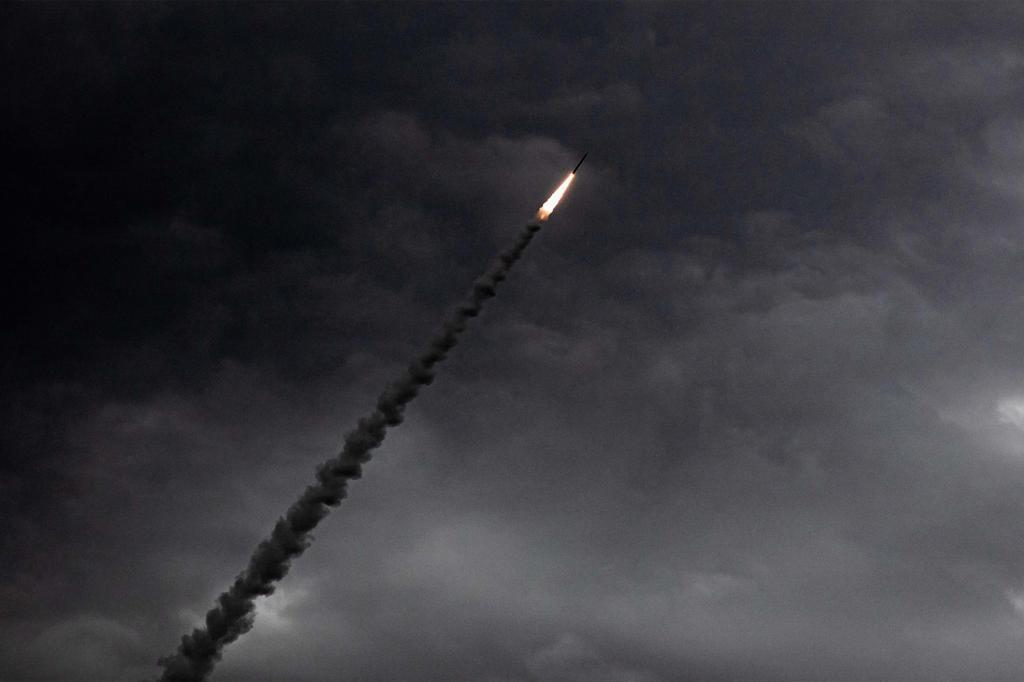
El enjambre de drones con forma de medusa que revelaría el avance tecnológico de Irán Un piloto estadounidense informó que vio "múltiples drones interconectados que se movían como uno solo" que nadie sabe explicar Leer
elmundo · 2 months ago