Loading…
 Saturday, September 26Saturday, September 26
4 months · 7 summary articles
Russia on Monday rejected fresh Ukrainian and European peace proposals, insisting the war’s outcome will be decided on the battlefield as Moscow presses territorial gains in Ukraine. Senior Kremlin officials in Moscow and Brussels confirmed the stance on June 8, dashing hopes of an imminent diplomatic breakthrough after weeks of shuttle diplomacy by Kyiv and EU capitals.
The rebuff came as European Commission enlargement chief Marta Kos arrived in Kyiv to finalise preparations for Ukraine’s accession talks, set to open on June 15. Speaking to reporters, Kos said Polish concerns over Kyiv’s EU bid had been resolved at the working level, clearing the way for the historic launch of membership negotiations. “For the time being, I think this issue has been solved at the working level,” she told journalists in Kyiv .
Meanwhile, Germany, France, Britain and Ukraine issued a joint call from London for President Vladimir Putin to accept an immediate and complete ceasefire and enter direct negotiations. “This was emphasized in a joint statement following a meeting in London between the leaders of these nations and Ukrainian President Zelenskyy,” according to a report by OSINTdefender . Finnish President Alexander Stubb, however, struck a more conciliatory tone, telling reporters he did not believe Putin would attack Europe and urging dialogue to resolve tensions.
The diplomatic impasse coincides with intensified fighting in eastern Ukraine, where Russian forces have made incremental advances in recent weeks. Military analyst Jörgen Elfving told Sweden’s Dagens Nyheter that Putin’s portrayal of steady Russian progress did not match battlefield realities. “On the whole, the impression is rather that Ukraine has the wind in its sails,” Elfving said .
In a parallel development, EU foreign affairs chief Kaja Kallas is scheduled to discuss the impact of sanctions on the Russian-owned Aughinish Alumina plant in Dublin on Tuesday. The facility has been accused of supplying refined alumina to Moscow’s defence sector despite EU restrictions. Kallas raised the issue in Brussels on Monday, warning that circumvention of sanctions undermines Europe’s economic leverage over the Kremlin .
Against this backdrop, Ukrainian President Volodymyr Zelenskyy met King Charles III at Windsor Castle to coordinate winter energy supplies and air-defence support. The two leaders also discussed ways to accelerate peace efforts, with Zelenskyy insisting any halt to frontline fighting must not result in a frozen conflict. “As always, a pleasant audience,” Zelenskyy said in remarks carried by Ukraine’s Digi24 .
The EU is set to adopt a new “mini-package” of sanctions on June 15, targeting more than 80 Russian propagandists, human-rights violators and defence-linked companies. The measures follow a visit by Kos to a Kyiv suburb struck by Russian missiles, where she pledged continued EU support for reconstruction and reform .
Follow us for live European news
3 further sources not geolocated

War, economic crisis, and discontent in Putins Russia - International Viewpoint
gdeltproject.org · 4 months ago
How Ukraines decentralised renewables can help end the global fossil fuel crisis cycle
gdeltproject.org · 4 months ago

Senior Russian officials on June 8 effectively rejected recent Ukrainian and European proposals aimed at restarting negotiations to end Russias full-scale war, signaling that Moscow remains focused on battlefield gains rather than diplomacy. #Russia #EU
mastodon bot · 4 months ago
#Russia #EU Germany, France, Great Britain, and Ukraine have called on President Putin to agree to an immediate and complete ceasefire and to engage in direct negotiations. This was emphasized in a joint statement following a meeting in London between the leaders of these nations and Ukrainian President Zelenskyy. Subscribe to @OSINTdefender Chat room
telegram bot · 4 months ago
#Russia #EU Finnish President Alexander Stubb does not believe that Putin will attack Europe and advocates for dialogue with him to resolve tensions, emphasizing the importance of negotiations to end the conflict. Subscribe to @OSINTdefender Chat room
telegram bot · 4 months ago
Zelenskyy meets King Charles III Ukrainian President Volodymyr Zelenskyy has met King Charles III of the United Kingdom.
ukrpravda · 4 months ago
Lho fatto io!: Trump e Meloni complici degli aumenti della benzina. Finiamo questa relazione tossica! di Simona Abbate* Era il 2022 quando lattacco della Russia allUcraina ha gettato lEuropa nel caos energetico. Sono passati solo quattro anni e siamo di nuovo allo stesso punto: una crisi internazionale fa salire i prezzi, famiglie e imprese pagano il conto, mentre le compagnie del petrolio e del gas trasformano linstabilità globale in nuovi […] Larticolo Lho fatto io!: Trump e Meloni complici degli aumenti della benzina. Finiamo questa relazione tossica! proviene da Il Fatto Quotidiano.
il fatto quotidiano · 4 months ago
Zelenskyy says Abramovich offered to carry messages to Kremlin Ukrainian President Volodymyr Zelenskyy revealed that Russian oligarch Roman Abramovich visited Kyiv and offered to deliver a message to Vladimir Putin, but insisted it be done quietly. Zelenskyy said he told Abramovich that Ukraine would not leave Donbas and that halting frontline fighting could accelerate peace, but not as a frozen conflict.
yenisafak · 4 months ago
Polish premier urges talks with Zelenskyy over WWII unit naming row Prime Minister Donald Tusk has publicly appealed for direct talks between Polish President Karol Nawrocki and his Ukrainian counterpart Volodymyr Zelenskyy to defuse a growing diplomatic row over Kyivs decision to name a military unit after a World War II nationalist force implicated in massacres of ethnic Poles, warning that conflict serves Moscows interests.
yenisafak · 4 months ago
„Rusia alege războiul. Oficialii de la Kremlin au respins propunerile de pace venite de la „troica europeană În data de 8 iunie, înalți oficiali ruși au respins, de fapt, recentele propuneri ale Ucrainei și ale Uniunii Europene menite să relanseze negocierile pentru încetarea războiului pe scară largă purtat de Rusia, dând de înțeles că Moscova rămâne concentrată mai degrabă pe câștigurile de pe câmpul de luptă decât pe diplomație.
digi24 · 4 months ago
Volodimir Zelenski s-a întâlnit cu regele Charles al III-lea. Liderul de la Kiev: „Ca întotdeauna, o audiență plăcută Președintele ucrainean Volodimir Zelenski s-a întâlnit luni, 8 iunie, cu regele Charles al III-lea la Castelul Windsor, în cadrul vizitei sale în Regatul Unit, în contextul în care Kievul colaborează cu aliații europeni pentru a relansa eforturile de a pune capăt războiului, relatează Kyiv Independent.
digi24 · 4 months ago
Kráľ Karol III. prijal Volodymyra Zelenského, riešili zimné dodávky energií a posilnenie protivzdušnej obrany Kráľ Karol III. prijal na Windsore Volodymyra Zelenského. Spoločne riešili, ako Spojené kráľovstvo pomôže Ukrajine zvládnuť zimné útoky na energiu a obranu.
aktuality.sk · 4 months ago
„Creierul lui Putin nu mai poate explica războiul. Ideologul Kremlinului vorbește despre exod, ruine și o Rusie aflată în declin Aleksandr Dughin, filosoful ultranaționalist supranumit de presa occidentală „creierul lui Putin, unul dintre cei mai vocali susținători ai invaziei din Ucraina, pare să fi rămas fără argumente pentru a justifica războiul.
adevarul · 4 months ago
Explained: Roman Abramovichs Behind-the-Scenes Role in Russia-Ukraine Peace Talks The billionaire recently traveled to Ukraine carrying messages between Moscow and Kyiv. Its not the first time he has been involved in peace efforts.
themoscowtimes · 4 months ago
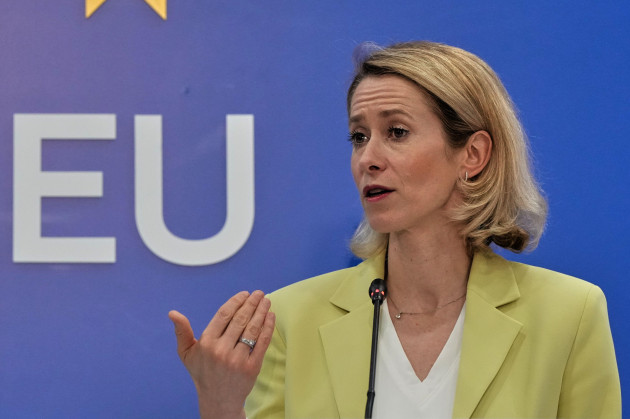
EU foreign affairs chief will discuss impact of sanctions on Aughinish Alumina in Dublin meetings Kaja Kallas was speaking to reporters in Brussels this morning and the issue of the Russian owned factory sending refined alumina to Russia was raised.
thejournal · 4 months ago

⚡️Polish concerns over Ukraine EU talks solved, EU enlargement chief says. "For the time being, I think this issue has been solved at the working level," the EUs Enlargement Chief Marta Kos said in a meeting with journalists in Kyiv on June 8, referring to Polands objection.
bluesky bot · 4 months ago
Lavrov kritiseeris Zelenskõi kirja: viisakad inimesed nii ei käitu Venemaa välisminister Sergei Lavrov kritiseeris Ukraina presidendi Volodõmõr Zelenskõi kirja Venemaa režiimi juhile Vladimir Putinile, öeldes, et selle avalikustamine näitab Ukraina vähest huvi läbirääkimiste vastu.
postimees · 4 months ago
EU enlargement commissioner visits Kyiv to discuss reforms European Commissioner for Enlargement Marta Kos is visiting Kyiv to support Ukraines implementation of the reforms required for its accession to the European Union.
ukrpravda · 4 months ago
EUs chief diplomat reveals details of mini Russia sanctions package to be adopted on 15 June The European Unions upcoming "mini-package" of sanctions against Russia, set to be approved at the EU Foreign Affairs Council meeting in Luxembourg on 15 June, will target over 80 Russian propagandists, human rights violators and companies linked to Russias defence industrial base.
ukrpravda · 4 months ago
Russia will divert export oil to refineries amid fuel shortage concerns, Reuters says Russia plans to reduce crude oil exports as it seeks to increase refining volumes in June amid concerns over fuel shortages.
ukrpravda · 4 months ago
Pro Ukrajinu už vybrala téměř milion dolarů. ‚Dokud tu budou Rusáci, budu tu taky, říká Čechoameričanka Z Československa odplavala Markéta Vorlová před 40 lety jako uprchlík s jednou taškou a loni doma ve Spojených státech vysbírala půl milionu dolarů na pomoc Ukrajině. Její motivace je prostá, rodinná zkušenost se socialismem a odpor ke Kremlu. Půl milionu dolarů už je pořádný balík peněz, takže Čechoameričanka Markéta tráví hodně času v Evropě a samozřejmě i na Ukrajině.
irozhlas.cz · 4 months ago
EU Commissioner Kos names date for official launch of Ukraines accession talks European Commissioner for Enlargement Marta Kos has officially confirmed that the European Union will formally open accession negotiations with Ukraine on June 15.
ukrinform · 4 months ago
EU Commissioner Kos visits site of Russian strike in Lukianivka During her visit to Kyiv, Marta Kos, the European Commissioner for Enlargement, together with Deputy Prime Minister for the Restoration of Ukraine and Minister for Communities and Territories Development of Ukraine Oleksii Kuleba, visited the Lukianivka district of Kyiv, one of the areas hardest hit by Russias large-scale attacks.
ukrinform · 4 months ago

Expert: Putins framgångsbild stämmer inte – Ukraina har vind i seglen Rysslands president Vladimir Putin fortsätter att hävda att landets styrkor avancerar längs hela fronten. Men verkligheten ser annorlunda ut – och de ryska framgångarna är begränsade. – På det stora hela är intrycket snarare att Ukraina har vind i seglen, säger militäranalytikern Jörgen Elfving.
dagens nyheter · 4 months ago