Loading…
 Saturday, September 26Saturday, September 26
4 months · 5 summary articles
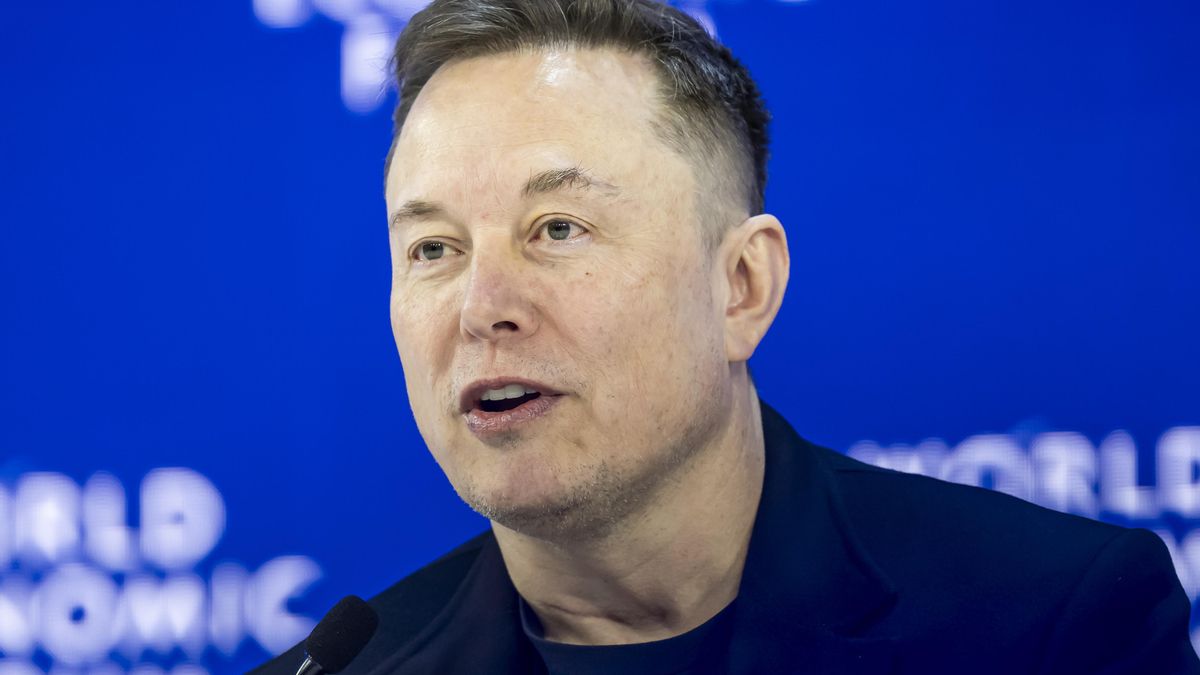
Elon Musk has become the world’s first trillionaire on paper after SpaceX’s record-breaking initial public offering on Friday, vaulting his combined stake in the rocket company and Tesla past the $1 trillion mark. The Nasdaq-listed shares of SpaceX closed at $160.95 on Thursday, capping a debut that valued the company at more than $2 trillion and erased in a single day the $160 billion in market capitalisation Tesla has lost over the past six months.
SpaceX’s IPO, the largest in history, immediately transformed Musk’s financial standing. The company’s valuation surged from $18.7 billion in revenue and nearly $5 billion in losses in 2025 to a market capitalisation exceeding that of every publicly traded U.S. corporation except Apple and Microsoft. Analysts noted that the listing marks the first time an individual’s wealth has reached the trillion-dollar threshold in public wealth rankings, though the fortune remains tied to volatile equity.
The milestone arrives as Tesla, once the sole engine of Musk’s wealth, struggles with declining deliveries, shrinking margins, and intensifying competition from Chinese automakers such as BYD. Tesla’s market capitalisation has fallen from $1.43 trillion in December 2025 to about $1.27 trillion, a drop that would have devastated most multinationals. Musk, however, has redirected investor focus toward SpaceX, Starlink, and his artificial intelligence ventures, including the $2 billion investment Tesla made in xAI earlier this year.
Critics, including Nobel laureate Paul Krugman, argue that Musk’s fortune rests on a self-reinforcing cycle of expectation rather than tangible results. Krugman has described the SpaceX valuation as emblematic of markets rewarding future promises over present performance, citing unfulfilled projects such as Hyperloop, the Boring Company’s tunnels, and fully autonomous driving. “The markets are rewarding the expectation of future success,” Krugman said, “not the delivery of current performance.”
The IPO also thrust Musk back into the spotlight for reasons beyond finance. Researchers accused him of amplifying violent rhetoric on X, formerly Twitter, following anti-immigration riots in Belfast, describing his platform as a megaphone for divisive discourse. The criticism underscores the dual role Musk now occupies: as a financial phenomenon and as a polarising public figure whose influence extends across technology, space, and social media.
With SpaceX shares now among the most widely held in index funds, millions of retail investors have indirectly bought into Musk’s vision of a multiplanetary future powered by Starlink and reusable rockets. Whether the valuation withstands the test of time remains an open question, but for now, Musk’s trillion-dollar milestone has redefined the boundaries of personal wealth and corporate ambition.
Follow us for live European news
1 further source not geolocated

Lansarea SpaceX la bursă: Cele mai importante cifre ale companiei lui Elon Musk după listare – a ajuns la 2.000 de miliarde de dolari. „Când Silicon Valley se unește cu Wall Street Listarea Space X pe Nasdaq a debutat spectaculos, într-un eveniment considerat deja cea mai mare ofertă publică inițială (IPO) din istorie, care l-a făcut pe cel mai bogat om din lume să devină primul trilionar (o mie de miliarde) de pe Pământ. Acțiunile companiei lui Elon Musk au încheiat prima zi la 160,95 dolari, cu …
hotnews.ro · 4 months ago

Un estudio de Cambridge: el monopolio de SpaceX erosiona la soberanía de los estados La firma de Elon Musk es responsable del lanzamiento de casi el 80 de toda la carga útil que la humanidad ha enviado al espacio
la vanguardia · 4 months ago
Größter Börsengang der Geschichte: SpaceX knackt Zwei-Billionen-Marke TOP-THEMA-SpaceX knackt beim Börsendebut Zwei-Billionen-Marke - Schlusskurs 161,11 Dollar
tagesspiegel · 4 months ago
Elon Musk becomes first trillionaire on paper after SpaceX IPO The SpaceX initial public offering has pushed Elon Musks combined holdings in the rocket company and Tesla past the $1 trillion mark on paper, marking the first time an individual has reached this valuation in public wealth rankings although the fortune remains tied to volatile equity.
yenisafak · 4 months ago

"Il dispose dun pouvoir sans équivalent" : Musk accusé davoir amplifié des discours violents sur X après les émeutes xénophobes à Belfast Elon Musk, dont la fortune a dépassé les 1.000 milliards de dollars, a été vivement critiqué par des chercheurs qui laccusent vendredi damplifier sur X des discours violents liés aux émeutes anti-immigration à Belfast. ...
la libre · 4 months ago
Elon Musk tiene un nuevo maná para olvidar lo que ha perdido con Tesla La fuerte subida de SpaceX en el primer día de cotización permite al controvertido emprendedor y magnate superar los 160.000 millones de capitalización perdidos por Tesla en seis meses ante las dudas sobre su futuroLas acciones de SpaceX se disparan un 19 en su debut en bolsa, y Musk se convierte en la primera persona con un billón de dólares Hubo un tiempo en que la fortuna de Elon Musk subía y bajaba al ritmo de Tesla. Hoy esa relación ya no es tan directa porque el controvertido magnate y emprendedor surafricano afincado en EEUU tiene un nuevo superunicornio con SpaceX, cuyo inicio de cotización le ha permitido olvidarse de las pérdidas en bolsa de Tesla. El fabricante de vehículos eléctricos ha perdido unos 160.000 millones de dólares de valor bursátil en apenas seis meses. La empresa que en diciembre de 2025 valía 1,43 billones de dólares capitaliza ahora alrededor de 1,27 billones. Para cualquier multinacional sería una destrucción de riqueza gigantesca. Para Musk, sin embargo, la caída coincide con el momento en que otras piezas de su conglomerado tecnológico están disparando su valor y se convierten en su nuevo maná. Golpe de timón en Tesla Desde sus difíciles comienzos en 2003, arrastrando pérdidas millonarias enjugadas por los petrodólares de fondos del golfo Pérsico, Tesla fue sinónimo de coche eléctrico. Pero esa definición empieza a quedarse pequeña y, al mismo tiempo, insuficiente para sostener las expectativas del mercado. En 2025 los beneficios netos se desplomaron un 46, hasta 3.794 millones de dólares. Los ingresos procedentes de la venta de automóviles cayeron un 10, hasta 69.526 millones. La producción retrocedió un 7 y las entregas un 9, hasta 1,63 millones de vehículos. Por primera vez en muchos años, Tesla dejó de ser una máquina de crecimiento imparable. La competencia china, encabezada por BYD, junto a la inoportuna aventura política de Musk junto a Donald Trump, arrebataron a la compañía el liderazgo mundial del vehículo eléctrico. Los fabricantes asiáticos han convertido el precio en su principal arma y han obligado a Tesla a sacrificar márgenes para mantener cuota de mercado. La desaparición de incentivos fiscales en Estados Unidos y el creciente desgaste de la imagen pública de Musk tampoco han ayudado. Los datos muestran además una dependencia cada vez más acusada del Model 3 y el Model Y. Los Cybertruck, Semi, Model S y Model X apenas representaron una pequeña fracción de la producción total. El negocio energético crece con fuerza, pero sigue siendo insuficiente para compensar completamente el enfriamiento del automóvil. Menos coches y más IA y robots Musk, sin embargo, lleva tiempo preparando a los inversores para mirar en otra dirección. A comienzos de año anunció una inversión de 2.000 millones de dólares de Tesla en xAI, la empresa de inteligencia artificial que fundó para competir con OpenAI y Anthropic. No era una simple operación financiera. Era una declaración de principios. Tesla ya no quiere ser vista únicamente como un fabricante de coches, sino como una empresa de inteligencia artificial, software, robótica, robotaxis y módulos de baterías. Los únicos coches que vamos a fabricar serán autónomos, con la excepción del Roadster, llegó a afirmar ante accionistas y analistas. La frase resume el cambio estratégico. El vehículo deja de ser el producto final para convertirse en una plataforma. El negocio del futuro pasa por monetizar software, conducción autónoma, datos e inteligencia artificial. De ahí la insistencia en proyectos como el Cybercab, el robotaxi sin volante ni pedales, o Optimus, el robot humanoide que Musk imagina trabajando en fábricas y hogares. La apuesta sigue siendo arriesgada. Wall Street lleva casi una década escuchando promesas sobre la llegada inminente de la conducción autónoma total. Los plazos se han retrasado una y otra vez. Pero el mercado continúa dispuesto a concederle el beneficio de la duda porque observa algo que va mucho más allá de Tesla. Un vendedor de expectativas La salida a bolsa de la compañía espacial este ha cambiado el centro de gravedad del universo Musk. La empresa debutó en el Nasdaq con una valoración cercana a los dos billones de dólares, convirtiéndose de inmediato en una de las mayores cotizadas estadounidenses. Los inversores añadieron cientos de miles de millones de dólares de valor en una sola jornada, pese a que la compañía registró pérdidas cercanas a los 5.000 millones de dólares el pasado ejercicio y obtuvo unos ingresos de 18.700 millones. La operación supone una demostración de fuerza extraordinaria. SpaceX controla la mayor red de lanzamientos espaciales del planeta, domina el mercado de internet por satélite gracias a Starlink y se ha convertido en la principal apuesta privada para la futura economía espacial. Pero la valoración alcanzada también refleja algo más: la confianza de los mercados en la capacidad de Musk para convertir promesas tecnológicas en negocios multimillonarios. Críticas a Elon Musk El premio Nobel de Economía Paul Krugman se ha convertido en una de las voces más críticas con el empresario, al que equipara con arquitecto de un sistema empresarial piramidal que requiere constantemente de nuevas aportaciones para no quebrar. Coincidiendo con la salida a bolsa de SpaceX, el economista ha argumentado que buena parte de la fortuna de Musk descansa sobre un círculo de expectativas que se retroalimenta. Los inversores compran acciones porque creen en su genio empresarial y esa subida de las cotizaciones refuerza, a su vez, la percepción de que se trata de un visionario infalible. Krugman recuerda que algunos de los proyectos más ambiciosos anunciados por Musk durante la última década siguen lejos de convertirse en realidad. Los sistemas Hyperloop nunca llegaron a operar comercialmente, los túneles de Boring Company continúan siendo marginales, la conducción autónoma total sigue sin desplegarse de forma masiva y la colonización de Marte permanece, de momento, en el terreno de la ciencia ficción. Según el Nobel, la valoración de SpaceX es un nuevo ejemplo de cómo los mercados premian la expectativa futura mucho más que los resultados presentes. También critica que la rápida incorporación de la compañía a determinados índices bursátiles obligará a millones de pequeños ahorradores a comprar indirectamente acciones de la empresa a través de fondos indexados. De hecho, Elon Musk se ha visto envuelto en varios pleitos por demandas presentadas por accionistas de Tesla contra sus abultadas retribuciones o por manipulación del mercado.
eldiario.es · 4 months ago
Space X : son décollage fulgurant à Wall Street propulse la fortune de Musk dans les hautes sphères La société spatiale et dintelligence artificielle a terminé sa première journée de cotation, vendredi 12 juin, sur une valorisation à plus de 2 000 milliards de dollars, faisant dElon Musk le premier homme de lhistoire à peser 1 000 milliards de dollars.
liberation · 4 months ago
NÄDALA NÄGU ⟩ Triljonimees Aafrikast kutsub kosmilisest glamuurist osa saama Lõuna-aafriklasest Elon Muskist ei saa iialgi Ühendriikide presidenti, küll aga on temast pärast eilset saanud USAs tegutsev maailma ajaloo kõige rikkam inimene. Vähemalt ametlikult. Ulatuslikule aktsiarallile on antud stardipauk ja neid, kes tahavad uue aja kosmilisest ja digitaalsest glamuurist osa saada, on ikka väga palju. Paraku on nii, et SpaceXi osaks olev tehisaru Grok genereerib tänaseni käsu peale lapspornot, aga see häirib vist väheseid, keda suur raha lummab.
postimees · 4 months ago

Worlds first large-scale hydrogen engine starts generating electricity
news.yahoo.com · 4 months ago