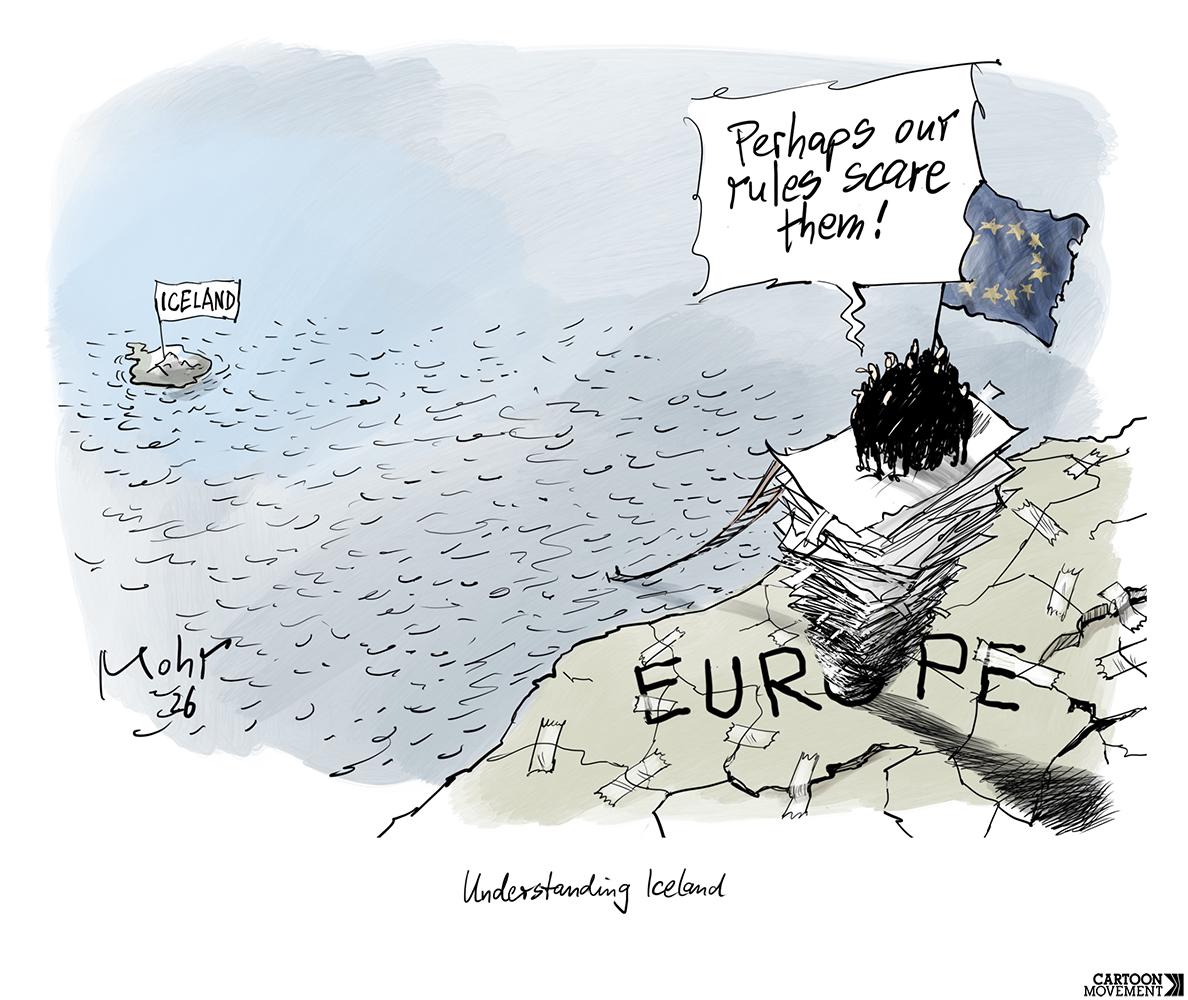
Icelanders voted against resuming European Union accession talks in a referendum held on Saturday, with 52.8% rejecting the proposal and 47.2% in favor, according to final results reported on Sunday. The non-binding vote, called by Prime Minister Kristrún Frostadóttir’s tripartite coalition government, revealed deep divisions, with rural areas overwhelmingly opposing the measure while Reykjavík supported it by margins of 55% to 60% in some districts.
The government, which includes Frostadóttir’s Social Democrats, the liberal party led by Foreign Minister Thorgerdur Katrín Gunnarsdóttir, and a formation tied to pensioners and disability rights led by Education Minister Inga Saeland, pledged to respect the outcome. Frostadóttir stated that all viewpoints must be acknowledged, noting the near-even split in public opinion .
The referendum centered on whether to reopen negotiations first launched in 2009, paused in 2013, and frozen in 2015. Economic concerns dominated the debate, particularly the potential impact on Iceland’s fishing industry, which accounts for nearly 40% of exports and 8% of GDP. Supporters of resuming talks argued that EU membership could stabilize prices by adopting the euro, while opponents feared losing control over fishing quotas and national sovereignty .
Guðrún Hafsteinsdóttir, leader of the opposition Independence Party, which campaigned against the measure, said the result sent a clear message: “We want to remain in close contact with the European Union, Europe and as many other countries as possible, but the nation intends to steer that course ourselves” .
The European Commission stated it respects Iceland’s decision and reaffirmed the country’s status as a close partner. The vote comes amid broader geopolitical tensions, including concerns over Arctic security and Iceland’s strategic position as a guardian of the GIUK gap, a key naval chokepoint between the Arctic and Atlantic oceans .
Turnout reached 82.5%, with 225,031 ballots cast. The referendum was consultative, meaning a second vote on actual EU membership would have been required if negotiations had resumed .