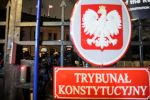
Poland's central bank has frozen payments to the Constitutional Tribunal, escalating a power struggle between Prime Minister Donald Tusk's government and the nationalist opposition.
The National Bank of Poland, led by Governor Adam Glapinski, a close ally of the opposition Law and Justice party (PiS), announced on Monday that it would no longer execute payment orders issued by the tribunal. The bank stated it was "not competent to resolve the dispute" over the court's leadership.
The freeze follows events on October 30, when police sealed the tribunal's headquarters to prevent President Bogdan Swieczkowski and Vice-President Bartolmiej Sochanski from entering. Judge Anna Korwin-Piotrowska, whose appointment President Karol Nawrocki had refused to accept, declared herself acting president and suspended both officials. Nawrocki, who was traveling to Senegal, turned his plane around and forced entry into the building. Right-wing protesters have since maintained a camp outside under police guard.
The dispute over the tribunal dates to 2015, when Tusk's previous government attempted to appoint judges later rejected by PiS after it took power. After PiS lost the 2023 elections, the current parliamentary majority elected eight new judges, but Nawrocki refused to swear in five of them.
Finance Minister Andrzej Domanski criticized the "deep politicization" of the central bank and said the government would ensure the tribunal could function. Swieczkowski welcomed the freeze, saying "usurpers" would no longer access the institution's accounts, though he regretted he would also be affected as he still considers himself the court's president. Nawrocki called a meeting of major political forces for Monday afternoon, but Tusk's Civic Coalition and its centre-left partner refused the invitation while PiS accepted.