
Hungarian professors defy church and Fidesz control in university reform push
Story Timeline
4 months · 2 summary articles
Hungary scales back solstice fireworks, urges inclusion of child protection institutions
Hungarian professors defy church and Fidesz control in university reform push
Eger’s university faculty has declared a sweeping reform agenda, defying what they describe as “church and Fidesz-linked control,” in a move that signals a broader pushback against political interference in Hungarian higher education. On Friday, professors at Eszterházy Károly Catholic University voted to adopt wide-ranging reforms aimed at restoring academic autonomy, arguing that the institution should have resisted pressure long before now. The announcement follows months of tension between faculty and university leadership over governance, funding, and curriculum decisions perceived as aligned with the ruling party’s agenda.
The reforms, approved in an extraordinary assembly, include demands for transparent governance, independent academic bodies, and the removal of political appointees from key decision-making roles. “We are not just reforming the university—we are reclaiming its soul,” said one professor who requested anonymity due to sensitivity. Faculty members also called for the resignation of university leaders they accuse of enabling political interference, a charge denied by the rector’s office, which stated that all decisions were made in accordance with legal and institutional procedures .
The confrontation in Eger reflects a growing wave of resistance across Hungary’s higher education sector. Earlier this week, Education Minister Lannert Judit criticized the country’s secondary school admissions system as “cruel” and “elitist,” vowing to review policies that force children into high-pressure academic tracks. “If Hungarian children study the most in Europe yet achieve only average test results, we are failing them,” she said during a symbolic interview with students at the Balzac School Network .
Meanwhile, in child welfare policy, Social Affairs Minister Kátai-Németh Vilmos announced the removal of police presence from children’s homes, arguing that care should be handled by trained professionals rather than law enforcement. “Children need educators, not officers,” he stated .
Across Europe, similar tensions are playing out. In Italy, teachers and families have launched a class action lawsuit against Education Minister Giuseppe Valditara’s reform of technical institutes, accusing the government of imposing changes “from above” without consultation. The protest movement, backed by the CGIL union, has called for a national strike on Tuesday, while some educators have distanced themselves from union leadership, demanding direct talks with the minister .
In Spain, teachers are demanding smaller class sizes, more support staff, and dedicated welcome classrooms to address student diversity, arguing that current ratios make inclusive teaching impossible .
The wave of activism underscores a continent-wide reckoning with education policy, as governments face pressure to balance fiscal constraints with demands for equity and autonomy. In Germany, Research Minister Dorothee Bär sparked debate by suggesting students should work more to fund their studies, drawing parallels to her own experience—though critics argue such policies risk deepening inequality .
Follow us for live European news
- 3
- 2
- 1
- 1
- 1
- 1
Articles

Egyetemi szabadságharc a NER-korszak után: a professzorok nekimentek az egyházi és a fideszes kontrollnak Egerben Az egyetemi tanárok széles körű reformokat szavaztak meg Egerben, de tudják: az egyetemnek idáig is vissza kellett volna utasítani a nyomást.
444.hu · 4 months ago
Kátai-Németh Vilmos megszüntette a rendőri jelenlétet a gyermekotthonokban Kátai-Németh szerint a gyermekotthonokban nem rendőrökre, hanem szakemberekre van szükség.
444.hu · 4 months ago
Lannert Judit: Ha a magyar gyerekek tanulnak a legtöbbet Európában, mégis közepes eredményeket érnek el a teszteken, akkor hihetetlen hibákat követünk el velük szemben Az oktatási miniszter szimbolikusan a diákok által alapított Balzacnak adta az első interjúját.
444.hu · 4 months ago
Prof e famiglie contro Valditara, class action per abolire la riforma degli istituti tecnici. Cgil: Sciopero nazionale, il governo ritiri le norme È scontro tra professori e famiglie dei ragazzi che frequentano gli istituti tecnici e il ministro dellIstruzione e del Merito Giuseppe Valditara colpevole – a detta dei primi – di aver messo in campo una riforma di questo indirizzo calata dallalto. Molti docenti si sono organizzati in una rete per fare massa critica e ora […] Larticolo Prof e famiglie contro Valditara, class action per abolire la riforma degli istituti tecnici. Cgil: Sciopero nazionale, il governo ritiri le norme proviene da Il Fatto Quotidiano.
il fatto quotidiano · 4 months ago
Schüler streiten um Wehrdienst: „Null Bock? Das stimmt doch gar nicht Am Käthe-Kollwitz-Gymnasium ringen junge Menschen eindrucksvoll mit den Widersprüchen ihrer Lage: Ihre Freiheit ist ihnen viel wert, aber wer würde sie verteidigen? Und wie denken Gleichaltrige anderswo darüber?
tagesspiegel · 4 months ago
Studium und Bafög: Das Studium der Dorothee Mantel Studierende sollen mehr arbeiten, findet Forschungsministerin Dorothee Bär. Sie habe schließlich auch gejobbt. Aber wie war das noch mal genau? mehr...
taz.de · 4 months ago

Lannert Judit: A középiskolai felvételi rendszer kegyetlen, csak az elitet szolgálja, meg fogjuk vizsgálni A miniszter szerint a magyar oktatási rendszer hihetetlen hibákat, vagy akár bűnöket követ el a gyerekekkel szemben azzal, hogy értelmetlen munkára kényszeríti őket.
hvg.hu · 4 months ago
HS Moskovassa | Venäjän eliitti kavahtaa länttä, mutta kasvattaa lapsensa lännen malliin Leikkipaikoilla lapset esittelevät kouluenglantiaan, naapurit hakevat brittiopettajia, ja yksityiskoulut kilpailevat kielenopetuksella. Sodan ajan Moskovassa englannista on tullut harvinaista ja haluttua.
helsingin sanomat · 4 months ago

¿Qué piden los profesores? Menos ratios, más aulas de acogida y más personal de acompañamiento Los profesores exigen ayudas para poder dedicarse a enseñar a todos los alumnos de su aula
la vanguardia · 4 months ago

Los docentes desautorizan a los sindicatos y piden interlocución con Niubó Las asambleas y CGT llaman a la huelga el martes, mientras crece la división en Ustec
la vanguardia · 4 months ago
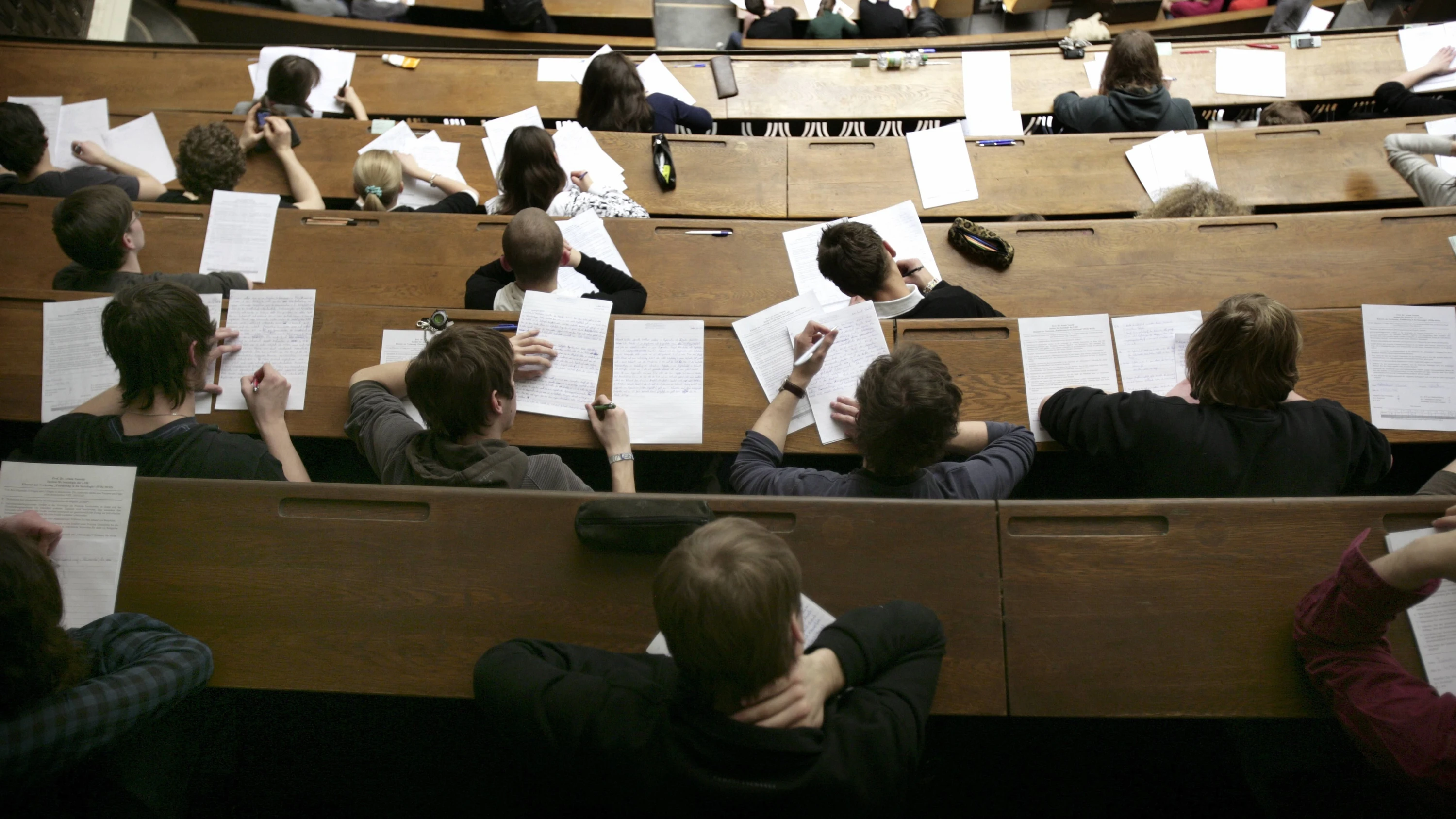
KI an Hochschulen: Woran man noch erkennt, ob Studenten selbst denken ChatGPT macht Hausarbeiten glatter, aber nicht automatisch besser. Eine Professorin erklärt, warum studentische Eigenleistung unter KI-Bedingungen sichtbar bleibt – und warum Lehrende künftig genauer prüfen müssen.
faz · 4 months ago

Boris Dilliès (MR) : Sil arrive au pouvoir à Bruxelles dans trois ans, le PTB cramera complètement la caisse Face aux blocages et aux mauvais sondages, le ministre-Président bruxellois défend son cap budgétaire et lance un processus visant à la refonte des institutions bruxelloises. ...
la libre · 4 months ago