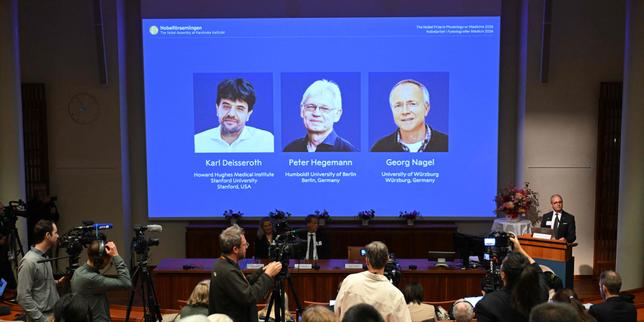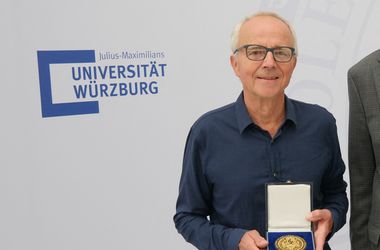
Karl Deisseroth, Peter Hegemann and Georg Nagel won the 2026 Nobel Prize in Physiology or Medicine on Monday for their discoveries of light-gated ion channels and the development of optogenetics, the Nobel Assembly at Sweden’s Karolinska Institute announced.
The technique allows scientists to switch individual nerve cells on or off in a living brain using light, revealing how neural circuits govern memories, emotions and behaviors, according to Thomas Perlmann, the assembly’s secretary-general. Clinical trials are already using the method to restore vision in patients with retinitis pigmentosa by inserting a light-sensitive protein into the retina, and researchers hope it could improve cochlear implants for more precise auditory nerve stimulation.
Hegemann and Nagel identified channelrhodopsin-2, a light-activated ion channel, in the alga *Chlamydomonas* in the early 2000s, while Deisseroth demonstrated its use in rat nerve cells in 2005, leading to the formal naming of optogenetics the following year. Perlmann said he spoke to all three laureates Monday morning, noting they were “surprised and delighted” and emphasized the honor of sharing the prize.
The prize sum of 12 million Swedish crowns ($1.2 million) will be divided among the three scientists. Optogenetics is now used in laboratories worldwide to probe the brain’s mysteries, Perlmann said .