
Peru swears in Keiko Fujimori as first woman president amid protests and deep polarization

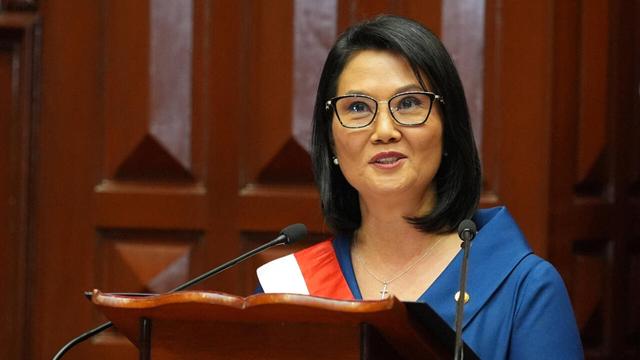
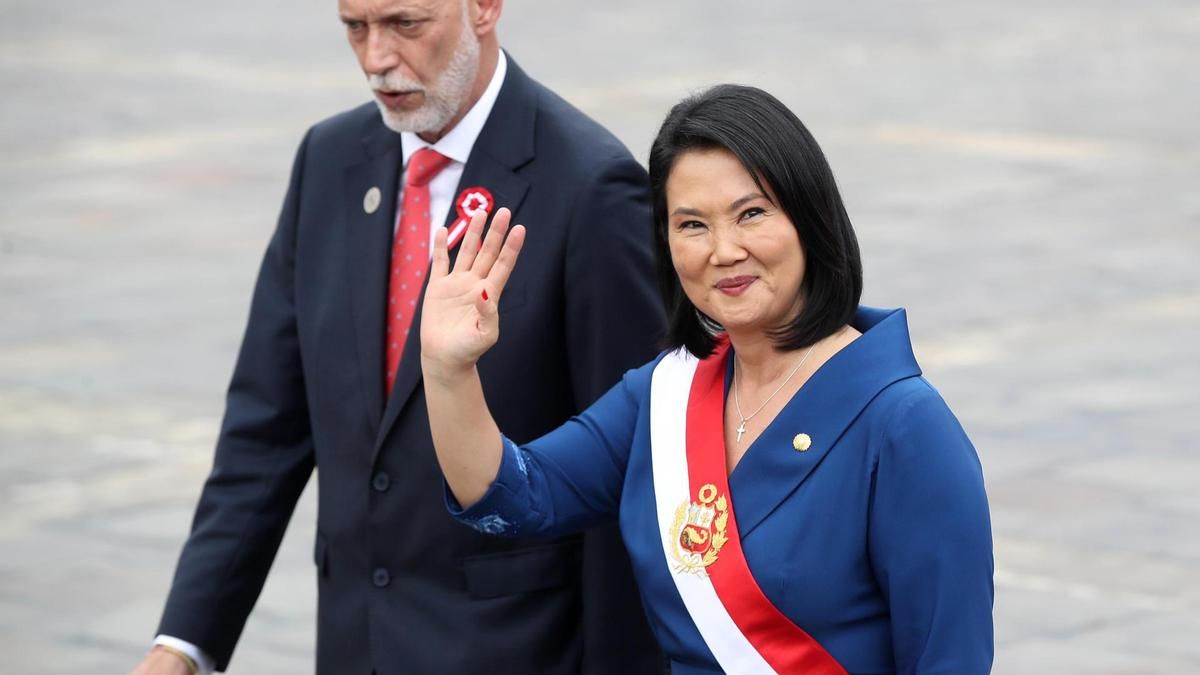
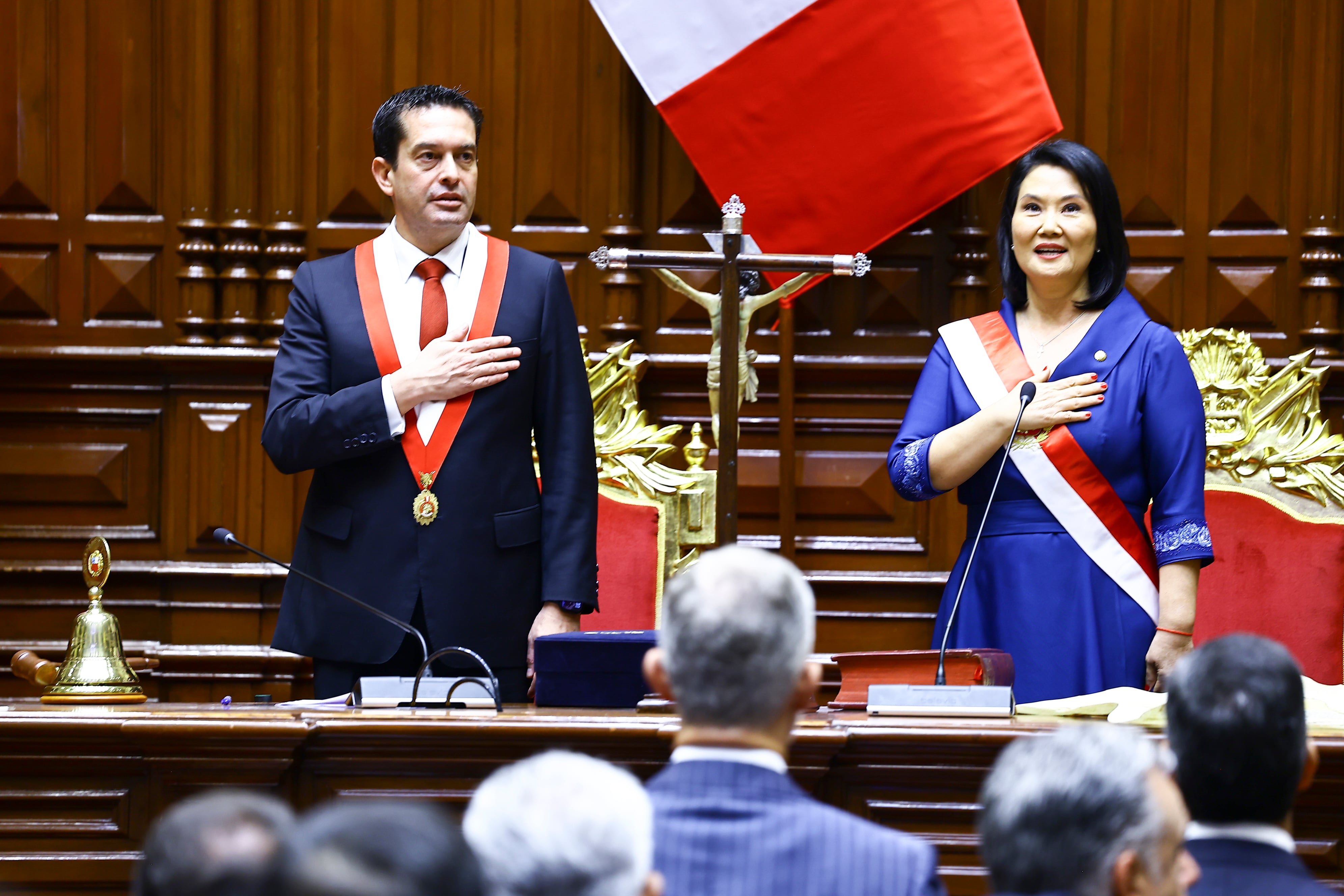
Keiko Fujimori was sworn in as Peru's president on Tuesday, becoming the first woman elected by popular vote to lead the country. She won the election by a narrow margin of less than 50,000 votes over leftist candidate Roberto Sánchez. Fujimori, the leader of the Fuerza Popular party, takes office amid deep polarization and promises to restore stability and tackle crime.
Fujimori's inauguration marks the return of Fujimorism to power after 26 years. Her father, Alberto Fujimori, resigned in 2000 amid a corruption scandal and was later convicted of crimes against humanity and corruption. Despite his controversial legacy, Keiko Fujimori has championed her father's legacy and promised to lead a "safe, prosperous, and united" country.
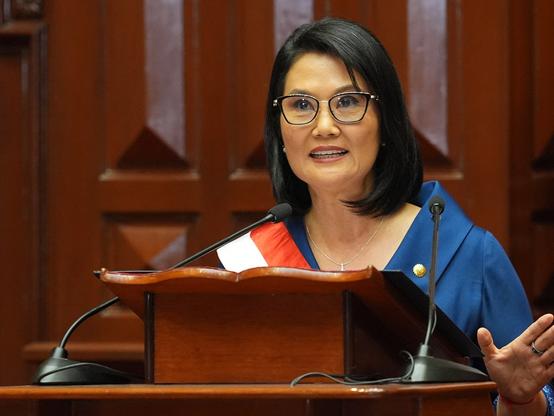
In her inauguration speech, Fujimori vowed to tackle Peru's worst security crisis in decades, driven by the spread of local and foreign criminal gangs. She proposed measures including deploying the military to crime-ridden areas, setting up courts with anonymous judges, and making prisoners work for their food. "During states of emergency, the armed forces will temporarily take the lead in security operations," she said.
Fujimori's victory comes after a decade of political turmoil in Peru, which has seen nine presidents in the past ten years. Her Fuerza Popular party and its ally control half the seats in the newly installed Senate, making it more difficult for lawmakers to remove her from office. However, right-wing parties still fall short of the majority needed to push through her agenda.
The inauguration ceremony was attended by several Latin American leaders, including Argentina's Javier Milei, Chile's José Antonio Kast, and Bolivia's Rodrigo Paz. A group of leftist lawmakers left the room in protest during Fujimori's speech.
Fujimori's political career has been marked by her association with her father's legacy. She entered public life at 19 when her father asked her to be first lady after a public split with her mother. She has spent decades at the center of Peruvian politics and has run for president three times before.
Her father, Alberto Fujimori, ruled Peru during the 1990s and was credited by supporters with defeating the Shining Path, a Maoist rebellion, and bringing hyperinflation under control. However, he was also convicted of corruption and crimes against humanity.
Fujimori's campaign centered on law and order, with promises to restore political stability, tackle rising crime, and revive economic growth. She has also vowed to tackle the El Niño climate phenomenon, which meteorologists predict will be the most intense and devastating since 1998.
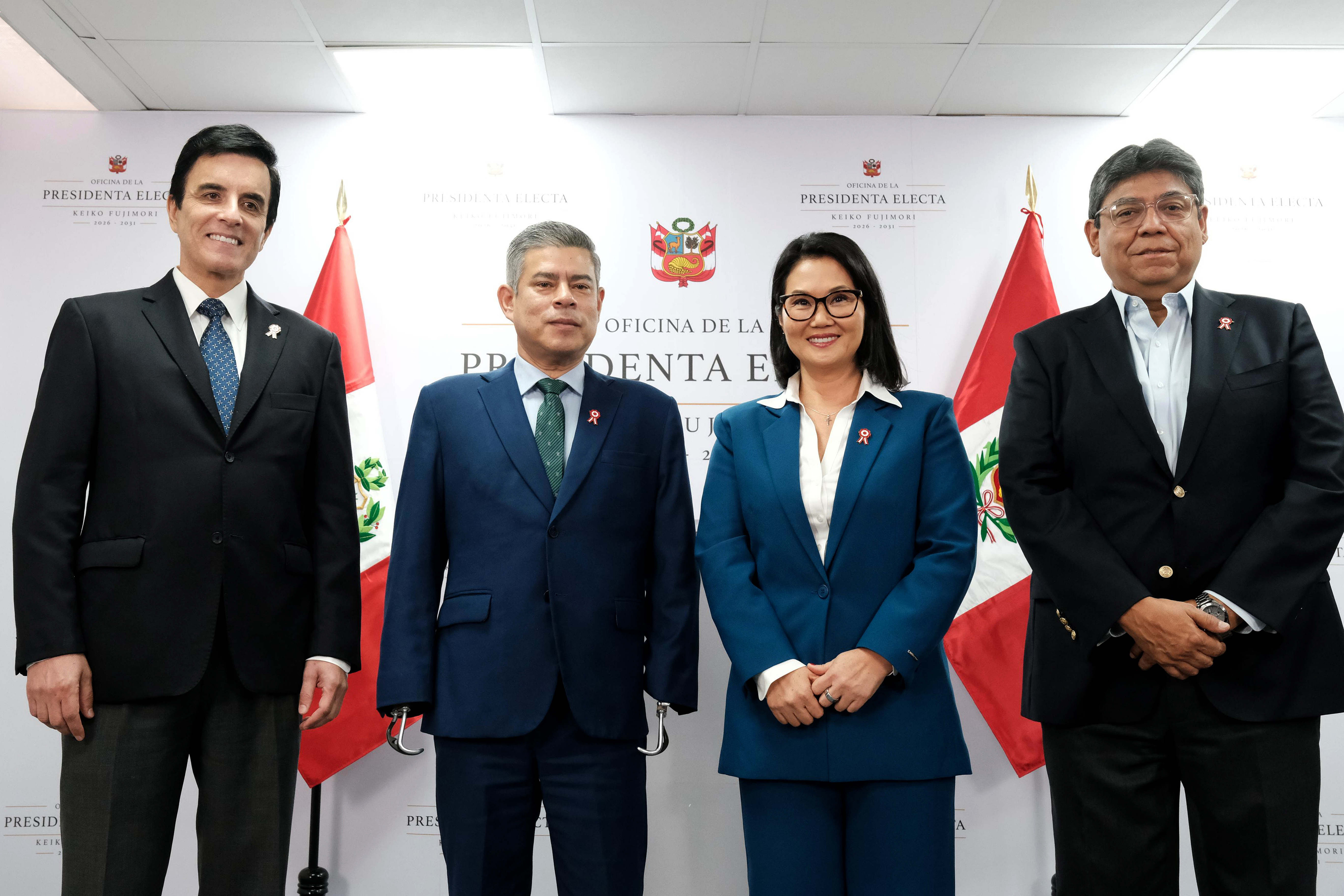
The new president has confirmed three names for her cabinet: Luis Galarreta as President of the Council of Ministers, Elmer Cuba as Minister of Economy and Finance, and Carlos Espá as Minister of Foreign Affairs.
Protests erupted in Lima as Fujimori was sworn in, reflecting the deep divisions in Peruvian society over her election and the return of Fujimorism to power.
Follow us for live European news
- 4
- 2
- 1
- 1
- 1
- 1
- 1
- 1
- 1
- 1
2 further sources not geolocated
Articles
Algérie : Khalida Boufedeche devient la première femme présidente de lAssemblée populaire nationale Députée dAlger, son parti était arrivé en tête des récentes législatives, au taux de participation le plus bas jamais enregistré et à lissue desquelles seules vingt-cinq femmes avaient été élues sur 407 sièges.
le monde · about 3 hours ago
Los hombres fuertes de Keiko, más allá del fujimorismo Elige con especial cuidado a sus tres principales ministros, en un intento de dotar a su primer gabinete de un peso político lo suficientemente fuerte como para evitar los constantes cambios de la pasada legislatura Leer
elmundo · about 4 hours ago
🟠 UPDATEKeiko Fujimori sworn in as Peru presidentFujimori pledged to deploy armed forces to crime-ridden areas and adopt a hardline security strategy to address gang violence, extortion, and illegal mining.📰 #GeoWire
mastodon bot · about 4 hours ago

Protests in Lima as Keiko Fujimori sworn in as Peru president Keiko Fujimori has been sworn in as Perus president amid protests and promises to crackdown on crime.
aljazeera · about 5 hours ago
Keiko Fujimori sworn in as Peru president after narrow election win Fujimori takes office promising an iron-fisted crackdown on crime, as critics fear a return to her fathers tactics.
aljazeera · about 5 hours ago
Keiko Fujimori vannutati Peruu presidendiks Keiko Fujimori vannutati teisipäeval Limas toimunud ametlikul tseremoonial viimase kümnendi üheksandaks Peruu presidendiks, teatasid AFP ajakirjanikud.
postimees · about 6 hours ago
Keiko Fujimori takes office as Perus president, vowing to end decade of instability The Popular Force leader becomes Perus first female president, returning Fujimorism to power after 26 years. She is due to deliver her inaugural address and unveil her cabinet. King Felipe VI attended the ceremony in Lima.
euronews · about 6 hours ago

Perus conservative President Keiko Fujimori took office on Tuesday, vowing to tackle the wave of crime sweeping the Andean nation, as its ninth president in a decade. u.afp.com/SrRF
bluesky_AFP English · about 6 hours ago
Perus neue Präsidentin verhängt Ausnahmezustand
orf.at · about 6 hours ago
Perus Fujimori vows military-led crackdown on crime after taking office The newly inaugurated president – the ninth in just a decade – pledged to deploy the armed forces to crime-ridden areas and adopt a hardline security strategy as Peru grapples with its worst wave of gang violence, extortion and illegal mining in decades.
france24 · about 6 hours ago
Beiktatták Keiko Fujimorit, Peru első női elnökét Az 51 éves nő apja a néhai perui elnök, az emberi jogi jogsértések miatt elítélt Alberto Fujimori volt.
444.hu · about 6 hours ago

"Nem mais um dia": Keiko Fujimori toma posse no Peru Depois do discurso, está previsto que caminhe até ao Palácio do Governo, em Lima, onde entrará pela primeira vez como Presidente, onde viveu durante a presidência do pai
observador · about 6 hours ago
Keiko Fujimori toma posesión como presidenta de Perú e inaugura una nueva era del fujimorismo en el poder La hija y heredera política del fallecido expresidente Alberto Fujimori asume el poder, casi 26 años después de que su padre dimitiese por un gran escándalo de corrupción y fuese condenado posteriormente por crímenes de lesa humanidadEl fujimorismo vuelve a gobernar Perú y reaviva el fantasma del autoritarismo: Es una coalición mafiosa La nueva presidenta de Perú, la derechista Keiko Fujimori, ha tomado posesión este martes, después de haberse impuesto al izquierdista Roberto Sánchez en las elecciones del pasado junio por menos de 50.000 votos, retomando así el camino iniciado por su polémico padre, el difunto Alberto Fujimori, que gobernó entre 1990 y el 2000. Fujimori, administradora de empresas de ascendencia japonesa, es la primera mujer en ser elegida jefa de Estado en Perú y todo indica que cuenta con el suficiente respaldo en el Parlamento para poder completar su mandato de cinco años (2026-2031). La nueva mandataria busca acabar con la inestabilidad que ha marcado la vida política del país en la última década, con una serie de destituciones presidenciales promovidas desde el Legislativo –la mayoría, con los votos del fujimorismo–. Este martes, Fujimori se ha convertido en la novena presidenta que asume el mando de Perú en diez años, después de unas elecciones que no estuvieron exentas de polémica. Tras varias semanas de recuento, Keiko Fujimori (Fuerza Popular) se impuso a Roberto Sánchez (Juntos por el Perú) por menos de 50.000 papeletas, según los datos oficiales de la Oficina Nacional de Procesos Electorales (ONPE). Si bien el izquierdista ganó dentro de Perú, Fujimori se hizo con la presidencia gracias al apoyo de los peruanos residentes en otros países. La mujer ha perseverado hasta este momento, con la esperanza de llegar al poder, tras heber perdido de forma consecutiva tres elecciones presidenciales en la segunda vuelta (las de 2011, 2016 y 2021), y haber pasado cerca de año y medio en prisión preventiva entre 2018 y 2020 (imputada por presunto lavado de dinero en la financiación irregular de sus campañas electorales). El rey Felipe VI ha viajado a Perú para asistir a la toma de posesión de Fujimori, así como otros jefes de Estado y de Gobierno, entre los que se encuentran los presidentes de Argentina, Javier Milei; Chile, José Antonio Kast; Ecuador, Daniel Noboa; Honduras, Nasry Asfura, y Paraguay, Santiago Peña. Desde España, también ha viajado el presidente del PP, Alberto Núñez Feijóo, para la toma de posesión de la nueva presidenta, con la que se reunió bilateralmente el lunes, a su llegada a Lima, según Europa Press. La sombra de su padre Desde principios de siglo, la hija mayor y heredera política del exmandatario asumió las riendas del fujimorismo con el propósito de recuperar el poder y limpiar el nombre de su padre, que fue condenado a 25 años de cárcel por delitos de lesa humanidad, además de otros cargos por diversos casos de corrupción. Alberto Fujimori (1938-2024) abandonó el poder en el año 2000, pocos meses tras su victoria en las elecciones que le otorgó un tercer mandato consecutivo. Después de que una serie de grabaciones revelaran sobornos de su asesor Vladimiro Montesinos a figuras políticas, empresariales y mediáticas peruanas, el escándalo hizo que huyera del país a Japón. Sin embargo, su caída no supuso el fin del fujimorismo. La politóloga y analista Eliana Carlín explicó a elDiario.es que la corriente política abierta por Fujimori solo se debilitó durante unos años tras la fuga del mandatario. Las figuras emblemáticas del fujimorismo siguieron siendo parte del ecosistema político del país, especialmente Keiko Fujimori desde el año 2011, señaló tras la victoria de la hija mayor del expresidente. En las cuatro campañas electorales en las que ha pasado a segunda vuelta ha habido un despliegue enorme de recursos económicos que vienen de los empresarios y de los poderes fácticos, aliados tradicionales de su padre. Fujimori no tiene una trayectoria política intachable y carga con el legado de su padre, que llegó a la presidencia por la vía electoral, pero se ganó con los años, dentro y fuera de Perú, el calificativo de dictador por la acumulación de poder y los delitos de lesa humanidad, cometidos en el marco de la lucha que emprendió contra los grupos guerrilleros Sendero Luminoso y MRTA. Tras ser detenido y extraditado a Perú desde Chile en 2005, la justicia peruana le condenó a una pena de 25 años de prisión que, sin embargo, no cumplió porque en 2017 recibió un indulto humanitario. Con información de EFE
eldiario.es · about 6 hours ago

El Rey anima, en Perú, la asistencia a la Cumbre Iberoamericana de Madrid Felipe VI viaja a Lima donde participa en la toma de posesión de Keiko Fujimori
la vanguardia · about 6 hours ago

#BREAKING Keiko Fujimori sworn in as Perus ninth president in a decade, becomes latest right-wing leader to take power in Latin America on crime crackdown pledge
bluesky_AFP English · about 7 hours ago
Keiko Fujimori takes office as president of Peru with the promise of a safe, prosperous, and united country The historic inauguration marks the return of Fujimorism after almost 30 years and makes the new leader the first woman elected by popular vote to lead the country
elpais · about 7 hours ago
⚡ NEWSKeiko Fujimori sworn in as Peru presidentKeiko Fujimori has been sworn in as the new President of Peru following a narrow election victory. She has promised an iron-fisted crackdown on crime, raising concerns among critics about a potential return to the authoritarian tactics associated with her fathers previous regime.📰 #GeoWire
mastodon bot · about 7 hours ago
Dictators daughter Keiko Fujimori takes power in Peru Conservative daughter of former dictator becomes latest rightwing leader in Latin America
financial times · about 7 hours ago
Ungaria are o nouă agenție anticorupţie. Magyar: E un pas uriaș către îndeplinirea angajamentelor noastre Parlamentul Ungariei a votat înfiinţarea unei noi agenţii care sprijină aplicarea legii în lupta împotriva corupţiei, relatează marţi dpa, potrivit Agerpres.
digi24 · about 7 hours ago