Loading…
 Saturday, September 26Saturday, September 26
4 months · 14 summary articles
The 2026 FIFA World Cup kicked off in Mexico City on Thursday evening with a record 48 teams competing across 104 matches in Canada, Mexico, and the United States. The opening fixture between Mexico and South Africa at the Estadio Azteca drew global scrutiny not only for the sport but for the geopolitical tensions surrounding the tournament. Critics argue that FIFA’s decision to award the World Cup to North America—amid concerns over visa restrictions, commercialization, and political interference—has overshadowed the event’s sporting integrity.
FIFA President Gianni Infantino faced immediate backlash after urging critics to “chill” in response to concerns over high ticket prices, travel restrictions, and the denial of visas to supporters from Côte d’Ivoire. “Infantino is just absolutely wretched,” wrote one commentator . The controversy deepened when Haiti’s national team was forced to alter its kit design after FIFA banned political and religious messaging, including a motif deemed too “war-like” .
Security concerns have also dominated pre-tournament discussions. The FBI has warned of potential drone threats targeting the 36 base camps and 11 stadiums, calling the World Cup one of the most complex security challenges in its history . Meanwhile, New York City renamed West 50th Street “Thierry Henry Way” in honor of the former Arsenal and France star, while Pelé received a similar tribute, as part of the tournament’s opening celebrations .
European media outlets have questioned whether the expanded format—now including 48 teams—dilutes the tournament’s competitive edge. “The 2026 FIFA World Cup is anything but egalitarian,” argued *Foreign Policy* . Critics point to the commercialization of the event, with concerns over rising costs for fans and the prioritization of sponsors over supporters in stadium seating. “Big money is killing the World Cup spirit,” wrote *The Guardian* .
Despite the controversies, the tournament’s opening ceremony featured Shakira performing in Mexico City, with schools and offices closed to mark the occasion . As the first matches get underway, the world’s attention will focus on whether the expanded format can deliver the drama and unpredictability that has defined past World Cups—or whether the event will be remembered more for its off-field disputes than its on-field action.
Follow us for live European news
2 further sources not geolocated

Le chat de Bart De Wever, Maximus, se la joue Paul le Poulpe et se lance dans les pronostics pour la Coupe du Monde (VIDEO) Il voit le Mexique gagner contre lAfrique du Sud dans le match douverture de la Coupe du Monde en Amérique du Nord, ce jeudi soir. ...
la libre · 4 months ago

Belgique – Iran arrêté en plein match ? Les menaces du ministre des Sports iraniens Les rencontres de la team Melli pourraient être arrêtées en cas de slogans hostiles au régime. Cest ce qui a été annoncé par le ministre des Sports du pays. ...
la libre · 4 months ago

Ce pays jouera sans ses supporters au Mondial : "LÉtat américain ne veut pas voir des supporters de certains pays sur son sol" La Côte dIvoire jouera ses matches de la Coupe du Monde 2026, sans fans venus du pays, faute davoir pu obtenir de visa, a déploré jeudi à lAFP, le président du comité national des supporters qui organise habituellement les déplacements. ...
la libre · 4 months ago

Oranje zakt naar achtste plaats op wereldranglijst voetbal Het Nederlands elftal is kort voor aanvang van het WK voetbal een plaats gezakt op de wereldranglijst. Oranje daalde op de donderdag officieel uitgebrachte ranking van de FIFA van de zevende naar de achtste plaats. Marokko heeft de ploeg van bondscoach Ronald Koeman ingehaald en bezet nu de zevende plaats.
rtl nieuws · 4 months ago
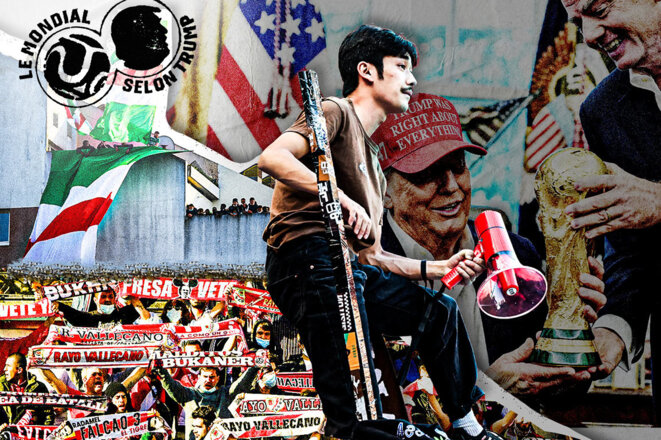
Mondial 2026: se réapproprier le football La Coupe du monde qui souvre est un condensé de tout ce qui a tué lamour du jeu depuis trente ans. De linstrumentalisation politique à la toute-puissance de largent roi, en passant par lautocratie liberticide qui règne sur cette compétition, il est temps de ne plus la prendre au sérieux, et de penser à laprès.
mediapart · 4 months ago

En direct. Coupe du monde 2026 : les petites et grandes histoires de la presse étrangère Le Mexique accueille lAfrique du Sud ce jeudi 11 juin, pour le premier des 104 matchs de la Coupe du monde de football 2026. Une grande fête sportive, politique et géopolitique, à suivre dans ce direct jusquà la finale du 19 juillet, avec les unes, récits, commentaires et analyses de la presse internationale.
courrier international · 4 months ago

Et pourtant, elle nous fait tourner la tête : la Coupe du monde à la une de la presse internationale Faut-il attendre la Coupe du monde coorganisée par les États-Unis, le Mexique et le Canada avec enthousiasme ou avec froideur ? Les deux, répondent de nombreux médias internationaux, qui sinquiètent du rôle joué par le président américain, Donald Trump, des dimensions géopolitiques et sécuritaires de lévénement, tout en espérant célébrer un été du soccer.
courrier international · 4 months ago
Coupe du monde 2026 : Shakira, Vegedream et Katy Perry… Le programme des trois cérémonies douverture Mexique-Afrique du Sud, Canada-Bosnie et Etats-Unis-Paraguay, qui donneront le coup denvoi du Mondial dans chaque pays hôte de la compétition, seront précédés dune cérémonie. «Libé» déroule le menu des festivités.
liberation · 4 months ago
EN DIRECT - Coupe du monde, jour 1 : Donald Trump devrait zapper le match douverture des Etats-Unis Matchs, reportages, portraits… Retrouvez toute lactualité de la Coupe du monde 2026 au fil de la journée par nos envoyés spéciaux en Amérique du Nord et nos journalistes sportifs.
liberation · 4 months ago
Fußballweltmeisterschaft 2026: Fans der Elfenbeinküste erhalten keine US-Visa Die Elfenbeinküste muss aufgrund fehlender Visa auf einheimische Fans bei der WM verzichten. Die Fifa hat das Design der Trikots von Haiti verboten. Das Liveblog
die zeit · 4 months ago
Freedom of Speech at the FIFA World Cup 2026 On 11 June 2026, the FIFA World Cup hosted by Canada, Mexico and the USA will be launched by the opening match between Mexico and South Africa in the Estadio Azteca of Mexico City. Considering the current international context, in particular ongoing tensions and armed conflicts, it is likely that FIFA and the three host countries will also face certain incidents during this years tournament. In principle, the international sports movement, including FIFA, aims to be ideologically, politically, and religiously neutral, which can provoke tensions with players and fans legitimate activism. The post Freedom of Speech at the FIFA World Cup 2026 appeared first on Verfassungsblog.
verfassungsblog · 4 months ago
Debate: Fifa World Cup: is this fair play? The Fifa Mens World Cup kicks off with the match between Mexico and South Africa today. A record 48 teams will compete in over 100 games across the three host nations: Mexico, Canada and the US. Europes press notes that many of the organisers decisions seem at odds with the values that the sport is supposed to embody.
eurotopics.net · 4 months ago
2026 World Cup: France team arrives on US soil 🇫🇷 ⚽ Frances national team has arrived in Boston for the World Cup, where players were welcomed by fans outside their hotel. France will play its opening match against Senegal on June 16 in New Jersey.
france24 · 4 months ago
World Cup opens with Mexico-South Africa rematch on pitch that shaped Pelé, Maradona legends Mexico Citys storied Azteca Stadium has been the stage for some of the most iconic moments in World Cup history, from Pelés third title to Maradonas Hand of God goal. The hallowed venue hosts the 2026 World Cup opener between Mexico and South Africa on Thursday, a throwback to the 2010 curtain-raiser in Johannesburg – and a rematch between coaches who faced off as players in the same stadium 40 years ago.
france24 · 4 months ago
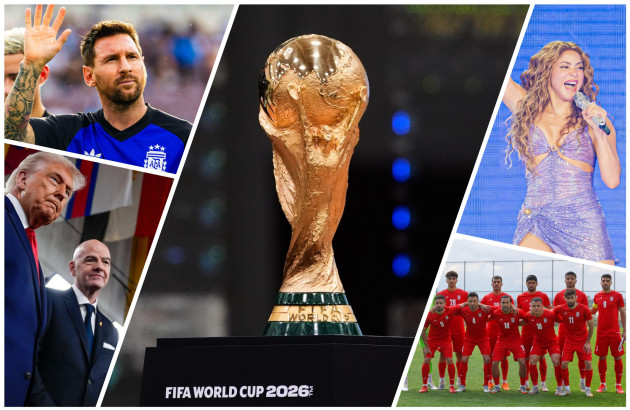
48 teams, extreme heat and a final half-time show - your guide to World Cup 2026 Fifa has promised this 23rd World Cup will be the biggest and best yet, but there has been plenty of controversy surrounding the tournament.
thejournal · 4 months ago
FIFA World Cup 2026 Group J teams, squads and odds
gdeltproject.org · 4 months ago
Mexicos historic Azteca Stadium to kickoff World Cup opener: All to know Mexico Citys iconic Estadio Azteca will become the first venue to host matches at three separate World Cups.
aljazeera · 4 months ago
World Cup 2026: countdown to opener, NYC renames street after Henry, Côte dIvoire fans denied visas – live ⚽️ Infantino tells fans to chill in response to Fifas critics⚽️ Match centre | Player guide | Bracketology | Mail DomBTL chat is thus far dominated by Gianni Infantinos ritual pre-tournament torching of his own dignity. SonOfThe Desert offers this:Infantino is just absolutely wretched, isnt he? An absolute nothing of a man, sucking up to tyrants because he thinks it makes him look strong. But you know whats really annoying me? All those heads of national associations who could have unified around a candidate - anyone - to oppose Infantino and try and rescue Fifa from humiliation. Couldnt be bothered though, could they? Mightve had to do some actual work that way.New York has honored two footballing greats by temporarily renaming streets after Thierry Henry and Pelé ahead of the World Cup kickoff …Crowds gathered at West 50th Street and 6th Avenue in downtown Manhattan to mark the unveiling of Thierry Henry Way by city officials, according to FOX Sports. Continue reading...
theguardian · 4 months ago

Big money is killing the World Cup spirit. Fans deserve a sporting chance at tickets Supporters come way below sponsors in the stadium-seat pecking order. No wonder some fans plan to binge-watch matches on a Spanish package holidayThere is nothing wonderful in the world that men in suits cant find a way of spoiling. Football World Cups used to be great: massive events to which the worlds eyes were glued. Not one of us watched, or went to, West Germany, Argentina, Spain, Mexico or Italy and thought: You know what? This is all very well – but if only it was all a bit bigger.It was plenty big enough, but not big enough for the men in suits, for they had willies to wave, and so the tournament had to grow, because growth is good and bigger is always better. So now we have 48 teams competing not in one country but over a whole continent. Continue reading...
theguardian · 4 months ago

How We Watched the World Cup: Smelling Maradona – video If you had the chance to meet Diego Maradona, what would you do? Smell him? Thats what our chief sports writer, Barney Ronay, did at the 2018 World Cup during Argentinas first group game of the competition. To keep up with more of Barneys adventures in his World Cup video diary, follow @guardiansport on TikTok. Continue reading...
theguardian · 4 months ago
Haiti embraces World Cup dream after 54-year wait Haitis Ti Mondial 2026 tournament brings together 48 schools to celebrate the World Cup and promote peace, unity and hope.
euronews · 4 months ago

Voici lhymne officiel de la Coupe du monde et ce nest pas Dai Dai de Shakira Dai dai nest pas lhymne officiel de la Coupe du monde. Si elle fait partie des titres de la compétition, la musique de Shakira nen est pas le porte-drapeau. ...
la libre · 4 months ago

Face au Mondial de Trump et à la Fifa, quelles résistances populaires? Comment ne pas désespérer du football à la vue du Mondial américain qui souvre? En traçant des perspectives optimistes, malgré tout. Notre débat en public, enregistré lors du Mediapart Festival.
mediapart · 4 months ago
Fifa verbietet Trikot von Haiti: Abbildung einer Schlacht von 1803 verstößt gegen politische Neutralität Der Hersteller der haitianischen Trikots für die Fußball-WM musste auf Wunsch der Fifa das Design der Trikots anpassen. Der Fußballverband verbot die Darstellung eines Kampfes der Unabhängigkeitsbewegung.
tagesspiegel · 4 months ago
Fußball-WM: Dokus zur Fußball-WM: Der andere Blick auf das Turnier Donald Trump und seine USA, Mexiko und Kartelle - diesmal gibt es erst recht Themen für andere Perspektiven auf eine Fußball-WM. Doch auch sportlich gibt es was für die Fans in aktuellen Dokus.
tagesspiegel · 4 months ago