
FIFAs dynamic pricing boosts revenue despite empty seats at 2026 World Cup

Story Timeline
4 months · 10 summary articles
FIFA’s dynamic pricing strategy for the 2026 World Cup is yielding results, with organisers pointing to empty seats as evidence of its success. Writing in *The Drum* on Saturday, marketing professor Mark Ritson argued that the model—whereby ticket prices fluctuate based on demand—has allowed FIFA to maximise revenue despite lower-than-expected attendance at several matches . The approach, he noted, ensures that high-demand fixtures command premium prices while less popular games remain accessible, a balance that has so far favoured the tournament’s commercial interests.
The strategy’s effectiveness was underscored by a separate *Financial Times* report on the same day, which highlighted the Kansas City Chiefs’ president Mark Donovan discussing the long-term viability of football in the United States following the World Cup’s expansion to 48 teams . Donovan’s remarks, made during a newsletter interview, suggested that the tournament’s presence in North America could cement the sport’s growth beyond its traditional markets, even as organisers grapple with uneven fan turnout.
Yet the World Cup’s opening weekend was not without controversy. On Friday, footage emerged of FIFA President Gianni Infantino and Canadian Prime Minister Mark Carney signing a Russian flag during a ceremonial event in Toronto . The incident, which occurred on 19 June, sparked immediate backlash in Ukraine, where officials condemned the gesture as insensitive amid ongoing geopolitical tensions. A Russian attendee later claimed the flag was a gift, though the explanation did little to quell criticism.
Analysts at the *Financial Times* also noted that the tournament’s early matches have been priced in by markets, with ticket sales reflecting a cautious optimism about the event’s commercial performance . While organisers have yet to release comprehensive attendance figures, the dynamic pricing model appears to be delivering on its promise of financial resilience. Whether this strategy will translate into sustained fan engagement beyond the tournament’s conclusion remains an open question, particularly as organisers weigh the long-term impact of the World Cup’s expanded format on global football’s traditional power structures.
Follow us for live European news
- 1
3 further sources not geolocated
Articles

Mark Ritson: Empty seats mean dynamic World Cup pricing is working (for Fifa)
gdeltproject.org · 3 months ago
Will football in America stick? Also in todays newsletter: Kansas City Chiefs president discusses hosting the World Cup
financial times · 3 months ago
The new chair effect First impressions, priced in
financial times · 3 months ago
Rousey and Paul taunt UFC over White House viewing figures Ronda Rousey and Jake Paul taunt the UFC and Dana White for failing to break Most Valuable Promotions MMA record audience figure with the White House event.
bbc sport · 3 months ago
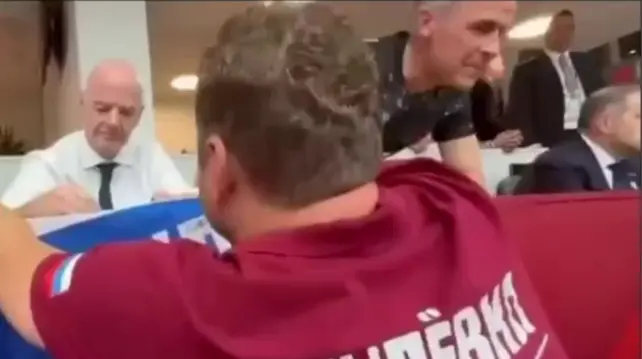
FIFA President and Canadian PM sign Russian flag during 2026 World Cup – videoOn 19 June 2026, FIFA President Gianni Infantino and Canadian Prime Minister Mark Carney signed a Russian flag. A Russian man explained how the incident happened. #ukraine
mastodon bot · 3 months ago