
US inflation falls to 3.5% in June on sharp energy price drop: Fed signals further rate hikes
US inflation fell more than expected to 3.5% in June as energy prices tumbled, according to data released on Tuesday. The Consumer Price Index (CPI) rose by 3.5% year-on-year in June, down from 4.2% in May, marking the largest one-month decrease since April 2020.
The decline was primarily driven by a 5.7% drop in energy prices, which had climbed by 3.9% in May, according to the Bureau of Labor Statistics. Core CPI, which excludes volatile food and energy prices, rose by 2.6% in June, down from 2.9% in May.
Federal Reserve Chairman Kevin Warsh testified before the House Financial Services Committee on Tuesday, emphasizing the Fed's commitment to restoring price stability. "The members of our committee have no tolerance for persistently elevated inflation. And we share a resolute commitment to restoring price stability," Warsh said in his prepared remarks.
Warsh's testimony comes as the Fed kept its benchmark interest rate steady at a range of 3.5% to 3.75% in June. However, some Fed officials have suggested that further rate hikes may be necessary to bring inflation down to the Fed's 2% target.
The latest inflation data comes amid ongoing geopolitical tensions, including the recent escalation in the conflict between the US and Iran, which has led to a sharp increase in oil prices. The price of a barrel of Brent crude has risen by more than 20% since July 1, reaching $86.53 on Tuesday morning.
Despite the recent decline in inflation, there are concerns that the surge in oil prices could lead to another bout of pain at the gas pump for Americans. This could pose a political challenge for President Donald Trump and Republicans as the midterm elections approach.
The inflation report also comes as the Fed is closely monitoring the impact of an investment boom fueled by AI-related spending, which has contributed to some inflationary pressures. "We at the Fed are monitoring the implications for inflation and the labor market," Warsh said in his testimony.
In other economic news, US small-business sentiment rebounded in June, but inflation remains a major worry for many business owners, according to a report from the National Federation of Independent Business.
The Fed's next policy meeting is scheduled to conclude on July 29.
Follow us for live European news
- 2
- 2
- 2
- 1
- 1
- 1
- 1
- 1
- 1
- 1
3 further sources not geolocated
Articles

US inflation has taken a surprising dip Inflation in the US has fallen more than expected. US consumer prices rose by 3.5 percent in June year-on-year, down from 4.2 percent in May. Economists had expected a 3.8 percent increase. According to Kristian Skriver from Dansk Erhverv, the decline was mainly driven by lower energy prices, which fell 5.7 percent in June following […]
cphpost · about 2 hours ago
Weaker-Than-Expected Inflation Data May Lead To Rebound On Wall Street
gdeltproject.org · about 2 hours ago
Number of farms up for sale in England hits two-decade high Rising costs, falling subsidies and inheritance tax changes have hit demand for agricultural land
financial times · about 2 hours ago
Inflation and interest rates tracker: see how your country compares Explore the latest data through interactive charts
financial times · about 2 hours ago
Benign CPI inflation takes Feds July rate rise off the table Headline and core inflation were below expectations in June and unlikely to persuade rate-setters to tighten policy
financial times · about 2 hours ago
US inflation fell more than expected to 3.5 in June as petrol prices tumbled Traders rein in bets on Fed rate rises as easing energy costs help tame price surges spurred by Middle East war
financial times · about 2 hours ago
Geldpolitik: US-Notenbankchef Warsh: Fed duldet keine dauerhaft erhöhte Inflation Die Teuerung in den USA schwächt sich ab, liegt aber weiter über dem Zwei-Prozent-Ziel der Notenbank. Fed-Chef Warsh bekräftigt vor dem Kongress seinen entschlossenen Weg gegen die Inflation.
handelsblatt · about 2 hours ago
Autoindustrie: Zehn Prozent des Bruttolohns: Bei ZF steht Zeppelin-Zulage auf der Kippe – Versammlung endet mit Eklat Bisher traute sich kein ZF-Chef an die übertarifliche Zulage am Stammsitz Friedrichshafen heran. Nun soll sie den Sparbemühungen zum Opfer fallen. Der Unmut in der Belegschaft ist groß.
handelsblatt · about 2 hours ago
Rahapolitiikka | Yhdysvaltojen keskuspankin pääjohtaja Warsh: Emme suvaitse nopeaa inflaatiota Kesäkuussa inflaatiovauhti hidastui Yhdysvalloissa 3,5 prosenttiin. Se on vielä selvästi kahden prosentin tavoitetta nopeampaa.
helsingin sanomat · about 2 hours ago
Bij Lobith stroomt historisch weinig water de Rijn door De waterafvoer in de Rijn bij Lobith, het Gelderse meetpunt van Rijkswaterstaat, is gedaald naar het laagste niveau in een junimaand sinds 1976.
nrc · about 2 hours ago
Why does petrol cost more in Finland than elsewhere in the Nordics? Prices can vary by as much as 60 cents per litre.
yle.fi · about 2 hours ago
Kevin Warsh vows Federal Reserve will be resolute in inflation fight Central bank chief says he will not declare mission accomplished after report showing lower price growth
financial times · about 2 hours ago

BUDGET BRIEF: (In)vested interests
bluesky_Euractiv · about 2 hours ago

US PJM power grid auction prices expected to stabilize near record highs reut.rs/4w50XtR
bluesky_Reuters · about 2 hours ago

US small-business sentiment rebounds in June, inflation a major worry for many reut.rs/3RhirnB
bluesky_Reuters · about 2 hours ago

US consumer inflation moderates in June as energy prices retreat reut.rs/4gyUVg9
bluesky_Reuters · about 2 hours ago
Motor Oil: Τι ανακοίνωσε για τη μείωση στις τιμές των καυσίμων
protothema · about 2 hours ago

Petite éclaircie sur les Bourses européennes Le ralentissement de linflation américaine a soutenu les marchés européens. À Bruxelles, cest Azelis qui en a profité. ...
la libre · about 2 hours ago
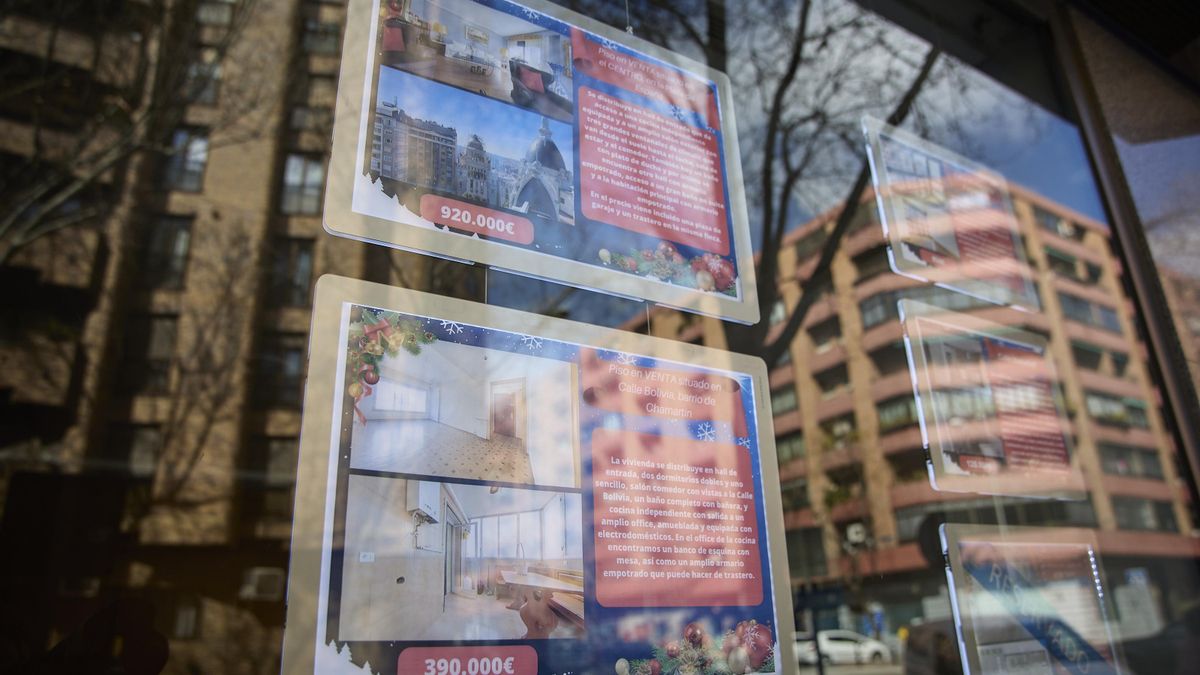
La compraventa de vivienda cae un 7,3 en su quinto mes seguido a la baja El enfriamiento de la activida no se refleja en los precios, que siguen subiendo a doble dígito con respecto al año pasado y 12 puntos por encima de la inflación interanual¿Cambio de ciclo en vivienda? Enfriamiento, pero no caída de los precios de compra La compraventa de viviendas acentuó su caída en mayo al 7,3 interanual y contabilizó 56.462 operaciones, lo que representa la quinta caída consecutiva, según los datos publicados este martes por el Instituto Nacional de Estadística (INE). Con este nuevo ajuste, las transacciones de vivienda acumulan un descenso del 3,4 en lo que va de año, en un contexto marcado por la falta de viviendas disponibles para atender a una demanda creciente que presiona al alza los precios. Por tipo de vivienda, en mayo descendieron las compraventas tanto de las nuevas como de las usadas. En concreto, las transacciones de vivienda usada, las más numerosas del mercado con un 78,9 del total, descendieron un 7,6 hasta las 44.574 unidades. En el caso de la vivienda nueva la caída fue del 6 hasta las 11.888 operaciones, según el INE, que obtiene estos datos a partir de la información contenida en los Registros de la Propiedad de todo el territorio nacional en virtud del convenio de colaboración firmado entre ambas. Por régimen, la mayor parte de las operaciones correspondieron a vivienda libre, casi un 94 , y sumaron 52.831 unidades, el 7,2 menos que en mayo de 2025. Por su parte, las compraventas de vivienda protegida cayeron en menor medida, un 8,2 , hasta las 3.631, y supusieron el 6,4 del total. Crecen un 6 con respecto a abril Si se compara con el mes anterior, abril, las transacciones de vivienda arroja una subida del 6 en tasa intermensual. Todas las categorías de vivienda presentaron subidas respecto al mes anterior. En el caso de la vivienda libre el incremento fue del 5,8 , mientras que en la protegida fue del 10,2 . Por antigüedad del inmueble, las compraventas de vivienda usada fueron las que más aumentaron con respecto a abril, un 6,7 , en tanto que las nuevas lo hicieron un 3,8 . Acumulan un ajuste del 3,4 en lo que va de año En el acumulado de los cinco primeros meses del año el saldo de las compraventas de vivienda fue negativo, del -3,4 . Tras crecer en 2025 un 11,5 y alcanzar las 714.237 unidades, la cifra más alta desde los máximos de 2007, la compraventa de viviendas inició el año con una caída del 5 , que siguió en febrero con un -0,5 , en marzo con un ajuste del -2,2 , en abril con el -1,8 menos y en mayo la caída se acentuó al -7,3 . Por régimen, los descensos en el año se extendieron a las compraventas de viviendas libres, -3 , y a las de vivienda protegida, -8,2 . Entre enero y mayo, la mayor caída de las compraventas se dio en las nuevas, con un ajuste acumulado del 4,4 , mientras que en las de segunda mano el descenso fue del 3,1 . Cae a doble dígito en 9 comunidades En mayo, la compraventa de viviendas cayó en quince comunidades autónomas con respecto al mismo mes de 2025 y en nueve de ellas lo hizo a doble dígito. Los descensos más pronunciados se dieron en Cantabria (–28,6); Murcia (–19,1 ); Illes Balears (–16,8 ); La Rioja (-14,3 ); Navarra (-14,1 ); País Vasco (-12,9 ); Comunidad de Madrid (-11,2 ); Galicia (-11 ) o Comunidad Valenciana (-10,8 ). Las compraventas solo subieron en mayo en Extremadura (2,6 ) y Andalucía (2,2 ). Los precios siguen subiendo El freno a la compraventa no enfría por ahora los precios. Según el índice general de los tasadores de Tinsa, el precio subió un 1,4 de mayo a junio para mantener una subida interanual a doble dígito que ya alcanza un 15,5, 12 puntos por encima de la inflación general de la economía.
eldiario.es · about 2 hours ago
Dow Jones, S&P, Nasdaq: „Der Reality-Check läuft: Wall Street sucht nach Inflationsdaten eine Richtung Teuerung, Unternehmenszahlen und der Iran-Krieg: Auf die US-Börsen wirken zahlreiche Impulse. Nun stellt sich die Frage, ob die Indizes wieder an die Rekordjagd anknüpfen können.
handelsblatt · about 2 hours ago

Inflation has biggest drop since 2020 Inflation fell in June, on the back of lower energy prices, the government said Tuesday.Why it matters: Its the largest one-month decrease since April 2020, but it may be a short-lived reprieve — the report doesnt account for the sharp increase in oil prices this month as the Iran war re-ignites.By the numbers: Still, inflation is pretty hot. The Consumer Price Index rose 3.5 in the 12 months through June — down from 4.2 in May.On a monthly basis, prices fell 0.4, after increasing 0.5 in May.Zoom in: The CPI for energy fell 5.7 in June, after climbing 3.9 in May — it was the largest factor in the June fall in inflation.Core CPI, which excludes more volatile food and energy prices, rose 2.6 in June, after increasing 2.9 in May. The big picture: The data doesnt account for the sharp rise in oil prices this week, as the U.S. and Iran resumed a hot war. The price of a barrel of Brent crude is up more than 20 since July 1 — and was at $86.53 Tuesday morning.Between the lines: That means Americans are likely about to experience another bout of pain at the gas pump — a political problem for President Trump and Republicans as the midterm elections draw near.Its not just Iran either. A second supply shock is building in Russia, which is facing a fuel shortage due to its war against Ukraine. Its a "double whammy with little cushion," wrote Patrick De Haan, head of petroleum analysis at GasBuddy.What to watch: Even as the inflation picture looks a little less severe than last month, its not at all clear that were on track to come close to the Federal Reserves 2 target anytime soon.Tariff price increases are still being passed through to consumers — and the AI boom is raising costs.Yes, but: The decline in inflation in June could keep the Federal Reserve from raising rates further this year, analysts say.What to watch: Expect all of this to come up later this morning when the new Federal Reserve chairman, Kevin Warsh, testifies before the House Financial Services Committee, and again tomorrow, when he appears before the Senate Banking Committee.
axios · about 2 hours ago
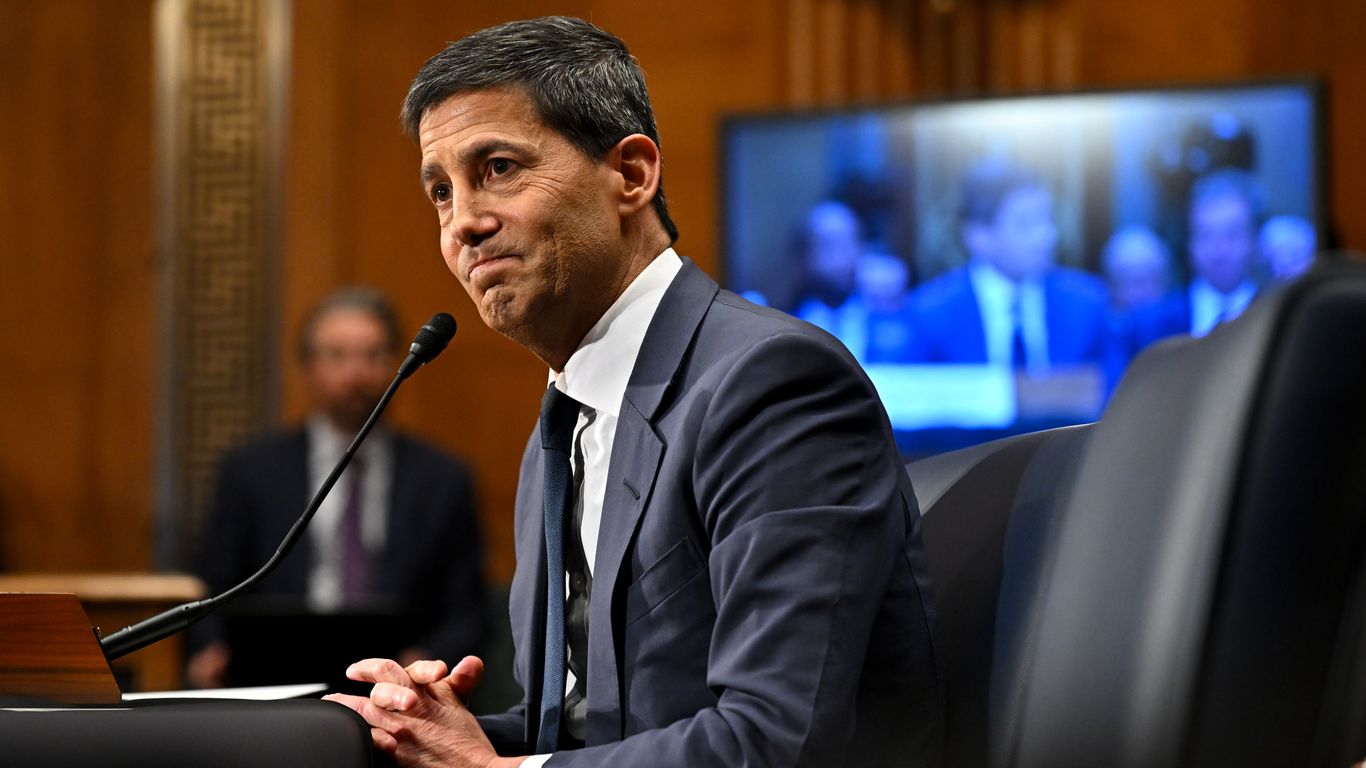
Feds Warsh stays mum on rate plans, pledges price stability Federal Reserve chairman Kevin Warsh will tell Congress Tuesday that the central bank is determined to restore price stability, but again offered little guidance as to whether it may need to raise interest rates to achieve it.The big picture: Warsh has sought to end the Feds modern practice of giving clear signals about its expected policy path, and continued that practice in his first congressional testimony as chairman.It comes as some of his Fed colleagues are debating whether there is a need for rate hikes as early as two weeks from now — or at least what might prompt them.The testimony also comes as the Labor Department released new data showing the Consumer Price Index was up 3.5 over the last 12 months, or 2.6 excluding food and energy.Driving the news: "The Feds No. 1 objective is to get monetary policy right — or as near to it as we possibly can," Warsh will tell the House Financial Services Committee, according to a prepared text released by the Fed."And if we get policy right — and we will — the inflation surge of the last five years will be a thing of the past," he will say."The members of our committee have no tolerance for persistently elevated inflation. And we share a resolute commitment to restoring price stability."Yes, but: It comes amid persistently high inflation, even excluding Iran war-driven impacts on energy and food prices, which has prompted some Fed officials to be more specific about the possibility that rate hikes will be needed to bring inflation down to 2.Fed governor Christopher Waller said Monday that while "there is still a credible case for inflation to begin to fall back to our 2 percent goal with policy at its current setting," he is "concerned about the equally plausible case that data in the coming weeks will show that inflation will remain at its elevated level or even trend higher."That scenario, he said, would require tighter monetary policy in the near term, which implies a rate hike could be on the table as early as a policy meeting that concludes July 29.New York Fed president John Williams said last week that if core inflation by the central banks preferred measure were to come in above 0.2 a month, "monetary policy would need to respond to that."Between the lines: As Warsh sticks to his desire to avoid explicit "forward guidance" about policy plans, his reluctance to even say much about the Feds reaction function — how it would respond to different economic scenarios — leaves markets guessing about the likelihood of rate hikes this year.In the absence of that guidance from the chairman, other members of the Fed policy committee have been filling in some of the gaps.Of note: In his testimony, the first of two days of the semi-annual monetary policy testimony required by law, Warsh noted an investment boom fueled by AI-related spending, which has fueled some inflationary pressures."We at the Fed are monitoring the implications for inflation and the labor market." He says that "we are at a hinge point in history" and that "its up to all of us to meet this moment.""The task of this generation of policymakers—and of individuals throughout the private sector—is to ensure the American economy excels far into the future."Editors note: This story has been corrected to reflect that the Feds next policy meeting concludes on July 29.
axios · about 2 hours ago

Some questions that may come up during Fed chief Warshs testimony to Congress reut.rs/4fz5zCp
bluesky_Reuters · about 2 hours ago
Interest rates to rise by September as oil prices surge
telegraph · about 2 hours ago
Szerdától jelentősen emelkednek az üzemanyagárak A 95-ös benzin bruttó 14, a gázolaj pedig bruttó 7 forinttal drágul.
444.hu · about 2 hours ago
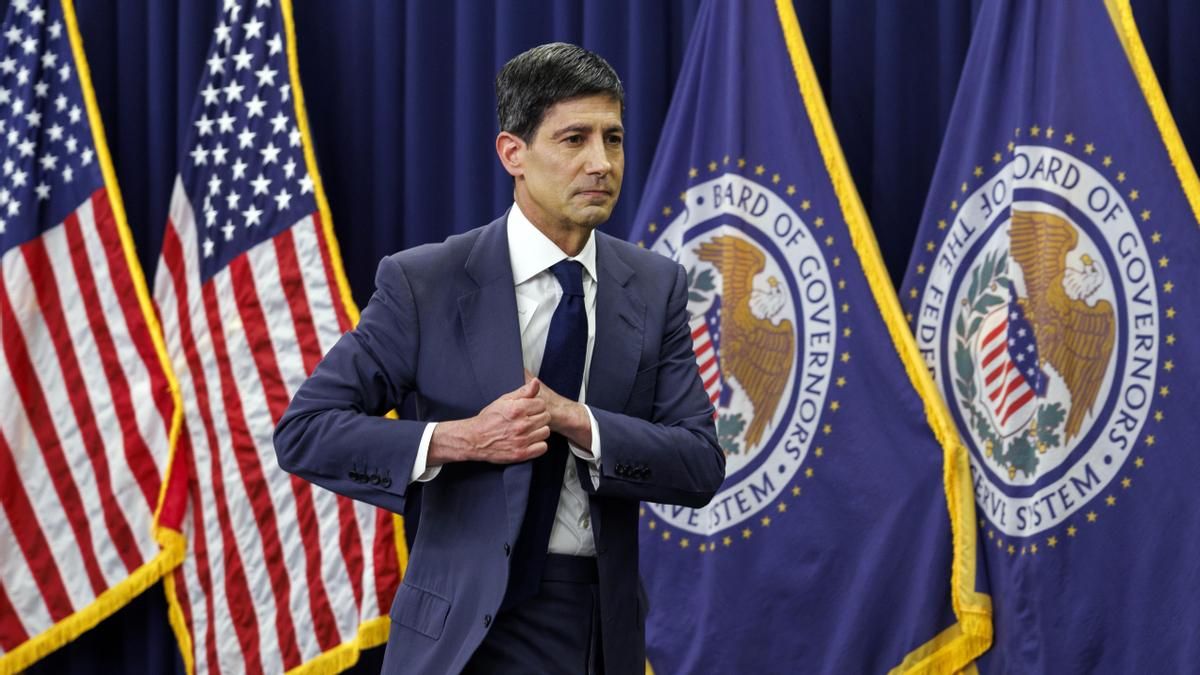
La inflación en Estados Unidos baja al 3,5 por la caída de los precios de la energía El presidente de la Fed, Kevin Warsh, promete combatir la inflación en contra de la intención de Trump de no subir los tiposVive rodeado de ricos, viene de Wall Street y lo ha elegido Trump: quién es Kevin Warsh, el nuevo presidente de la Fed El Índice de Precios de Consumo (IPC) de Estados Unidos bajó siete décimas hasta el 3,5 en junio tras la caída en los precios de la energía, por debajo del 3,7 pronosticado de los analistas, que ya preveían una moderación del repunte inflacionario impulsado por el alza del combustible debido a la guerra con Irán. Pocos minutos antes de que se diera a conocer la cifra, el nuevo presidente de la Reserva Federal (Fed), Kevin Warsh, destacó que no está dispuesto a aceptar una inflación persistentemente elevada y prometió trabajar para estabilizar precios tras lo que volvió a calificar como un último lustro en que la entidad fracasó en su misión. La alta inflación ha sido una carga excesiva para los hogares y las empresas estadounidenses, ha dicho. Según el máximo responsable de la Fed, la inflación fue el foco absoluto de la reunión del FOMC en junio pasado, cuando el órgano mantuvo los tipos de interés en la horquilla del 3,5 y el 3,75 , un movimiento contrario a las exigencias del presidente, Donald Trump, que ha presionado al banco central y a su expresidente, Jerome Powell, por una bajada agresiva de las tasas. Si acertamos con la política, y lo haremos, el auge de la inflación de los últimos cinco años quedará atrás, advirtió. Los miembros de nuestro Comité (el Comité Federal de Mercado Abierto o FOMC) no tienen ninguna tolerancia con una inflación persistentemente elevada. Y compartimos un compromiso firme de restaurar la estabilidad de precios, dijo el economista en la sesión, donde se espera que sea interrogado sobre las garantías de independencia de la entidad. El IPC estadounidense, al detalle La inflación subyacente, que excluye los volátiles índices de energía y los alimentos, bajó al 2,6 , tres décimas menos que en mayo, informó este martes el Buró de Estadísticas Laborales (BLS). En términos mensuales, la inflación decreció un 0,4 en el sexto mes de 2026, después del incremento del 0,5 anterior, en la mayor caída registrada desde abril de 2020, cuando este índice bajó ocho décimas. Por otro lado, el dato subyacente intermensual se mantuvo estable tras el 0,2 anterior. El portavoz de la Casa Blanca, Kush Desai, recordó en X que el presidente, Donald Trump, afirmó reiteradamente que, a medida que se normalizara el tráfico en el estrecho de Ormuz, los precios del petróleo - y, por ende, la inflación general- se desplomarían drásticamente. El informe del IPC de junio, que superó todas las expectativas, demuestra que el presidente Trump tenía razón, escribió Desai, sin referirse a la reciente escalada en la guerra iniciada el 28 de febrero por EE.UU. e Israel contra Irán, que ha vuelto a declarar cerrado el tráfico por el estrecho de Ormuz como represalia. El índice de energía cayó un 5,7 en junio, en coincidencia con la entrada en vigor de un alto el fuego y la firma de un memorando de entendimiento entre Washington y Teherán con garantías para restablecer el tránsito por la vía clave de crudo. Esta moderación fue la que más contribuyó a la disminución del índice general, compensando con creces los aumentos en otros índices, como los de vivienda y alimentos, según el BLS. La caída de junio tuvo lugar después de subidas en mayo (3,9 ), abril (3,8 ) y marzo (10,9 ), que golpearon el bolsillo de los estadounidenses, en vilo ahora por la posible alza en los precios del combustible tras la reciente ruptura de la tregua y la disputa por el control del paso marítimo. El índice de alimentos aumentó un 0,2 , al igual que los índices de alimentos para consumo en el hogar y alimentos fuera del hogar. En términos interanuales, el componente de energía subió un 15,7 , mientras que el de alimentos aumentó un 3 . La recreación, el mobiliario y operaciones del hogar y el cuidado personal estuvieron entre los índices que crecieron en junio. Entre los que disminuyeron se incluyen los seguros de vehículos de motor, las comunicaciones, la ropa, la atención médica y los automóviles y camiones usados. La inflación, junto a los datos de desempleo y el producto interior bruto (PIB), es clave para evaluar la salud de la economía y sirven a la Reserva Federal para tomar decisiones en materia de política monetaria. La publicación de este nuevo informe coincide con el testimonio del nuevo presidente de la Fed, Kevin Warsh, en el Congreso, su primera aparición ante legisladores desde que asumiera el cargo.
eldiario.es · about 2 hours ago

„Der Preisdruck hat im Juni etwas nachgelassen Die Eskalation im Iran-Konflikt sorgt für Unsicherheit an den Märkten. US-Inflation schwächt sich ab, bleibt aber ein Thema für die Notenbank. „Die US-Wirtschaft bleibt in einer Phase des inflationären Wachstums, sagt Johannes Mayr, Chefvolkswirt bei Eyb & Wallwitz bei Dietmar Deffner.
welt.de · about 2 hours ago
Teuerung: „Größter Rückgang seit sechs Jahren: US-Inflationsrate sinkt auf 3,5 Prozent Der kurzzeitige Einbruch der Energiepreise entlastet die Verbraucherpreise im Juni. Trotzdem bleibt die Inflation über dem Fed-Ziel. Das setzt nicht nur die Notenbank unter Druck.
handelsblatt · about 2 hours ago
Kevin Warsh vows Federal Reserve will be resolute in inflation fight Central bank chief says he would have no tolerance for persistently elevated price growth
financial times · about 2 hours ago