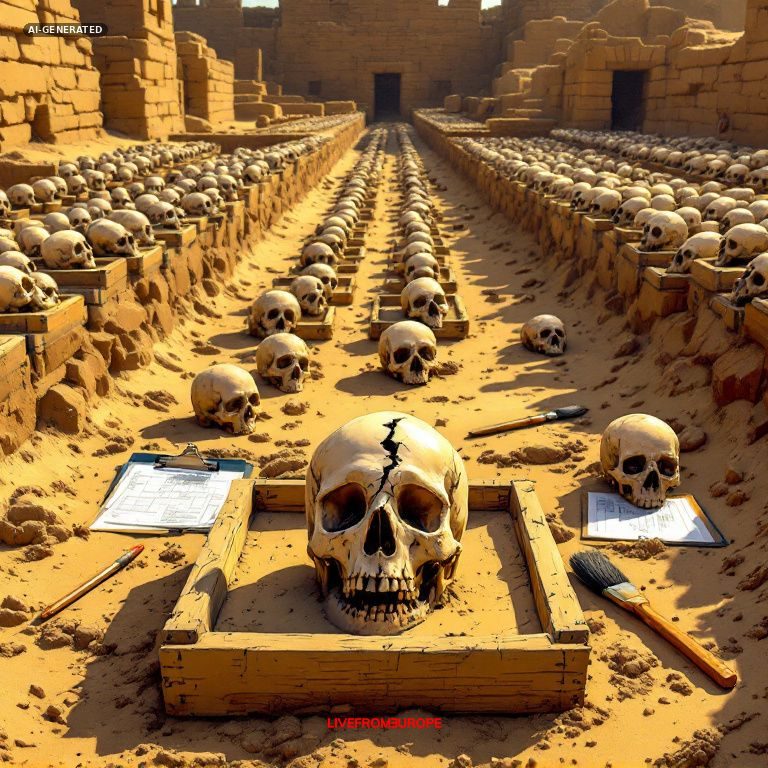
Egyptologists have uncovered forensic evidence suggesting human sacrifice in First Dynasty tombs, according to a new study published in *Frontiers in Environmental Archaeology*. Bioarchaeologist Roselyn Campbell of Purdue University re-examined 46 skulls from the Umm el-Qaab cemetery in Abydos, excavated by Flinders Petrie in the 1920s, and found that over one-third showed signs of blunt force trauma.
The skulls were part of subsidiary burials believed to belong to retainers of deceased First Dynasty rulers. Campbell, who specializes in the history of human sacrifice, noted that the debate over whether ancient Egyptians practiced retainer sacrifice has long been polarized. “People tend to fall into one of two camps,” she told *Ars Technica*. “Either retainer sacrifice definitely happened, end of discussion, or it definitely didn’t happen, end of discussion. But nobody’s actually looked at the bones in a very long time.”
The study highlights the challenges of analyzing older remains, which are often incomplete or modified for preservation, potentially destroying critical forensic information. Campbell emphasized the need to contextualize legacy data, given the history of European and colonial archaeology in Egypt. The findings suggest that violence may have been used to ensure servants accompanied pharaohs into the afterlife, though Campbell cautioned against applying modern definitions of violence to ancient practices.




:format(jpg)/f.elconfidencial.com%2Foriginal%2F162%2Ffd2%2Fd0c%2F162fd2d0c38b0d05d40ac4cc7d1faa51.jpg)