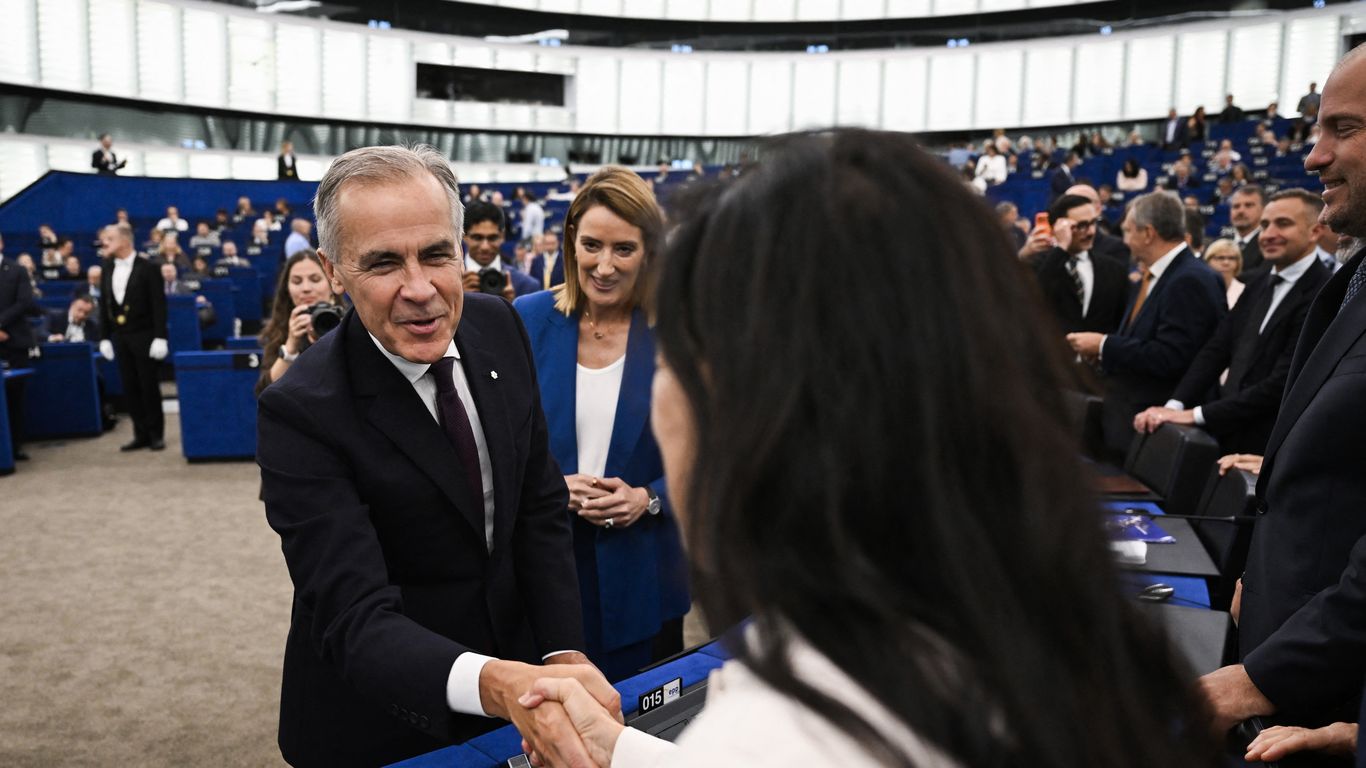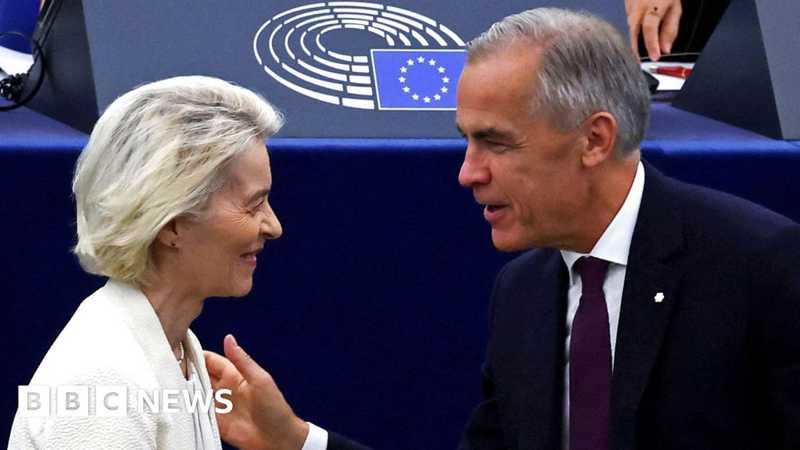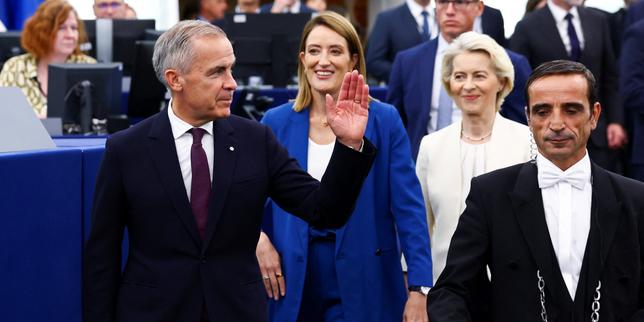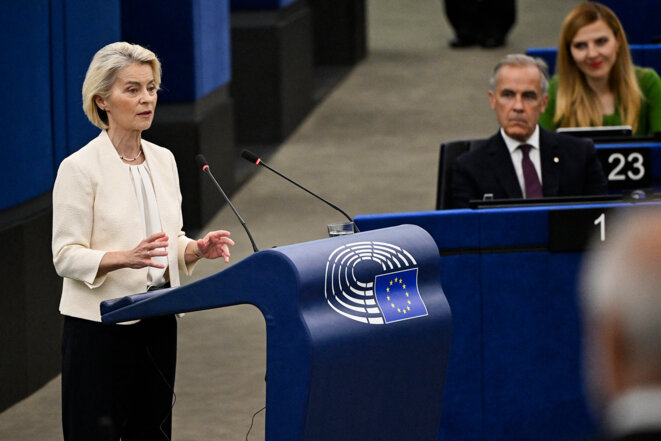
European Commission President Ursula von der Leyen proposed on Wednesday making Canada the European Union’s first “associate member” during her State of the Union address in Strasbourg. The announcement drew a standing ovation from EU lawmakers, with von der Leyen addressing Canadian Prime Minister Mark Carney directly in the chamber before embracing him.
Von der Leyen framed the proposal as a response to a fractured global order, stating that democracies “have the freedom to choose with whom to work” and that the EU and Canada “see the world with the same eyes” on issues from AI to geopolitics. She emphasized shared values, including democracy, and cited cooperation on Ukraine, defense, and supply chains .
The proposal, which has no existing legal framework in EU treaties, would deepen ties beyond the current trade pact, potentially integrating defense industries, technology, energy, and Arctic policy. Carney’s office welcomed the idea of a “far stronger, more ambitious alliance” but did not explicitly endorse the “associate member” label .
The initiative was not pre-coordinated with EU member states, and diplomats told Politico it had caused confusion. The EU has historically resisted flexible membership models, and Germany’s earlier suggestion of associate status for Ukraine met lukewarm responses .
Carney is scheduled to address the European Parliament on Thursday, with further discussions expected at the Canada-EU summit in Montreal on Oct. 29-30 .