Loading…
 Saturday, September 26Saturday, September 26
4 months · 6 summary articles
ABB’s chief executive has warned that Europe faces “mass unemployment” unless the EU accelerates deregulation and reforms, as Swiss engineering giant ABB joins a chorus of business leaders sounding the alarm over the bloc’s eroding competitiveness. Speaking to the *Financial Times* on Monday, Morten Wierod said Brussels had shown “no sense of urgency” in implementing the sweeping changes proposed nearly two years ago by Mario Draghi, the former ECB president and Italian prime minister. “I hope it will not come to a much more serious crisis with mass unemployment,” Wierod said. “It should not have to get to that point for the necessary urgency to be recognised.”
The warning comes as Swiss voters prepare to cast ballots on 14 June in a referendum that could cap the country’s population at 10 million—a move critics have likened to a “Swiss Brexit” and which business groups say would throttle access to skilled labour and strain relations with the EU, Switzerland’s largest export market.
Meanwhile, the EU is racing to shield its chemicals industry from a flood of cheap Chinese imports that threatens to cripple the sector, with the European Commission readying new measures to tighten import quotas and raise duties on excess shipments. The bloc has also adopted stricter rules for steel imports, introducing tighter tariff-rate quotas and higher duties on excess volumes to counter global overcapacity.
In energy policy, Swiss public sentiment has swung sharply in favour of nuclear power, with nearly 60% of respondents in a GFS.bern poll supporting the construction of new plants amid growing fears of electricity shortages. The survey found 79% want existing reactors to keep running as long as they remain safe, while 59% back new facilities. The House of Representatives is set to debate the country’s energy future on Monday.
Switzerland is also weighing a Franco-Italian alternative to US air defences after Raytheon’s Patriot system deliveries were delayed by at least five years, with the SAMP-T system emerging as a strong contender for Bern.
On the labour front, doctors in Swiss hospitals report a slight easing in workloads, with average weekly hours falling to 54.6 from 56.3 in 2022, though exhaustion and patient-safety risks remain critical. Nearly 52% of respondents told a Demoscope survey they had at least occasionally felt unable to continue.
In Brussels, industry groups are pushing back against EU plans to mandate electric vehicles in company fleets, arguing the proposal amounts to a de facto combustion-engine ban.
Follow us for live European news
2 further sources not geolocated

The EU has adopted new rules to shield its steel sector from the effects of global overcapacity. The new rules introduce a revised tariff-rate quota system with tighter import quotas and higher duties on excess imports. More ➡️ link.europa.eu/pnp3Wt
bluesky bot · 4 months ago

UE vrea să schimbe legislația pentru a reduce facturile la curent Uniunea Europeană pregătește modificări ale taxelor pe energie și ale tarifelor de rețea, inclusiv planuri de a impozita electricitatea la o cotă mai mică decât gazul, într-un efort de a reduce facturile la energie ale consumatorilor, arată un proiect de propunere consultat de Reuters. Propunerea Comisiei Europene face parte din tentativele blocului comunitar de a …
hotnews.ro · 4 months ago
Avertisment dur înainte de referendumul cu potențial istoric, care ar putea limita populația Elveției la 10 milioane Companiile și angajatorii se tem că decizia limitării populației ar lovi economia, ar reduce accesul Elveției la forță de muncă calificată și ar afecta relațiile cu Uniunea Europeană, cea mai mare piață de export a țării, scrie Reuters. Elveția votează pe 14 iunie în cadrul unui referendum pentru a stabili dacă să-și limiteze populația la …
hotnews.ro · 4 months ago
Alpines Schmetterlingsparadies – «Hier leben mehr als die Hälfte aller Schweizer Tagfalter» In der Schweiz gibt es 3800 Falterarten. Hans-Peter Wymann kennt sie fast alle. Unterwegs im Talkessel von Grindelwald.
srf.ch · 4 months ago
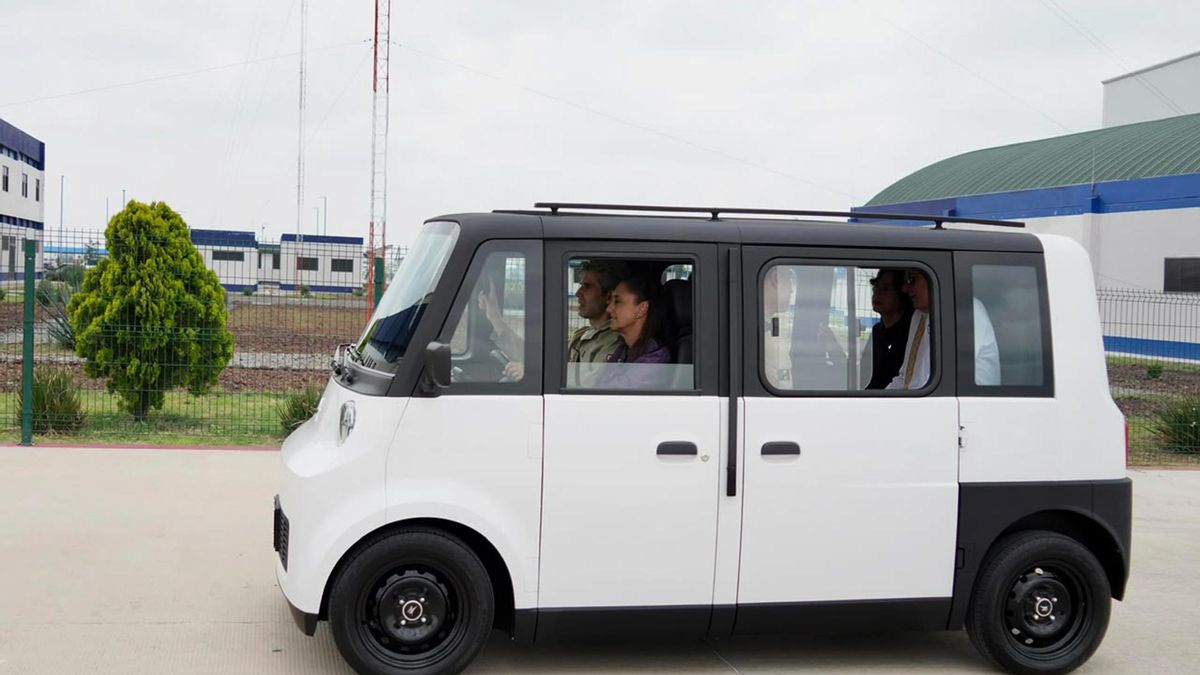
Olinia 1, el coche eléctrico mexicano que cuesta 8.600 dólares La presidenta de México, Claudia Sheinbaum, se pone al volante del primer coche eléctrico desarrollado íntegramente en el país y que quiere convertirse en un acelerador de la electromovilidadLa UE contraataca a China: llegan los coches eléctricos baratos europeos La presidenta de México, Claudia Sheinbaum, ya ha podido ponerse al volante del primer Olinia 1, el coche eléctrico desarrollado íntegramente en el país y que quiere convertirse en un acelerador de la electromovilidad. El Olinia 1 entró oficialmente en fase de producción y promete llegar a las calles en el verano de 2027 con un precio de partida de 150.000 pesos, unos 8.600 dólares. Olinia representa mucho más que un vehículo eléctrico, afirmó Sheinbaum durante la presentación. Es la visión de un México que aprovecha la inteligencia y la creatividad de sus jóvenes para incorporarse plenamente al desarrollo digital y tecnológico que está transformando al mundo. El vehículo compacto, diseñado para transportar hasta seis pasajeros y adaptado para usuarios en silla de ruedas, es el resultado de un proyecto iniciado apenas un año y medio atrás. En enero de 2025, el Gobierno conformó un equipo de investigadores del Instituto Politécnico Nacional (IPN) y del Tecnológico Nacional de México con un presupuesto inicial de 25 millones de pesos para desarrollar el vehículo. Hoy, más de un centenar de personas trabajan en el Centro de Diseño Olinia, ubicado en Puebla, afinando los detalles de una iniciativa que busca abrir una nueva etapa para la industria automotriz mexicana. Un vehículo para la movilidad urbana El nombre no es casual. Olinia significa movimiento en náhuatl y resume la ambición del proyecto: impulsar una transición hacia la movilidad eléctrica con tecnología desarrollada localmente. La apuesta responde a una realidad urbana concreta. Según datos oficiales, el 70 de los mexicanos vive en ciudades y el 80 realiza trayectos diarios inferiores a los 30 kilómetros, una distancia para la que un vehículo compacto y eléctrico puede resultar suficiente. Las especificaciones técnicas apuntan precisamente a ese mercado. El Olinia 1 incorpora una batería de 14,7 kilovatios, ofrece una autonomía superior a los 125 kilómetros por carga y alcanza una velocidad máxima de 50 kilómetros por hora. Sus promotores destacan además su bajo coste operativo: apenas 49 centavos de peso por kilómetro recorrido, una cifra que, según los cálculos oficiales, supone un gasto cinco veces menor que el de un automóvil de gasolina y puede traducirse en ahorros de hasta 50.000 pesos al año. Pero el Gobierno quiere que el vehículo sea también el punto de partida de algo más amplio. Durante su intervención, Sheinbaum definió el proyecto como la semilla de una industria a nivel país, construida a partir de la colaboración entre universidades, centros de investigación, el Estado y el sector productivo. En otras palabras, una estrategia para que México no solo ensamble tecnología extranjera en sus abundantes factorías, que lo sitúan como séptimo país con más producción mundial (más de cuatro millones de vehículos), sino que genere conocimiento propio y participe en el diseño de las soluciones del futuro. Ampliación de la gama Olinia México puede ir más allá de ser un simple receptor de inversiones, sostuvo la mandataria. Puede desarrollar tecnología, diseñar soluciones y crear valor a partir de nuestras propias capacidades. La hoja de ruta contempla la expansión de la familia Olinia en los próximos años. El proyecto nació con tres líneas de desarrollo: movilidad personal, vehículos de barrio para sustituir mototaxis y modelos para reparto de mercancías. De hecho, Roberto Capuano Tripp, coordinador del programa, aprovechó la presentación para adelantar que el próximo modelo será el Olinia Cargo, destinado al transporte de mercancías de última milla. Misión cumplida, le dijo Sheinbaum al responsable del proyecto tras concluir la demostración. La iniciativa llega en un momento en que la industria automotriz mexicana busca adaptarse a la transición global hacia los vehículos eléctricos. El sector representa cerca del 4 del PIB nacional y más del 20 del producto manufacturero, convirtiéndose en uno de los pilares económicos del país. En ese contexto, Olinia pretende posicionarse como una alternativa de bajo coste en un mercado donde los precios de los vehículos eléctricos siguen siendo una barrera para gran parte de la población.
eldiario.es · 4 months ago
LInsee projette un pic de population en France en 2037 à 69,8 millions dhabitants, suivi dune baisse régulière En 2070, les plus de 65 ans pourraient être deux fois plus nombreux que les moins de 20 ans, selon lInstitut national de la statistique.
le monde · 4 months ago
EU-Kommission plant Elektro-Pflicht bei Firmenwagen – Verbände sprechen von Verbrennerverbot Die EU-Kommission plant, Elektroautos als Firmenwagen zur Pflicht zu machen. Europäische Verbände kritisieren dies als faktisches Verbrennerverbot. Nun beraten die Verkehrsminister über den Vorschlag.
welt.de · 4 months ago
Mobilität: Eine Elektroquote für Dienstwagen ist überflüssig Das Verbrenner-Aus ist aufgeweicht, aber jetzt sollen Unternehmen Elektroauto-Ziele auferlegt werden. Schluss mit noch mehr Regeln! Wenn E-Autofahren zuverlässig und günstig funktioniert, steigen die Firmen von ganz allein um.
sueddeutsche · 4 months ago
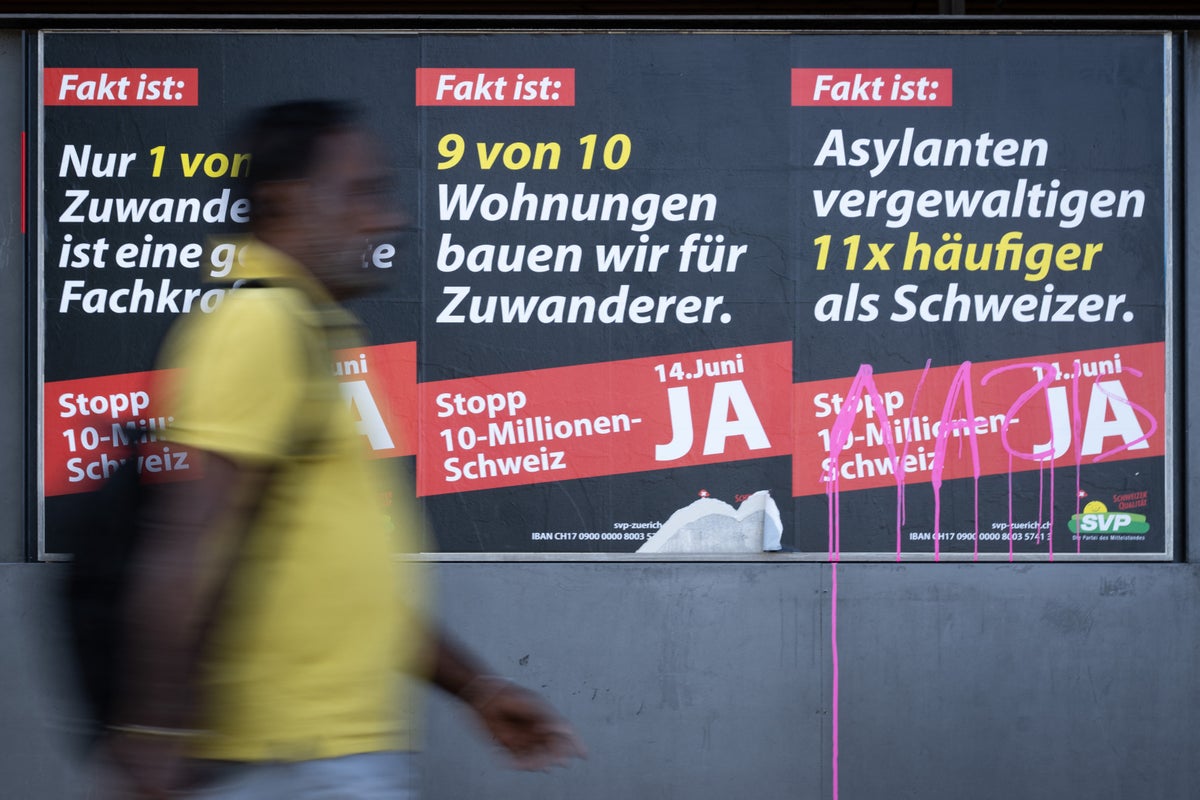
Swiss Brexit population cap vote sparks fears of economic blow Switzerland is poised for a pivotal vote on 14 June, as citizens head to the polls to decide on a proposal to cap the nations population at 10 million. The referendum, which some have dubbed a "Swiss Brexit", has sparked alarm among businesses, who fear economic repercussions should the measure pass.
independent · 4 months ago
UK pioneers new model for Swiss representation abroad The dissolution of the Federation of Swiss Societies in the UK (FOSSUK) marks the beginning of a new chapter for Swiss citizens in Britain. Its successor, SwissCommunity UK, hopes to become a more democratic and digitally connected organisation – and a model for Swiss communities abroad facing similar challenges. For many long-term Swiss residents in the UK, this spring marked the end of an era and the loss of a Swiss icon in London. On May 11, the Federation of Swiss Societies in the UK (FOSSUK) was officially dissolved, marking the end of one chapter for Swiss citizens in Britain and the beginning of another. Just a couple of months earlier, Armin "Sweety" Lötscher, the longtime owner of the iconic Swiss restaurant St. Moritz in London, passed away shortly before his 88th birthday. For many Swiss in London, the Soho venue had long served as an informal gathering place for the community. While the staff at St. Moritz will continue to run the restaurant as Lötscher had done since ...
swissinfo · 4 months ago
Swiss public sentiment swings in favour of nuclear energy Nearly 60 of the Swiss population supports the construction of new nuclear power plants, according to a poll commissioned by the Swiss Association of Electricity Companies (AES). + Get the most important news from Switzerland in your inbox This renewed popularity of nuclear power reflects a growing fear of electricity shortages. The House of representatives is scheduled to decide on the future of Swiss energy policy during a parliamentary debate on Monday. According to the survey conducted by the GFS.bern institute, 79 of respondents want to continue operating nuclear power plants as long as they remain safe, while the construction of new generation facilities receives 59 support. + I went solar in Switzerland – I now know why many people dont "Security of supply is a major issue in Switzerland in 2026. We are wondering whether renewable energies will be sufficient. We are therefore looking for alternatives and nuclear power is one of them," Urs Bieri, political scientist at ...
swissinfo · 4 months ago
Swiss doctors workload eases but still cause for concern The working hours of doctors in Swiss hospitals have fallen slightly. Nevertheless, exhaustion and risks to patient safety remain at a high level, according to a survey of working conditions. + Get the most important news from Switzerland in your inbox The average weekly working time, extrapolated to a full-time workload, fell to 54.6 hours. In 2022, it was 56.3 hours, as the Association of Swiss Assistant and Senior Physicians (VSAO) announced on Monday. The Demoscope survey institute interviewed 2,400 doctors for the survey. + Swiss voters give helping hand to nurses There was also a decrease in labour law violations, which still affected 58 of respondents, compared to 68 in the previous survey. Despite this positive trend in working hours, the level of fatigue remains critical. As in the last survey in 2022, every second person surveyed (52) stated that they thought "I cant do any more" at least once in a while. The overload also continues to jeopardise patient safety.
swissinfo · 4 months ago
Animal rights activists lodge complaint against Swiss supermarket An alliance of animal protection organisations has called out a Swiss supermarket chain for alleged misleading advertisement. The retailer Migros rejects the accusations. + Get the most important news from Switzerland in your inbox The Werbemist team plans to lodge a complaint with the Swiss Fair Trading Commission in the next few days, it told Keystone-ATS, confirming a report in the SonntagsZeitung. Behind Werbemist are the animal protection organisations Animal Rights Switzerland and Sentience, as well as the Fondation pour lanimal en droit (TIR) and Tier im Fokus (TIF). The statement "Always topical: animal welfare", used in a Migros advertising campaign, is "cynical" in view of the serious animal protection problems in livestock farming, the organisations claim. In particular, they point to the painful fractures of the breast bone, in laying hens and the CO2 stunning of pigs, which causes panic by suffocating them. Despite this, Migros can use the labels "animal welfare" or ...
swissinfo · 4 months ago
Swiss university disposes of hazardous substance The disposal of a potentially hazardous chemical substance from a former research site at the Federal Institute of Technology ETH Zurich was successfully completed on Sunday. + Get the most important news from Switzerland in your inbox The almost 270 residents evacuated as a precautionary measure were able to return to their homes as planned. The gas cylinder filled with chlorine trifluoride was reloaded as planned into a specially designed recovery container and transported away by a specialised company, the Zurich cantonal police announced on Sunday afternoon. The coordinated operation in the area of the ETH started as planned on Sunday morning. All residents had left their homes in good time. The precautionary safety measures for reloading and removal from a secure laboratory at ETH Zurich were lifted after around six hours. The ordered evacuation and the temporary traffic restrictions were lifted after the work was completed at 4.25pm. The affected residents were allowed to ...
swissinfo · 4 months ago
ABB CEO warns of massive job losses in Europe The CEO of Swiss engineering firm ABB has warned of a significant loss of EU competitiveness and possible mass redundancies. + Get the most important news from Switzerland in your inbox The EU must deregulate as a matter of urgency, Morten Wierod said in an interview with the Financial Times. Otherwise, there is a risk of a severe crisis with "mass unemployment". According to the article, the CEO of the Zurich-based electrical engineering group criticised the fact that European lawmakers have shown "no sense of urgency" in their reforms. The reform plan presented by former European Central Bank president and ex-Italian prime minister Mario Draghi has been on the table for almost two years, but very little has been implemented. "I hope it will not come to a much more serious crisis with mass unemployment. It should not have to get to that point for the necessary urgency to be recognised," Wierod said. The ABB CEO called for concrete improvements: "The internal market or the EU must ...
swissinfo · 4 months ago
EU must act before China cripples European industries, warns EPP chief
gdeltproject.org · 4 months ago
Switzerland weighs Franco-Italian alternative to US air defences SAMP-T emerges as strong option for Bern as Raytheons Patriot system deliveries delayed for at least 5 years
financial times · 4 months ago
EU exports of shark fins dropped in 2025 In 2025, the EU exported 2.7 thousand tonnes of shark fins to countries outside the EU, worth €44.8 million. Compared with 2024, the export volume decreased by 15.2 (from 3.1 thousand tonnes), and the export value dropped by 31.3 (from €65.3 million). These decreases followed a steep rise betw...
eurostat · 4 months ago

The European Commission is preparing new measures to prop up the EUs chemicals industry as a wave of cheap Chinese imports pushes the sector to the brink.
bluesky bot · 4 months ago
Positionspapier: Verbände kritisieren mögliche Pflichtquoten für E-Firmenwagen Die EU-Kommission drängt auf einen höheren Anteil von Elektroautos in Firmenflotten. In einem Positionspapier sprechen sich mehrere Verbände dagegen aus und schlagen andere Lösungen vor.
handelsblatt · 4 months ago
Insight Innovation: „Ein Zehnkampf – Warum die neuen E-Autos von Mercedes und BMW mehr Reichweite haben und schneller laden Mit der neuen Generation ihrer Stromer wollen deutsche Autobauer den Rückstand zur Konkurrenz aufholen. Dahinter steckt aber mehr als nur leistungsstärkere Batterien.
handelsblatt · 4 months ago