Loading…
 Saturday, August 29Saturday, August 29
2 months · 6 summary articles
The German far-right Alternative for Germany (AfD) has solidified its leadership ahead of crucial regional elections in September, while Spain’s left-wing coalition partner Movimiento Sumar faces internal collapse just months before national elections. The contrasting fortunes of these two parties highlight the deepening polarization across Europe’s political landscape.
In Erfurt on Saturday, the AfD re-elected its co-leaders Alice Weidel and Tino Chrupalla, with Weidel securing over two-thirds of delegate votes in a show of dominance that underscores the party’s growing electoral strength. The party’s internal cohesion, despite past factional strife, now appears unassailable as it prepares for regional votes in Saxony-Anhalt, Thuringia, and Berlin—where polls show the AfD leading with an eight-point advantage over the center-right Union parties.
German Defense Minister Boris Pistorius, a member of the ruling SPD, warned that the AfD’s ties to Moscow—including alleged financial support from Russia—make it unfit to handle classified military information. “The proximity to Putin is not to be overlooked,” Pistorius told *Bild am Sonntag*, adding that the government is reviewing access to sensitive data. His remarks came as Saxony-Anhalt’s acting premier, Sven Schulze, accused the AfD of harboring “church-destroying” policies, a claim reflecting the party’s hardline secularism.
Meanwhile, Spain’s Movimiento Sumar, the junior partner in Prime Minister Pedro Sánchez’s progressive coalition, is in disarray ahead of its third assembly in three years, scheduled for July 11. The party, which won 31 seats in 2023 as a bulwark against the far right, now faces a leadership crisis after the resignation of former coordinator Lara Hernández, who was exonerated of workplace harassment allegations after charges were dropped. Hernández’s team dismissed the resolution of the conflict as a “fictitious consensus,” alleging a purge of dissenting voices.
The party’s new “unity list,” led by Verónica Martínez Barbero and Rosa Martínez, is expected to be ratified, but internal fractures run deep. Only one minister, Ernest Urtasun (Culture), will remain in the executive, supported by just four deputies, while prominent figures like Yolanda Díaz—the party’s founder and deputy prime minister—are sidelined. The crisis has left the broader left-wing coalition, including parties like IU and Más Madrid, demanding bold leadership to revitalize the movement ahead of the 2027 general elections.
The AfD’s rise contrasts sharply with Sumar’s decline. In Germany, the party’s shift away from its once-inflammatory migration rhetoric—now deemed politically toxic—has allowed it to focus on governance, with Weidel positioning the AfD as a viable alternative in regional parliaments. In Spain, Sumar’s inability to counter the PSOE’s dominance or address internal scandals has eroded its credibility, leaving the left vulnerable to further electoral setbacks.
As the AfD prepares for what could be its first regional majority in September, the political tremors are being felt across Europe. In France, the far right has recast its attacks on immigration as critiques of elitism, while in the Netherlands, Geert Wilders’ shock victory has further emboldened populist forces. The question now is whether Sumar can reverse its fortunes or if Spain’s left will follow the path of fragmentation seen in other European democracies.
Follow us for live European news
1 further source not geolocated

Innenpolitik: Pistorius will der AfD keine geheimen Informationen geben – Parteitag in Erfurt endet Der Verteidigungsminister verweist auf die Nähe der Partei zu Russland. Am zweiten Tag des Parteitags geht es derweil vor allem um interne Fragen der Parteiarbeit.
handelsblatt · about 2 months ago
Doppelspitze bröckelt – Weidel triumphiert, Höcke gewinnt an Einfluss Werner Patzelt analysiert die Machtverhältnisse in der AfD. Weidel ist gestärkt, Chrupalla verliert an Rückhalt, Höcke baut seinen Einfluss aus. „Doppelspitzen zeigen fehlenden Zusammenhalt, sagt der Politikwissenschaftler bei WELT TV.
welt.de · about 2 months ago
Delegiertentreffen: AfD-Parteitag endet - Protestbündnis zieht positive Bilanz Zehntausende Demonstranten und massives Polizeiaufgebot - doch der AfD-Parteitag verlief am ersten Tag überraschend reibungslos. Am zweiten Tag geht es vor allem um interne Fragen der Parteiarbeit.
tagesspiegel · about 2 months ago
Kommentar: Weidels trügerischer Triumph Alice Weidel verlässt den AfD-Parteitag als klare Siegerin. Doch ihr Triumph hat eine Kehrseite, die für sie und die Partei noch gefährlich werden kann.
handelsblatt · about 2 months ago
AfD-Parteitag: Ohne ihren Extremismus ist die AfD nichts Die Macht vor Augen will die AfD nun »unideologisch und pragmatisch« sein: weniger Anti-Migrations-Rhetorik, mehr »Schwarz-Rot-Gold«. Für die Partei ein riskanter Schwenk
die zeit · about 2 months ago
Útoky AfD na Bauhaus? ‚V Německu se začíná sortýrovat, kdo je pravý Němec, říká Chuchma Před více než 90 lety nacisté označovali vše, co zosobňovala umělecká škola Bauhaus, za zvrhlé. Dnes na nadaci spravující její odkaz útočí Alternativa pro Německo (AfD), která může podle průzkumů výrazně uspět v podzimních zemských volbách v Sasku-Anhaltsku. „Jde o vyvolávání kulturních válek, varuje publicista Josef Chuchma. V rozhovoru se vrací i ke Knihovně Václava Havla a připomíná jubilejní ročník karlovarského filmového festivalu.
irozhlas.cz · about 2 months ago
AfD baut Vorsprung aus: Union verliert in Umfrage weiter an Zustimmung Im aktuellen „Insa-Sonntagstrend liegt die AfD acht Punkte vor der Union – SPD und Grüne teilen sich den dritten Platz. Die Brandmauer der CDU/CSU spaltet demnach die Bevölkerung.
tagesspiegel · about 2 months ago
Parteitag in Erfurt: Protestbündnis gegen AfD zieht positive Bilanz – Weidel-Partei baut Umfragevorsprung vor Union aus Zehntausende Demonstranten und massives Polizeiaufgebot – doch der AfD-Parteitag verlief am ersten Tag überraschend reibungslos. Am zweiten Tag geht es vor allem um interne Fragen der Parteiarbeit.
handelsblatt · about 2 months ago
Radikale AfD-Jugendorganisation rückt beim Parteitag in den Fokus Am zweiten Tag des AfD-Parteitags in Erfurt blieb es weitgehend ruhig. Die Polizei meldete bisher keine Zwischenfälle. Im Fokus steht nun die Einbindung der AfD-Jugendorganisation. „Die Konflikte werden intern geklärt, sagt Lutz Stordl, Reporter, bei WELT TV.
welt.de · about 2 months ago
„Die AfD will die Kirchen zerstören, sagt Ministerpräsident Schulze Was droht den Kirchen bei einem Sieg der AfD bei der Landtagswahl in Sachsen-Anhalt? Der amtierende Ministerpräsident Sven Schulze erkennt eine kirchenfeindliche Politik – viele Einrichtungen seien gefährdet.
welt.de · about 2 months ago
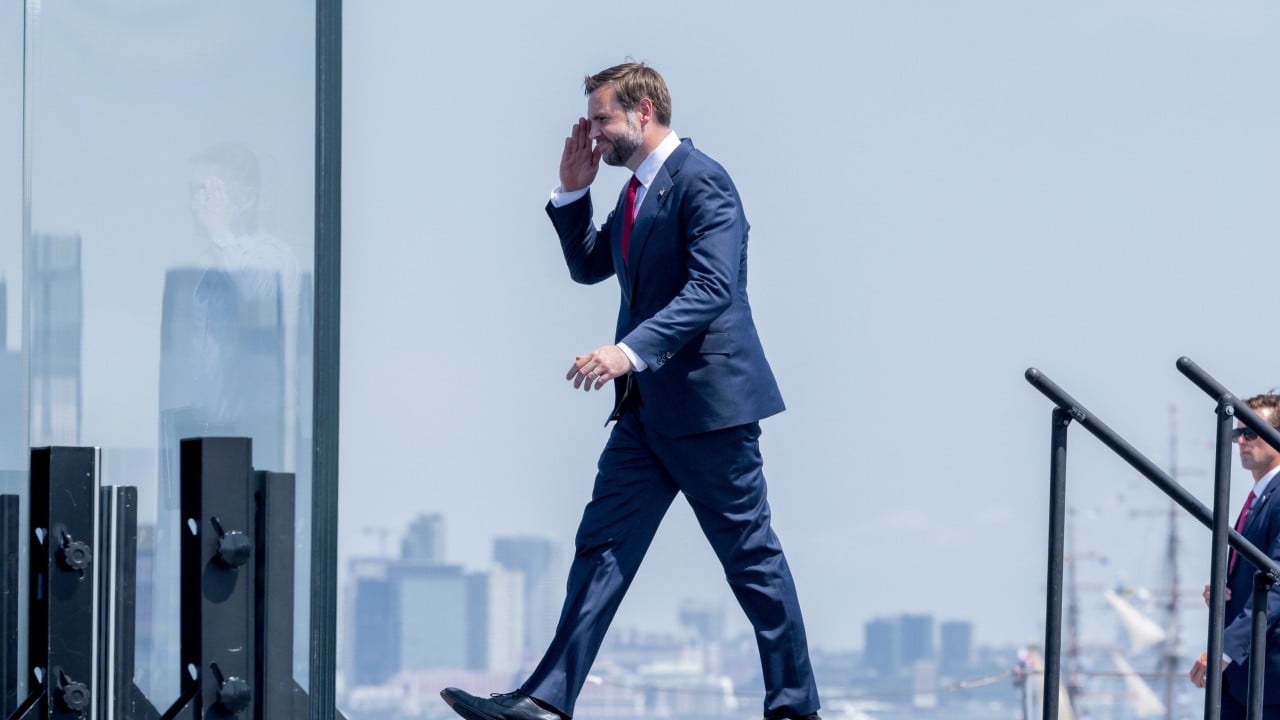
Vance hopes Burnham delivers structural change amid broken UK politics US Vice-President J.D. Vance said Britain had been failed by its leadership for a long time, adding that he hoped the countrys next prime minister could deliver the structural change voters were seeking after years of political turmoil. In an interview with the Sunday Times newspaper, Vance said frequent changes of government pointed to deeper problems in British politics. Prime Minister Keir Starmer announced last month he would step down after two years in office, paving the way for...
south china morning post · about 2 months ago
Erfurt: AfD-Parteitag endet – Protestbündnis zieht positive Bilanz Zehntausende Demonstranten und massives Polizeiaufgebot – doch der AfD-Parteitag verlief am ersten Tag überraschend reibungslos. Am zweiten Tag geht es vor allem um interne Fragen der Parteiarbeit.
handelsblatt · about 2 months ago
Weidel klar vor Chrupalla im Amt bestätigt ‒ Polizei hat Proteste im Griff Beim AfD-Parteitag in Erfurt blieb es nach massiven Protesten weitgehend ruhig. Alice Weidel und Tino Chrupalla wurden als Parteichefs bestätigt. „Über zwei Drittel der Delegiertenstimmen motivieren mich, sagt Tino Chrupalla, AfD-Chef, bei WELT TV.
welt.de · about 2 months ago
„Weidels Netzwerk ist stärker, zusammen mit Höcke sowieso – Chrupalla klar Nummer 2 Politikwissenschaftler Oliver Lemke analysiert die Machtverhältnisse auf dem AfD-Parteitag: Weidel setzt sich als Nummer eins durch, Höcke gewinnt an Einfluss. „Das Bündnis zwischen Weidel und Höcke ist rein taktisch, sagt Oliver Lemke, Politikwissenschaftler, bei WELT TV.
welt.de · about 2 months ago
Tízezrek tüntettek az AfD kongresszusa ellen Erfurtban Megpróbálták blokkolni az utakat, hogy a szélsőjobboldali párt tagjai ne tudjanak eljutni a rendezvényre.
444.hu · about 2 months ago
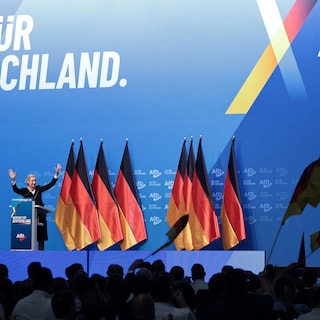
Terwijl de AfD nog een tikje naar rechts opschuift, klinkt in Erfurt uit vele kelen: We zijn allemaal antifascisten
de volkskrant · about 2 months ago
„Wir sind die Zukunft für Deutschland, sagt Alice Weidel in Erfurt Beim AfD-Parteitag in Erfurt zeigt sich Alice Weidel zufrieden mit dem neuen Bundesvorstand und betont die Konzentration auf kommende Wahlkämpfe. „Wir sind nicht mehr die Alternative für Deutschland, wir sind die Zukunft für Deutschland, sagt sie.
welt.de · about 2 months ago
Blockaden und Proteste in Erfurt – Polizei bleibt trotz einzelner Angriffe gelassen Vor dem AfD-Parteitag in Erfurt kam es zu Protesten und Blockaden, teils mit Gewalt. Die Polizei meldet überwiegend friedliche Demonstrationen, einzelne Angriffe auf Journalisten und ein AfD-Büro. „Mob-Situationen sind sehr gefährlich, sagt Malte Roschinski, Sicherheitsexperte, bei WELT TV.
welt.de · about 2 months ago
AfD-Parteitag: Neue alte Spitze: Wohin steuert die AfD jetzt? Die AfD kann ihren Parteitag trotz Protesten pünktlich starten. Hat sie auch den internen Streit gut umschifft? Und: 35 Badetote an nur einem Wochenende – allesamt Männer
die zeit · about 2 months ago
Demokratische Mehrheiten: Kämpfer fordert klare Abgrenzung aller Demokraten von AfD
die zeit · about 2 months ago
AfD-Parteitag in Erfurt: Co-Parteichef Chrupalla ist mit seinem Wahlergebnis zufrieden Der AfD-Parteitag in Erfurt geht weiter. Tino Chrupalla will Verfassungsschutzämtern verbieten, Parteien zu beobachten. Proteste waren überwiegend friedlich. Das Liveblog
die zeit · about 2 months ago
Allemagne: le parti dextrême droite AfD en ordre de bataille Le parti dextrême droite allemand AfD est en congrès ce week-end. Le mouvement a le vent en poupe et domine les sondages. Il pourrait remporter une région, une première depuis la guerre, lors délections en septembre. Plus radical que jamais, lAlternative pour lAllemagne doit aussi songer à quitter son opposition radicale pour exercer le pouvoir.
rfi.fr · about 2 months ago
VMRO and Mickoski dominate latest poll, Filipce is down to third place The regular poll conducted by MKD.mk and Market Vision finds that the ruling VMRO-DPMNE party maintains its massive lead over the competitors. The phone poll, conducted in the second half of July on 1,200 citizens, finds that 20.5 pecent of all voters opt for VMRO, while only 6.2 would support its once chief competitor SDSM. […] The post VMRO and Mickoski dominate latest poll, Filipce is down to third place appeared first on Republika English.
republika macedonia · about 2 months ago

Le Pen et Bardella affichent leur unité avant le couperet judiciaire Marine Le Pen et Jordan Bardella ont affiché samedi leur unité, réaffirmant mutuellement leur soutien, à trois jours de la décision de la cour dappel de Paris qui déterminera si la patronne du Rassemblement national (RN) peut concourir une quatrième fois à lélection présidentielle. ...
la libre · about 2 months ago
Sicherheit: Poseck: Für AfD-Verdachtsfall reichen öffentliche Quellen
die zeit · about 2 months ago
Επανεκλογή Βάιντελ και Χρουπάλα στην ηγεσία της AfD - Φαρσέρ έπαιζε από τα μεγάφωνα... τη μουσική του κακού των Star Wars Ίσως σύντομα να μπορέσουμε να κυβερνήσουμε μόνοι μας, λένε οι συναρχηγοί ενόψει των εκλογικών αναμετρήσεων των επόμενων μηνών
protothema · about 2 months ago
AfD-Parteitag wird heute fortgesetzt – Polizei zieht erste Bilanz zu Protesten Der erste Tag des AfD-Bundesparteitags ist beendet. Die Polizei erwartet eine ruhige Nacht – und meldet 48 Straftaten im Rahmen der Proteste. Alle Entwicklungen im Live-Ticker.
welt.de · about 2 months ago
La scelta della data per il congresso non è un caso, mano tesa da Afd ai neonazisti per lalleanza Lo storico Wagner: È un pericolo che il partito prenda il potere in Sassonia-Anhalt, basta guardare il programma per rendersi conto quanto sono estremi
corriere · about 2 months ago
„Sonntagstrend: AfD liegt laut Umfrage acht Prozentpunkte vor der Union Die AfD kann einer Meinungsumfrage zufolge ihren Vorsprung vor CDU/CSU ausbauen. Verteidigungsminister Pistorius warnt vor der Weitergabe geheimer Bundeswehr-Informationen an die Partei.
faz · about 2 months ago
Proteste gegen AfD: Clueso trotzt AfD-Parteitag: Ich will Heimat sagen Parallel zum AfD-Bundesparteitag in Erfurt hat Musiker Clueso auf dem Domplatz seiner Heimatstadt ein Zeichen gesetzt. Er will sich das Wort „Heimat nicht nehmen lassen.
tagesspiegel · about 2 months ago