
European economies grow in second quarter despite Iran war fallout: Spain leads, Austria stagnates
The economies of several European countries showed growth in the second quarter of 2026, despite global unrest and the ongoing Iran war.
The Dutch economy grew by 0.4% in the second quarter compared to the previous quarter, according to Statistics Netherlands (CBS). Household consumption rose by 0.5%, and government consumption increased by 0.4%. The export of goods and services rose by 1.2%, although imports rose more strongly at 1.4%. The trade, hospitality, transport, and storage sector saw the highest increase in added value at 1.8%, while industry saw a significant increase at 1.5%. However, mining and energy companies had negative added value at -5.2% and -3.5%, respectively. "The Dutch economy is coming through this reasonably unscathed so far," said CBS chief economist Peter Hein van Mulligen.
Germany's economy grew by 0.2% in the second quarter, according to the Statistisches Bundesamt. This marks the third consecutive quarter of growth, with exports increasing. Industry orders, production, exports, building permits, and retail turnover all increased. Industry order books are the best filled since the start of the statistics in 2015, with the range of order coverage at a record level of 8.9 months. Billions are being invested in infrastructure and armaments. The Ifo-Institut reported that the business climate index rose for the third consecutive month in July. "The German economy is ready to gain momentum," said Ifo-Institut survey chief Klaus Wohlrabe.
Spain's economy grew by 0.7% in the second quarter, with household consumption and investment being the main drivers, according to the Instituto Nacional de Estadística (INE). Household consumption increased by 0.7% quarter-on-quarter and 3.2% year-on-year. Investment increased by 0.4% quarter-on-quarter and 5.1% year-on-year, with strong growth in intellectual property products (7.7% year-on-year) and construction (5.2% year-on-year). The country has seen 21 consecutive quarters of year-on-year growth. The Ministry of Economy reaffirmed that the growth accumulated for the first half of 2026 is 2.2%, which favors the fulfillment of the government's economic forecast of 2.6% for the entire year.
France's economy grew by 0.2% in the second quarter, with exports, particularly in the aeronautics sector, being the main driver, according to reports. The slight rebound is largely due to exports, with industry holding up, but households remaining cautious.
Italy's economy grew by 0.2% in the second quarter, with a year-on-year growth of 1%, according to Istat. The acquired variation for 2026, corrected for calendar effects, is 0.8%.
Estonia's economy grew by 2.1% year-on-year in the second quarter, according to Statistics Estonia.
Finland's economy grew by 0.9% in the second quarter compared to the previous quarter, according to Statistics Finland.
Hungary's economy grew by 1.7% year-on-year and 0.4% quarter-on-quarter in the second quarter, according to reports.
In contrast, Austria's economy stagnated in the second quarter due to increased oil prices from the Iran war, according to a quick estimate by WIFO. The rise in oil prices caused by the conflict has been cited as the primary reason for the stagnation.
Follow us for live European news
- 5
- 3
- 3
- 2
- 2
- 2
- 1
- 1
- 1
- 1
1 further source not geolocated
Articles

La economía crece el 0,7 en el segundo trimestre, una décima más, por el consumo de los hogares y la inversión El avance interanual del producto interior bruto (PIB) se mantiene en el 2,7, tasa similar a la anotada entre enero y marzoLa inflación escala en julio al 3,5 por el alza de precios de combustibles y electricidad La economía española ha crecido un 0,7 en el segundo trimestre de 2026, una décima más respecto a los tres primeros meses del año, debido principalmente al tirón del consumo de los hogares y de la inversión. El avance interanual del producto interior bruto (PIB) fue del 2,7, tasa similar a la anotada entre enero y marzo. De acuerdo con los datos de contabilidad nacional publicados este jueves por el Instituto Nacional de Estadística (INE), el crecimiento se ha sustentado en la demanda interna, que ha aportado 0,6 puntos, y en menor medida en la demanda externa (exportaciones e importaciones), que contribuyó con 0,1 puntos. El consumo de las familias aumentó un 0,7 en el segundo trimestre del año; la inversión, un 0,4, y el consumo público, un 0,3, mientras que las exportaciones se incrementaron un 0,8 y las importaciones, un 0,6. El PIB lleva 21 trimestres seguidos con aumentos en términos interanuales. En este caso, la demanda nacional contribuyó con 3,3 puntos al crecimiento interanual de la economía española en el segundo trimestre, si bien la demanda externa tuvo una aportación negativa de 0,6 puntos. Con estos datos de la Contabilidad Nacional conocidos hasta el cierre del primer semestre de 2026, el crecimiento acumulado para el conjunto del año es ya del 2,2, lo que favorece el cumplimiento de la previsión del 2,6 del cuadro económico del Gobierno para todo el ejercicio, según ha reafirmado el Miniterio de Economía. España sostiene el pulso de crecimiento y sigue liderando a las grandes economías de la zona del euro, según las últimas previsiones de los principales organismos internacionales, en un contexto todavía marcado por el impacto de la guerra en Irán, ha destacado el departamento que lidera Carlos Cuerpo. Los datos de Estadística reflejan que el consumo de los hogares se consolida como uno de los motores de la economía, con un avance trimestral del 0,7 y del 3,2 interanual, sostenido por la solidez del mercado laboral. La inversión también mantiene su dinamismo, dado que la formación bruta de capital fijo creció un 0,4 intertrimestral y un 5,1 interanual, con especial fuerza en los productos de la propiedad intelectual (7,7 interanual) y en la construcción (5,2 interanual).
eldiario.es · about 2 hours ago

Economie groeit door ondanks gure internationale wind De Nederlandse economie blijft aan de praat, ondanks de oorlog in Iran en de verstoringen die daarmee gepaard gaan. In het tweede kwartaal groeide de economie met 0,4 procent ten opzichte van een kwartaal eerder.
rtl nieuws · about 2 hours ago
Konjunktur: Deutsche Wirtschaft schafft Mini-Wachstum trotz Iran-Krieg Die deutsche Wirtschaft trotzt dem Iran-Krieg. Doch der erhoffte kräftige Aufschwung lässt auf sich warten. Immerhin gibt es einige Hoffnungsschimmer.
tagesspiegel · about 2 hours ago
Konjunktur: Deutsche Wirtschaft mit Mini-Wachstum im zweiten Quartal
die zeit · about 2 hours ago
WIFO-Schnellschätzung: BIP stagnierte im zweiten Quartal
orf.at · about 2 hours ago
Dutch population growth continues to slow; 23,000 new residents in first half of 2026 In the first half of 2026, the Dutch population grew by over 23,000 people.
nltimes.nl · about 2 hours ago
GDP flash estimate: Economy grew by 2.1 in Q2 2026 Estonias gross domestic product (GDP) rose by 2.1 percent year-on-year in the second quarter of 2026 (Q2 2026), Statistics Estonia reported.
news.err · about 2 hours ago
Minder banen en zzpers, maar werkgevers blijven zoeken naar personeel De krapte op de arbeidsmarkt is in het tweede kwartaal weer licht toegenomen. Voor elke honderd werklozen stonden 95 vacatures open, tegen 91 een kwartaal eerder. Tegelijk daalde het aantal zzpers al voor het zesde kwartaal op rij.
nu.nl · about 2 hours ago

Deutsche Wirtschaft wächst im zweiten Quartal um 0,2 Prozent
welt.de · about 2 hours ago
Berlin / Brandenburg: Deutsche Wirtschaft mit Mini-Wachstum im zweiten Quartal Deutsche Wirtschaft mit Mini-Wachstum im zweiten Quartal
tagesspiegel · about 2 hours ago
Istat: il Pil cresce dello 0,2 nel secondo trimestre
il sole 24 ore · about 2 hours ago
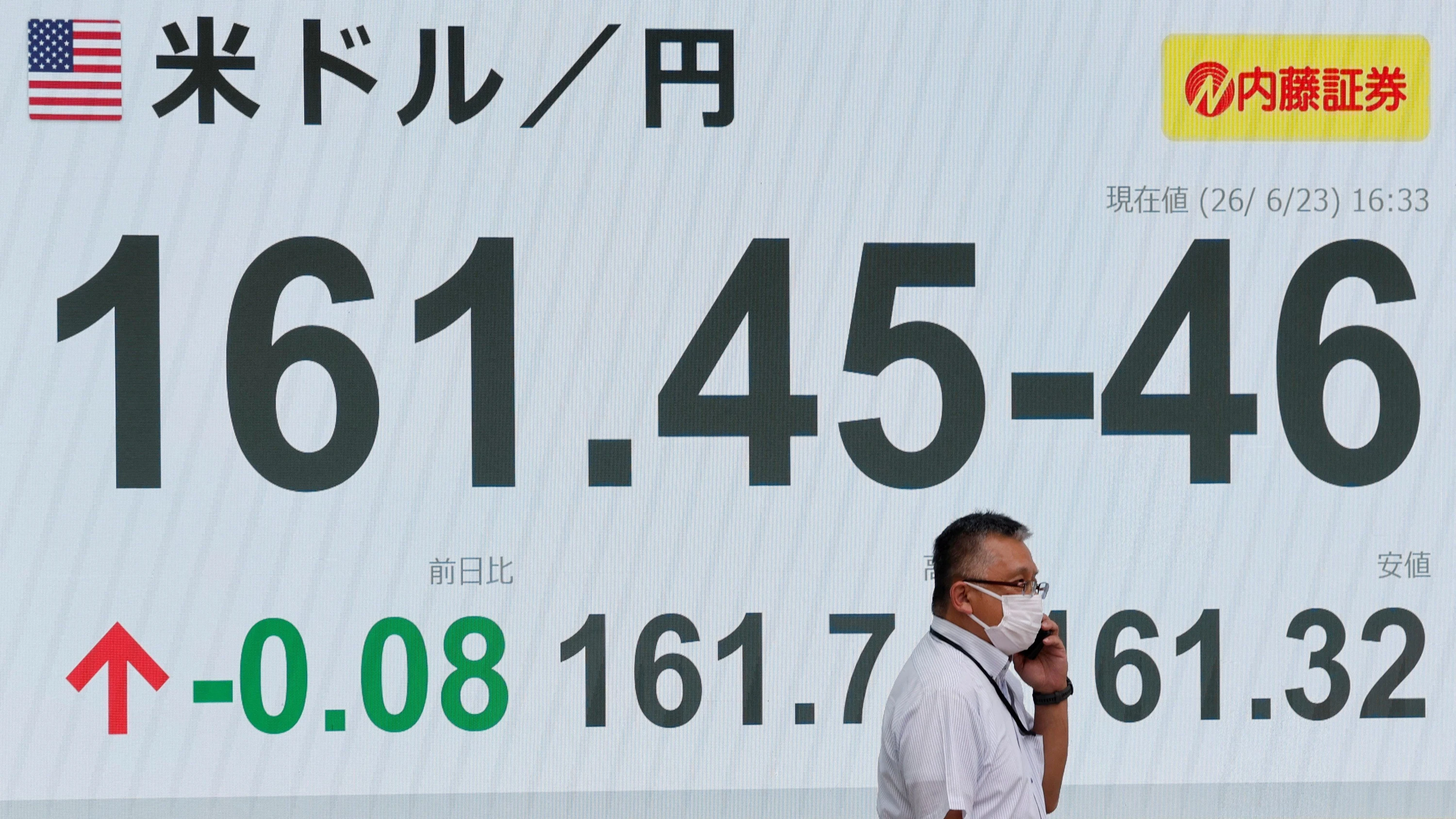
Währungsverfall: Der schwache Yen trifft Japans Mittelschicht Über Jahre hat Japans Volkswirtschaft vom billigen Yen profitiert. Was jedoch die Exporte stärkt, äußert sich längst als größeres Problem für die Binnenwirtschaft.
faz · about 2 hours ago
Dutch economy still trudging along despite global unrest; 0.4 growth in Q2 The Dutch gross domestic product (GDP) rose by 0.4 percent in the second quarter of 2026 compared to the previous quarter, Statistics Netherlands (CBS)
nltimes.nl · about 2 hours ago
Konjunktur: Deutsche Wirtschaft wächst im zweiten Quartal leicht Nach dem leichten Aufschwung zu Jahresbeginn kommt die deutsche Wirtschaft etwas vom Fleck. Allzu viel Wachstum bringen die neuen Zahlen für das zweite Quartal aber nicht.
handelsblatt · about 2 hours ago

China Signals Little Appetite for Major Stimulus Despite Growth Headwinds Chinas top leaders signaled little appetite for major stimulus in the second half of the year despite mounting domestic headwinds.
wsj · about 2 hours ago
Vermögen: Bin ich schon reich oder nicht? Dieser Rechner liefert Ihnen die Antwort Trotz Inflation zeigen aktuelle Daten, dass die Vermögen in Deutschland gewachsen sind. Der Handelsblatt-Rechner zeigt Ihnen, wo Sie im Vergleich zur deutschen Bevölkerung stehen.
handelsblatt · about 2 hours ago
Konjunktur: Spaniens und Frankreichs Wirtschaft trotz Iran-Krieg gewachsen Frankreichs Wirtschaft wächst nach dem Rückschlag zu Jahresbeginn wieder. Spanien legt erneut kräftig zu, während die Inflation dort über dem EZB-Ziel bleibt.
handelsblatt · about 2 hours ago
Bár növekedett, mégis kisebb csalódást okozhatott a magyar gazdaság a második negyedévben Előző év azonos időszakához képest 1,7 százalékos növekedést sikerült összehozni, az előző negyedévhez képest viszont a legpesszimistább várakozás vált valóra.
444.hu · about 2 hours ago

Újra óriási többlet volt a magyar külkereskedelemben Júniusban 1305 millió euró volt a termék-külkereskedelmi többlet.
hvg.hu · about 2 hours ago
Suhdanne | Suomen talouskasvu jatkuu yllättävän vahvana: suorastaan hurjaa, sanoo ekonomisti Talous kasvoi huhti–kesäkuussa 0,9 prosenttia edellisestä vuosineljänneksestä.
helsingin sanomat · about 2 hours ago

Wifo-Schnellschätzung: Heimische Wirtschaftsleistung stagniert im zweiten Quartal Der durch den Irankrieg deutlich angestiegene Erdölpreis habe die österreichische Wirtschaft belastet und die konjunkturelle Erholung unterbrochen, so die Wirtschaftsforscher
der standard · about 2 hours ago
Nederlandse economie groeit vooral door hogere consumptie van huishoudens De Nederlandse economie is in het tweede kwartaal van 2026 met 0,4 procent gegroeid ten opzichte van het voorgaande kwartaal, meldt het CBS op basis van eerste berekeningen. In het eerste kwartaal was de groei nog 0,3 procent.
nu.nl · about 2 hours ago
Öl: Iran-Krieg lässt Wirtschaft Saudi-Arabiens einbrechen Weil die Öl-Exporte des Königreichs durch die Hormus-Blockade massiv behindert sind, geht auch die Wirtschaftsleistung zurück. Besserung ist angesichts neuer Angriffe nicht in Sicht.
handelsblatt · about 2 hours ago
La croissance française a atteint 0,2 au deuxième trimestre La légère hausse du PIB entre avril et juin est inférieure à la prévision de lInsee, qui anticipait jusque-là une croissance de 0,3 après un recul de 0,1 au premier trimestre.
liberation · about 2 hours ago

French, Spanish Economies Picked Up in Second Quarter Despite Uncertainty From Iran War Economies across the eurozone have proved more resilient than feared in the face of supply-chain disruptions and higher energy prices driven by the U.S. and Israeli war on Iran.
wsj · about 2 hours ago

Consumers, AI spending likely supported US economic growth in the second quarter reut.rs/45uup0t
bluesky_Reuters · about 3 hours ago
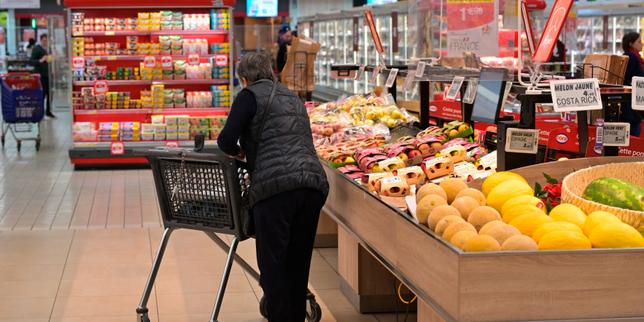
Le rebond en trompe-lœil de léconomie française au deuxième trimestre Après un recul de 0,1 du PIB au cours des trois premiers mois de lannée 2026, le léger rebond au deuxième trimestre (+ 0,2 ) est largement dû aux exportations, notamment dans laéronautique. Lindustrie tient, tandis que les ménages demeurent prudents.
le monde · about 3 hours ago

Ismét nőtt a magyar GDP, de azért elájulva nem lehetünk a számoktól A második negyedévben 1,7 százalékkal – a kiigazított adatok alapján 1,6 százalékkal – nőtt a magyar gazdaság, az előző negyedévhez képest pedig 0,4 százalékkal.
hvg.hu · about 3 hours ago
Neue Daten zur Konjunktur: Der Iran-Krieg macht den Aufschwung zunichte [premium] Österreichs Wirtschaft stagnierte im zweiten Quartal. Der wirtschaftliche Aufwind von Beginn des Jahres ist verebbt, das liegt vor allem an gestiegenen Erdölpreisen. Welche Sektoren wuchsen und welche schrumpften.
die presse · about 3 hours ago
Soome SKP kasvas teises kvartalis esimesega võrreldes 0,9 protsenti Soome statistikaameti teatel kasvas hooajaliselt korrigeeritud sisemajanduse koguprodukt (SKP) teises kvartalis esimesega võrreldes 0,9 protsenti.
postimees · about 3 hours ago