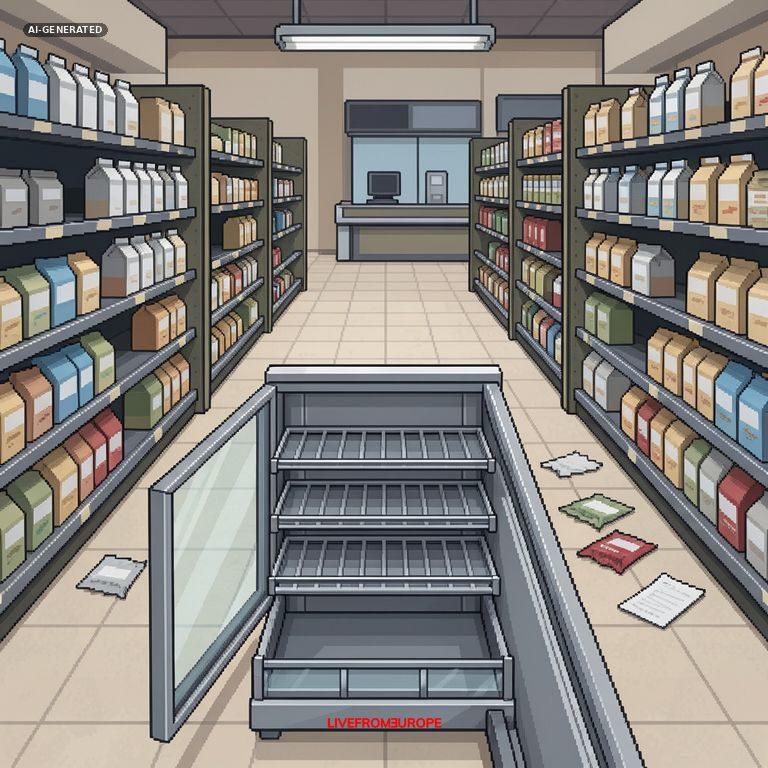
European households are stockpiling food and emergency gear while Greek officials warn that supermarket refrigeration systems face cyberattack risks as fears of energy supply disruptions grow.
The buying surge, reported across Europe and the United States, has emptied shelves of long-life milk, rice, pasta, oil, canned goods and water in some cities [1]. The pace matches levels last seen during the 2020 coronavirus pandemic, though supply chains remain stable. Consumers are also purchasing generators, batteries, camping equipment and gas canisters, with Walmart noting increased demand for cooking gas bottles. Nik Modi of RBC Capital Markets said government campaigns and social media anxiety have made worst-case preparation increasingly common. One trigger was a late-September Pentagon directive on military readiness that was misinterpreted on TikTok as signaling an imminent 90-day power outage.
In Greece, Spyros Papageorgiou, the general secretary for the protection of critical entities, warned that cyberattacks enabled by artificial intelligence could target supermarket cooling systems [2]. "Whatever is vulnerable right now will be hit quickly," he said, noting that remote-access applications used by technicians to control refrigeration equipment could allow attackers to disrupt food preservation. He added that no digital system is absolutely safe: "If there were, we wouldn't be talking now."
The European Commission in early November urged every household to stock at least 72 hours of food, water and supplies [1]. Recommended items include six to nine liters of water per person, medicines, long-life food, a flashlight, radio, charger, documents, cash and warm clothing. The commission also proposed a European Preparedness Day to be marked annually from 2027 on October 23, the anniversary of the EU Civil Protection Mechanism's founding in 2001. The United Kingdom launched a similar "Be Prepared" campaign in late October.
The stockpiling has already affected retail data. Britain's Office for National Statistics reported that October sales volume rose 0.7 percent from September [1]. The increase broke a negative trend from August and September and marked the second-largest monthly rise of the year after April. Economists cautioned that the growth may not continue, as households that front-load purchases may spend less later.
Papageorgiou distinguished between cybercriminals seeking financial gain and state actors who can use the same techniques to infiltrate systems and remain dormant for long periods [2]. "Usually the cyberattack precedes the war," he said, noting that modern weapons systems depend heavily on software and technological infrastructure.