Pro-Russian hackers have launched cyberattacks on critical infrastructure across NATO countries, disrupting utilities and industries from Spain to the United States.
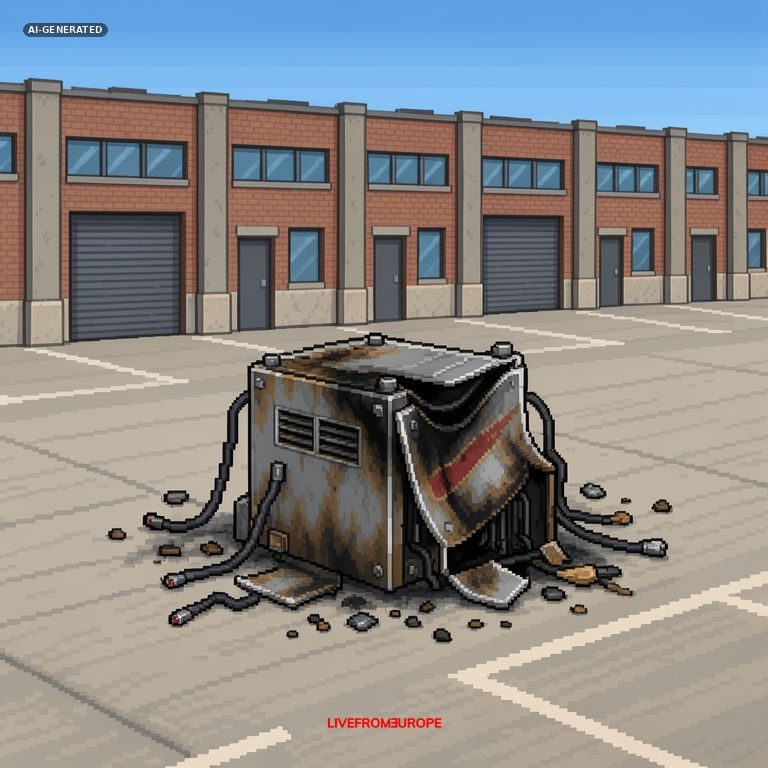
Since late 2024, groups linked to Russia’s GRU military intelligence, including CARR and Z-Pentest, have targeted water systems, factories, and food production in roughly 20 countries, Bloomberg and Meduza reported. In Spain, hackers disabled crematorium furnaces in Alicante, triggered a fire at a transformer factory in Catalonia, and halted operations at two wineries by disrupting heating and ventilation. In Denmark, a December 2024 attack on a water pumping station left 450 households without supply after hackers altered pressure settings and burst pipes; the system’s password was “1234.” In the U.S., hackers shut off refrigeration at a Los Angeles meatpacking plant, spoiling over 900 kilograms of meat and forcing an evacuation after an ammonia leak, and tampered with a Texas water system, spilling drinking water from storage tanks.
U.S. prosecutors allege the GRU funds and directs CARR, whose leader Yulia Pankratova told Bloomberg the group would continue targeting hospitals and water infrastructure, recognizing no “red lines.” Victoria Dubranova, a Ukrainian citizen, was charged by the U.S. Justice Department in late 2025 with participating in attacks on behalf of CARR and Z-Pentest; she denies the charges. The groups have claimed responsibility for attacks on water systems in Poland and the U.S., as well as a power plant in France, according to Meduza.
The hackers often exploit poorly secured industrial systems, compromising whatever they can access to inflict maximum damage. In Denmark, technicians from Evotect ApS confirmed the water system had been hacked, while local officials admitted choosing a cheap, insecure controller. The U.S. Cybersecurity and Infrastructure Security Agency has linked Z-Pentest to former CARR members dissatisfied with GRU support, now focusing on industrial sabotage. Both groups are under U.S. and EU sanctions for targeting critical infrastructure, particularly in energy and water sectors.