
Europe faces justice crises as protests erupt over child murder and systemic failures
Story Timeline
4 months · 12 summary articles
The French justice system faces unprecedented scrutiny as the controversial criminal justice bill, championed by Justice Minister Gérald Darmanin, arrives at the National Assembly for debate on Monday. The legislation, already divisive within legal circles, now takes centre stage amid the Lyhanna case, a child murder that has triggered nationwide protests and calls for systemic reform.
Thousands marched in Fleurance on Monday evening, demanding accountability after the 11-year-old Lyhanna’s suspected killer was known to police for nearly a decade. Authorities had received prior allegations of sexual assault against the suspect, including a case involving a ten-year-old girl, yet failed to act decisively. The tragedy has exposed systemic failures in policing and child protection, prompting Justice Minister Darmanin to convene a crisis meeting with senior prosecutors at 8:30 a.m. today.
In Slovakia, the so-called “Očistec” case escalates as prosecutors allege that the Bödörova police unit, nicknamed the “police octopus,” targeted high-ranking figures from the opposition Smer party—not merely political rivals. According to the indictment, investigators sought compromising material on an ex-minister, raising concerns about politically motivated surveillance.
Meanwhile, in Hungary, President Tamás Sulyok’s use of military aircraft has sparked a security scandal. A former communications director at the Presidential Office alleged serious safety risks, prompting an internal investigation. While the military denies most claims, it admitted to lapses in protocol, including allowing Sulyok to fly with the same pilots despite unresolved concerns.
In Romania, a 48-year-old man has been detained in Lupeni after shooting four people, including his former partner and her family. One victim remains in critical condition. Authorities accuse him of attempted murder, illegal weapons possession, and violating a protection order.
In France, a priest in the Pyrénées-Atlantiques diocese has been barred from public ministry after an investigation into alleged sexual abuse of a minor. The case, reported in June 2024, has prompted the bishop of Bayonne to impose immediate restrictions.
Across Europe, judicial systems are under pressure. In the Netherlands, a law targeting street harassment has resulted in just six fines in two years, sparking criticism that it is too complex to enforce. In Ireland, a developer convicted of assaulting three teenagers avoided immediate imprisonment after a minister issued a favourable planning ruling on the same day as his sentencing.
From Dublin to Cluj-Napoca, where an 18-year-old woman alleges she was drugged and raped at her high school graduation party, Europe’s legal institutions are being tested like never before. The coming weeks will determine whether justice systems can restore public trust—or whether deeper reforms are inevitable.
Follow us for live European news
- 3
- 2
- 1
- 1
- 1
- 1
- 1
- 1
2 further sources not geolocated
Articles

Tusentals protesterar efter 11-åriga Lyhannas död Mannen som misstänks för inblandning i mordet på 11-åriga Lyhanna har funnits på polisens radar i nästan tio år.Han var också nyligen misstänkt för att ha våldtagit en tioårig flicka. Nu rasar invånarna i Fleurance mot polisens agerande.
expressen · 4 months ago
O fată de 18 ani din Cluj-Napoca acuză că a fost drogată și violată la banchetul de absolvire a liceului O tânără de 18 ani din Cluj-Napoca ar fi fost drogată și agresată sexual la banchetul de absolvire a liceului. Fata a ajuns la spital, iar cazul a ajuns în atenția polițiștilor.
digi24 · 4 months ago
Bărbatul care a împușcat patru persoane în Lupeni, reținut. Una dintre victime este în stare instabilă Bărbatul de 48 de ani care a tras focuri de armă asupra fostei sale iubite şi a familiei acesteia, a fost reţinut pentru 24 de ore. El este acuzat de tentativă de omor calificat asupra unui membru de familie, încălcarea ordinului de protecţie, tulburarea ordinii şi liniştii publice, nerespectarea regimului armelor şi muniţiilor, uz de armă fără drept, precum şi pentru introducerea sau scoaterea din ţară, fără drept, de arme şi muniţii.
digi24 · 4 months ago

Sulyok Tamás repülései: mi igaz abból, hogy súlyos biztonsági kockázatok álltak fenn a honvédségi gépeknél? Feljelentést fontolgattak a Magyar Honvédségnél, miután a Köztársasági Elnöki Hivatal korábbi kommunikációs igazgatója azt sugallta, hogy biztonsági kockázatok álltak fent, amikor honvédségi géppel utazott az államfői delegáció. Bár a honvédség határozottan tagadja a konkrétumokban szűkölködő vádak jelentős részét, az kiderült: van bennük némi igazság. De mi abból az igazság, hogy Sulyok Tamás kijárta, ugyanazokkal a pilótákkal repülhessen?
hvg.hu · 4 months ago
Bödörova policajná chobotnica mala hľadať „kompro ešte aj na exministra Smeru Nemali to byť len súperi, na ktorých sa údajne zháňala špina. Podľa obžaloby v kauze Očistec raz hľadali páky aj na vysokopostaveného funkcionára Smeru.
aktuality.sk · 4 months ago
Toto nie je obyčajný súd o mafiánskej skupine (komentár Petra Bárdyho) Bödörovci boli v bezpečnostných zložkách veľmi silná „značka".
aktuality.sk · 4 months ago

Developer facing jail benefited from Ministers planning ruling on same day as sentencing Sligo developer Cathal OConnor faces two years in prison for violent assault on three teenagers
irish times · 4 months ago
«On boit leau des toilettes» : au Burkina Faso, plongée dans les geôles clandestines de la machine répressive dIbrahim Traoré Les lieux denfermement secrets se multiplient dans le pays sahélien, au rythme des disparitions de civils et de militaires. Trois survivants racontent un quotidien de tortures et de privations imposées par la junte, dans une prison secrète dont «Libération» a pu identifier lemplacement exact.
liberation · 4 months ago
A Saint-Etienne, la nouvelle majorité veut faire rejaillir la joie et la fierté de ses administrés Marquée par «laffaire de la sextape» de lex-maire de droite Gaël Perdriau, rejugé à partir de ce lundi 8 juin, la ville cherche à se forger une nouvelle image sous limpulsion du maire socialiste élu en mars, Régis Juanico.
liberation · 4 months ago
Projet de loi sur la justice criminelle : que reste-t-il du texte porté par Gérald Darmanin qui arrive à lAssemblée nationale ? Le projet de loi du garde des Sceaux, qui réunit contre lui une grande partie du monde judiciaire, sera examiné à laune de laffaire Lyhanna à partir de ce lundi 8 juin en commission des lois.
liberation · 4 months ago
EN DIRECT - Disparition de Lyhanna : les procureurs généraux attendus à la chancellerie pour une «réunion de travail» Le garde des Sceaux a convoqué les procureurs généraux - représentants du ministère public au sein des 36 cours dappel de France - à 8 h 30 ce lundi 8 juin pour une «réunion de travail». Plusieurs collectifs féministes et de protection de lenfance ont de leur côté appelé à des rassemblements lundi à 19 heures devant le ministère de la Justice et devant une centaine de tribunaux.
liberation · 4 months ago
Autoritatea anticorupție din Ungaria anunță urmărirea penală a apropiaților lui Viktor Orbán în legătură cu dispariția unor fonduri europene de miliarde de euro Oficiali de rang înalt din guvernul fostului premier ungar Viktor Orban ar trebui să fie investigați în legătură cu dispariția unor fonduri europene de ordinul miliardelor de euro, a declarat autoritatea anticorupție din Ungaria.
adevarul · 4 months ago

France is starting to own its role in the slave trade. Now it needs to repair its Caribbean legacy | Marie-Annick Gournet The notorious Code Noir is gone. But people in Guadeloupe and Martinique continue to live with the consequencesVive la République, et vive la France.Emmanuel Macron closed his 21 May speech marking the 25th anniversary of the passing of the Taubira law, which recognised slavery as a crime against humanity, with the customary patriotic slogan. As applause rippled around the reception room of the Elysée Palace, whose construction was financed by a 18th-century slave-owning magnate, Leïla Brédent, a black soprano from Guadeloupe, launched into a stirring rendition of La Marseillaise. Continue reading...
theguardian · 4 months ago
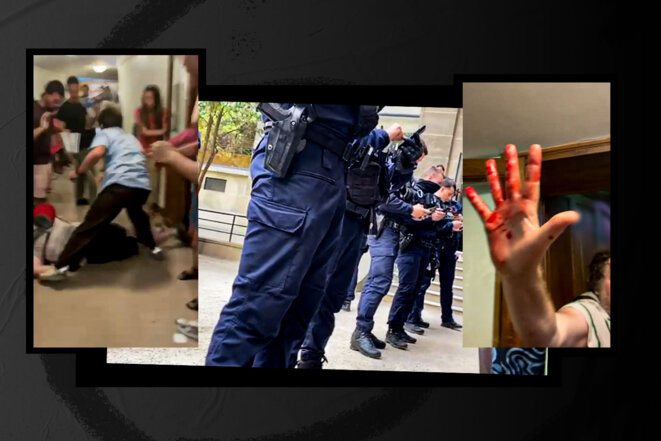
Sciences Po, Paris-I, Toulouse: les facs confrontées à des répressions «inédites» Agression, distribution massive damendes, contrôles didentité… Pour enrayer les mobilisations syndicales et étudiantes, les universités ont de plus en plus souvent recours à la police, aux dépôts de plainte et aux sanctions disciplinaires, saccageant le principe du débat didées.
mediapart · 4 months ago

Dans les Pyrénées-Atlantiques, un prêtre visé par une enquête pour des faits de nature sexuelle sur un mineur Le sexagénaire, qui officiait à Urrugne, a désormais « interdiction de tout ministère public dans le diocèse », a fait savoir lévêque de Bayonne. Les faits, qui se seraient produits à Béziers, avaient fait lobjet dun signalement en juin 2024.
le monde · 4 months ago

Présidentielle 2027 : à Saint-Denis, Jean-Luc Mélenchon élargit son concept de « nouvelle France » et installe son duel avec le RN Le leader de La France insoumise et quadruple candidat à la magistrature suprême a tenu, dimanche, en région parisienne, son premier meeting de campagne.
le monde · 4 months ago

📰 The jailing of Germanys most wanted woman – podcastDancer, dog owner, bank robber. Germanys most wanted woman, Daniela Klette, has been sentenced to 13 years in prison after decades on the run. Deborah Cole and Jason Burke report To her friends and neighbours, there was nothing extraordinary about Claudia Ivone. As our Berlin co… #UKNews #Europe
mastodon bot · 4 months ago

Une contre-attaque inédite face aux procédures-bâillons de Vincent Bolloré et Hubert Fabri Visées par des poursuites judiciaires intentées par le milliardaire français Vincent Bolloré et le milliardaire belge Hubert Fabri (via Socfin), plusieurs ONG tentent une démarche inédite afin de renverser la table. ...
la libre · 4 months ago
På bilden har Anne Valo ett dygn kvar att leva Mohammad Heidarzadeh knivmördade en vän som kallade honom kort.Ett par månader efter att han släpptes från rättspsykiatrin mördade han exflickvännen Anne. Hur kunde han släppas ut? – Är det först efter tre mord eller när sätter man ner foten? frågar sig Annes bror Petri.
expressen · 4 months ago
Perché Amnesty International e altre Ong hanno denunciato FedEx Belgio per il transito illegale di armi dirette a Israele Amnesty International, Azione per la pace, Lega dei diritti umani e Coordinamento nazionale dazione per la pace e la democrazia hanno presentato alla procura di Liegi una denuncia contro FedEx Belgio, sussidiaria del gigante statunitense delle spedizioni, riguardante lasserito transito illegale di armi dirette a Israele, comprese parti degli aerei da combattimento F-35 ampiamente usati […] Larticolo Perché Amnesty International e altre Ong hanno denunciato FedEx Belgio per il transito illegale di armi dirette a Israele proviene da Il Fatto Quotidiano.
il fatto quotidiano · 4 months ago