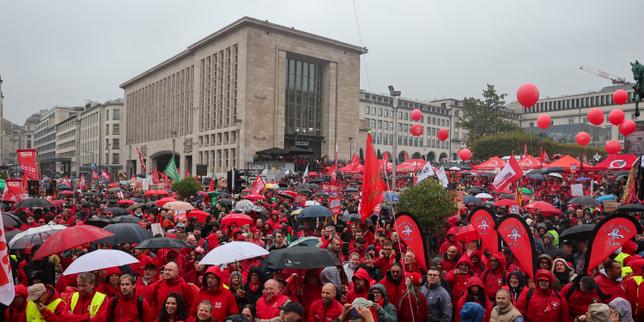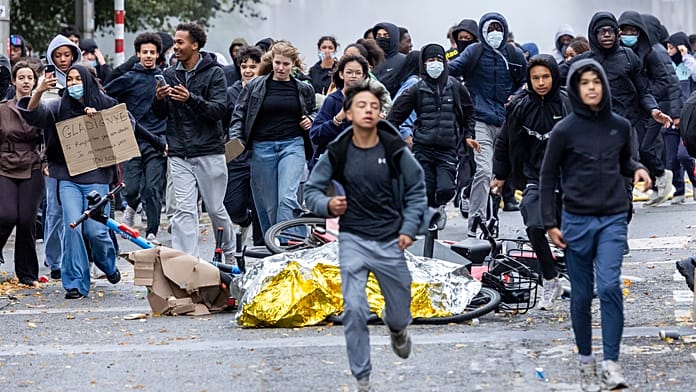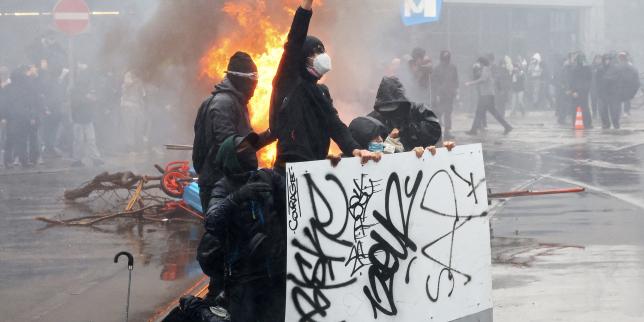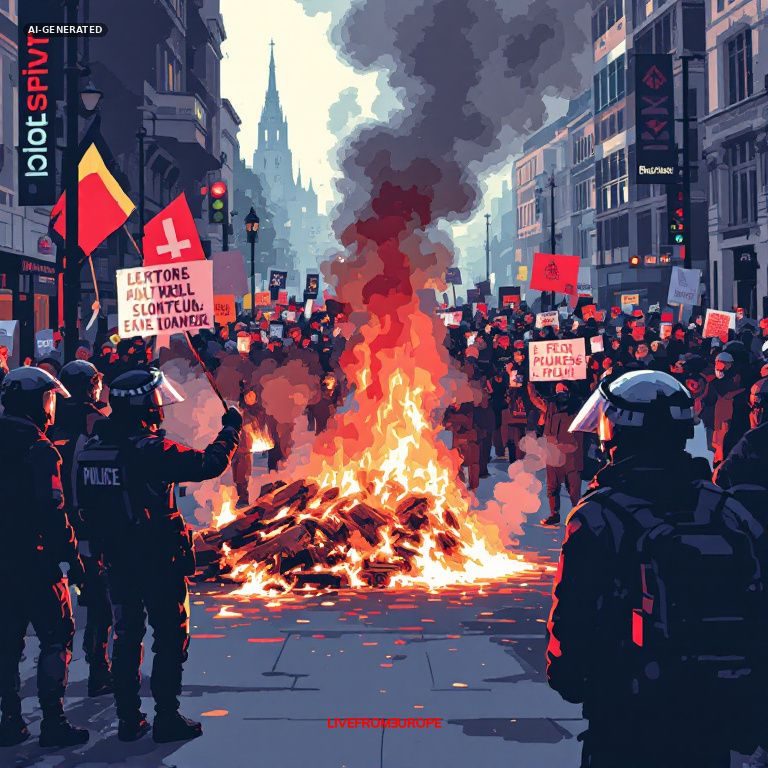
Brussels erupted in violence on Friday as tens of thousands protested against government austerity measures, with clashes between police and demonstrators overshadowing a largely peaceful trade-union march.
The national strike, called by Belgium’s largest unions, FGTB/ABVV and CSC/ACV, drew around 30,000 to 50,000 people opposing budget cuts they argue disproportionately burden workers, pensioners, and low-income households. Students joined to protest education cuts, rising fees, and reforms they fear could reduce university accessibility. The main march began with placards, music, and dancing, but violence later flared near Brussels-Midi and Brussels-Central stations, where masked protesters threw rocks, fireworks, and gas canisters at police. Officers responded with water cannons, tear gas, and baton charges, supported by a helicopter. Firefighters extinguished several fires, including on buses, while property damage was reported.
Police initially detained 21 people, including 13 minors, but the number rose to over 100 by Friday evening—around 30 judicial arrests and 80 administrative detentions. Authorities emphasized the clashes occurred on the sidelines, separate from the main union march, which remained peaceful. No confirmed casualty figures were available despite the unrest.
Prime Minister Bart De Wever had defended the measures on Thursday, stating painful budget cuts were necessary to avoid a debt spiral. Student groups, whose protests began earlier this month in Liège, cited rising education costs and overcrowded classrooms as key grievances. "We're not taken into account at all, and no one seems to realize that it's hard for us too, both for workers and for students," said Emilie L'Honneux, a 23-year-old student from Liège .
The strike disrupted public transport, air travel, and many schools and childcare facilities across the capital .